

- Original composition from your story — not a favourite song rearranged, but a new piece created specifically for the couple.
- One theme can carry the whole day — arranged differently for the ceremony, dinner, first dance, and wedding film, rather than several unrelated pieces.
- Fully remote for Japan destination weddings — Composer Dr. Lukas Schepp coordinates directly with local musicians, so no travel is required.
- Japanese instruments with genuine respect — koto, shakuhachi, and taiko can be woven in through specialist collaboration, not as decorative colour.
- Pricing from around €900 — starts with a personal piano theme and scales to full ensembles; a solo piece can later expand for an anniversary or future celebration.

Lukas is a composer specialising in custom wedding music and personalised wedding songs, with a background in film scoring and opera composition. He works remotely with couples internationally, coordinating live performance with local musicians wherever the wedding takes place — including Japan.
Most couples spend months choosing flowers, food, and a photographer. But very few think about whether their wedding could have its own piece of music. One that didn’t exist before them, and won’t exist for anyone else afterward.
That is what custom wedding music composition is: it’s not a favourite song played in a new arrangement, but an original composition written from a couple’s own story. Whether you call it custom wedding music or a custom wedding song, the idea is the same.
Dr. Lukas Schepp is a composer whose background spans film scoring and a full-length opera, and who now writes custom wedding music compositions and personalised wedding songs for couples internationally.
We spoke with him about how the process works, what it costs, how one piece of music can carry an entire wedding day, and how it can be shaped around Japanese musical traditions for a Japan destination wedding.
Dr. Lukas Schepp is a composer specialising in custom wedding music, based in Europe and working with couples internationally. You can see more of his work at lukasschepp.com.
- What Is Custom Wedding Music, Exactly?
- One Composition, Woven Through the Entire Day
- A Couple's Story, Told Without Words
- Custom Composition or Arrangement — What's the Difference?
- Live Performance: From Solo Piano to Full Orchestra
- Incorporating Japanese Musical Traditions
- How the Process Works Remotely for a Japan Wedding
- When to Start, How Long It Takes, and What It Costs
- The Most Meaningful Work
- Closing
What Is Custom Wedding Music, Exactly?
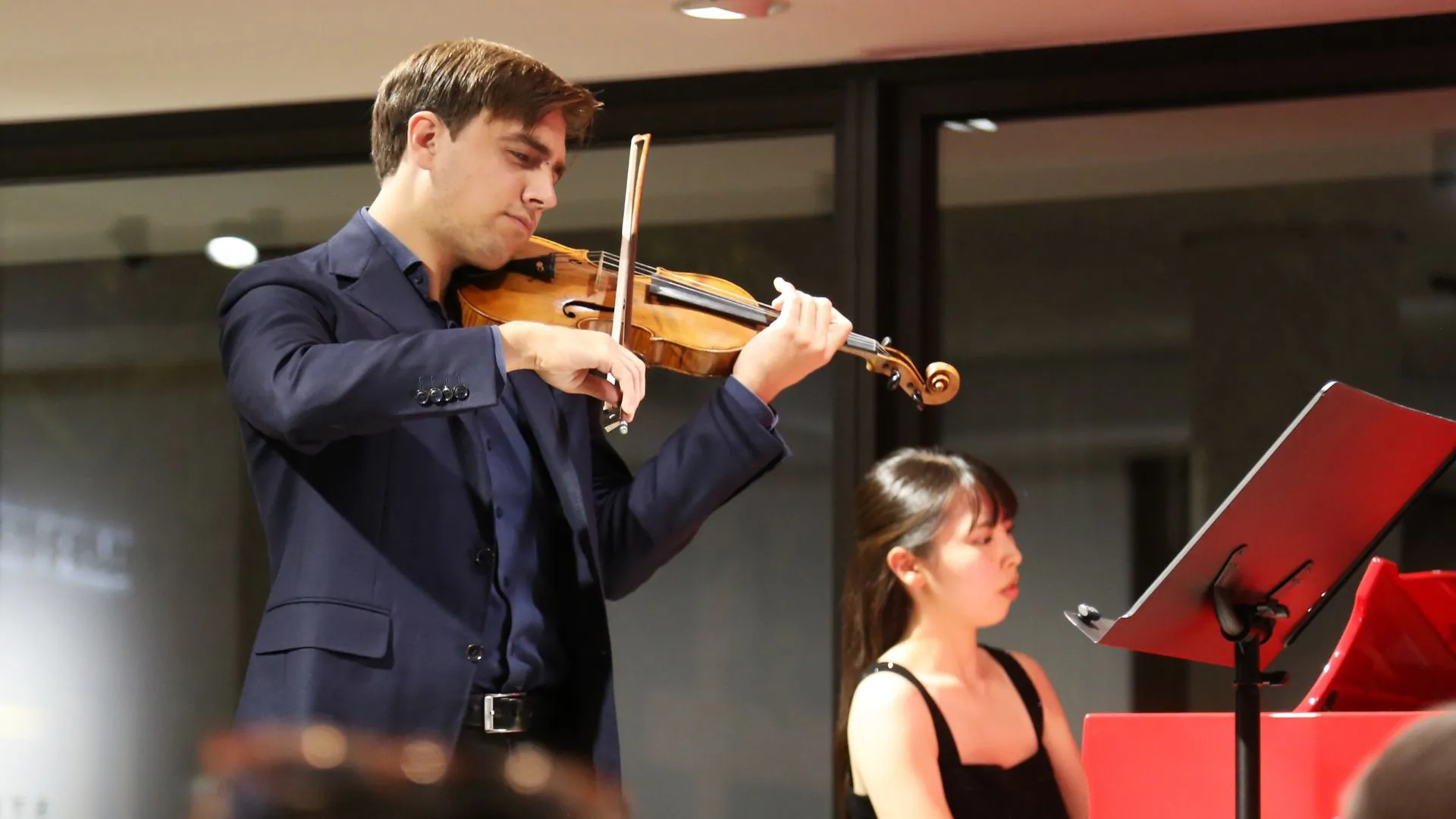
“A bespoke wedding composition is an original piece of music written for one particular couple,” Lukas explains. “It is not simply a favourite song played in a new arrangement; the musical theme itself is created from the couple’s story, personalities and vision for the wedding.”
The process begins with a conversation — about the couple, the atmosphere they want, and the moments the music will need to fill. From there, Lukas develops a first theme or sketch, refines it based on feedback, and builds out the complete piece.
What that final delivery looks like depends entirely on the wedding: a finished recording, several arrangements for different parts of the day, sheet music and parts for live musicians, or separate audio files for a wedding filmmaker to work with.
“The intention is to create something personal that belongs to the couple long after the wedding day.”
One Composition, Woven Through the Entire Day
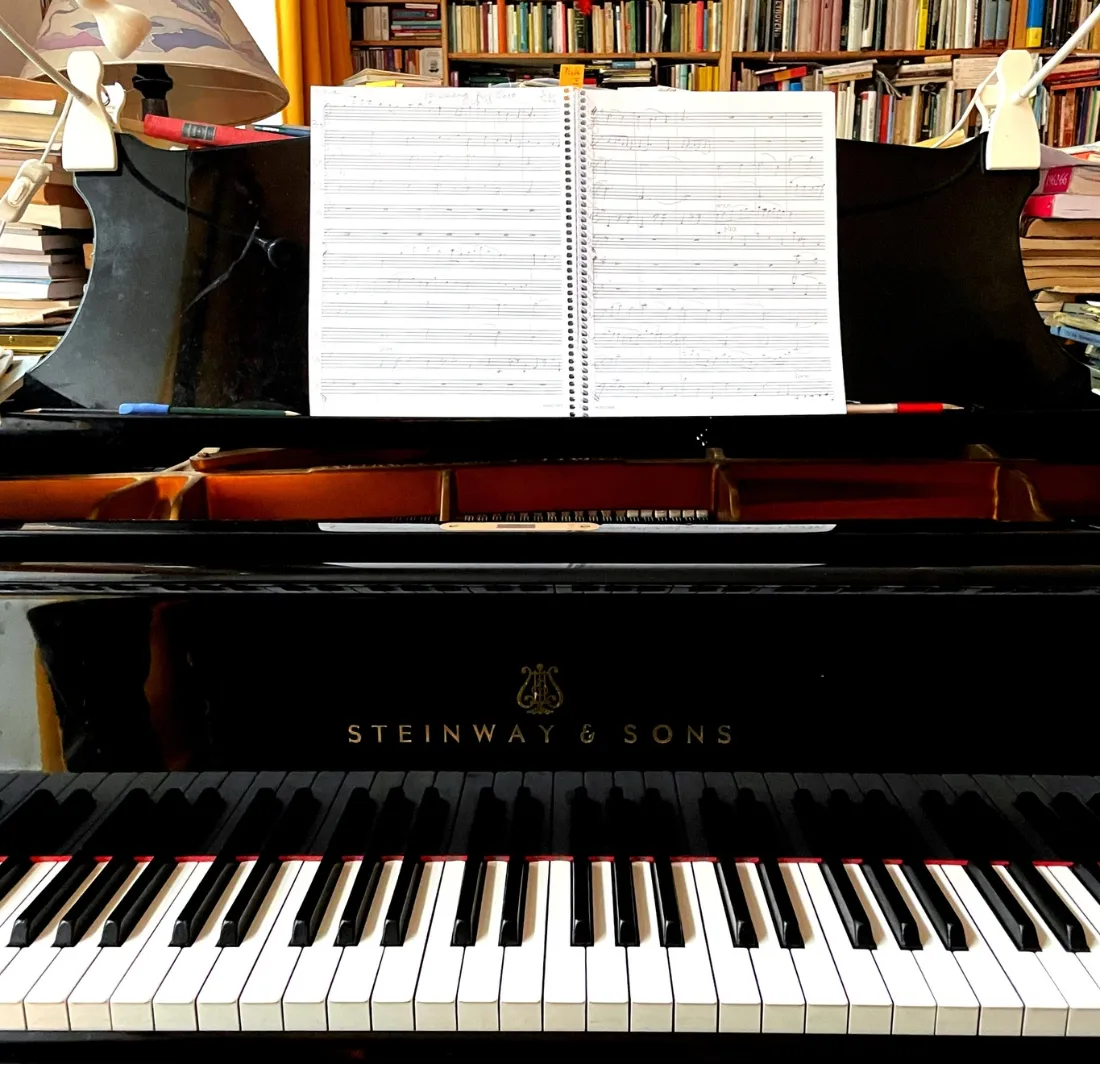
The most practical idea behind custom wedding music is that a single theme doesn’t have to stay in one place. “The central theme can be treated almost like the musical identity of the wedding,” Lukas says. “It remains recognisable while the arrangement changes according to the setting.”
A spacious piano or strings version might open the ceremony. The same theme turns lighter and more intimate for dinner. A version with a clearer pulse carries the first dance. And for the wedding film, the material can be developed further or broken into shorter edits and individual stems so a filmmaker can adapt it scene by scene without losing its identity.
Longevity beyond the Wedding Day
It doesn’t have to end when the wedding does, either. “After the wedding, the original theme can remain as a recording, a signed score, an anniversary piece or even be expanded for a future family celebration,” Lukas notes. “Instead of several unrelated pieces, the wedding has its own musical thread.”
A Couple’s Story, Told Without Words
Asked how a relationship actually becomes music, Lukas describes listening for emotional character rather than illustrating biography literally. “I may ask how the couple met, which experiences shaped them, what they value in one another, and what kind of emotional journey they want the wedding to have,” he says.
Places, family traditions, meaningful words, even the music a couple already loves. Not to copy it, but to understand what they respond to, all feed into the decisions that follow.
One example he shared, without naming the couple: a relationship between two people from different countries, Germany and Italy, that developed over a long distance before they married.
“I began their piece with two short melodic phrases played by two different instruments: the clarinet for Italy, and the cello for Germany. At first, each phrase had its own rhythm and musical space, reflecting two individual lives and a feeling of distance. Gradually, they began to respond to one another, share notes and finally combine into one longer melody. As the music developed, a piano entered for the accompaniment and the separate ideas form a shared theme.”
“The personal meaning for bride and bridegroom was present in the musical structure,” he adds, “and if you explain it to unknowing listeners, it becomes obvious — but you can also enjoy the music without knowing the musical background.”
Custom Composition or Arrangement — What’s the Difference?
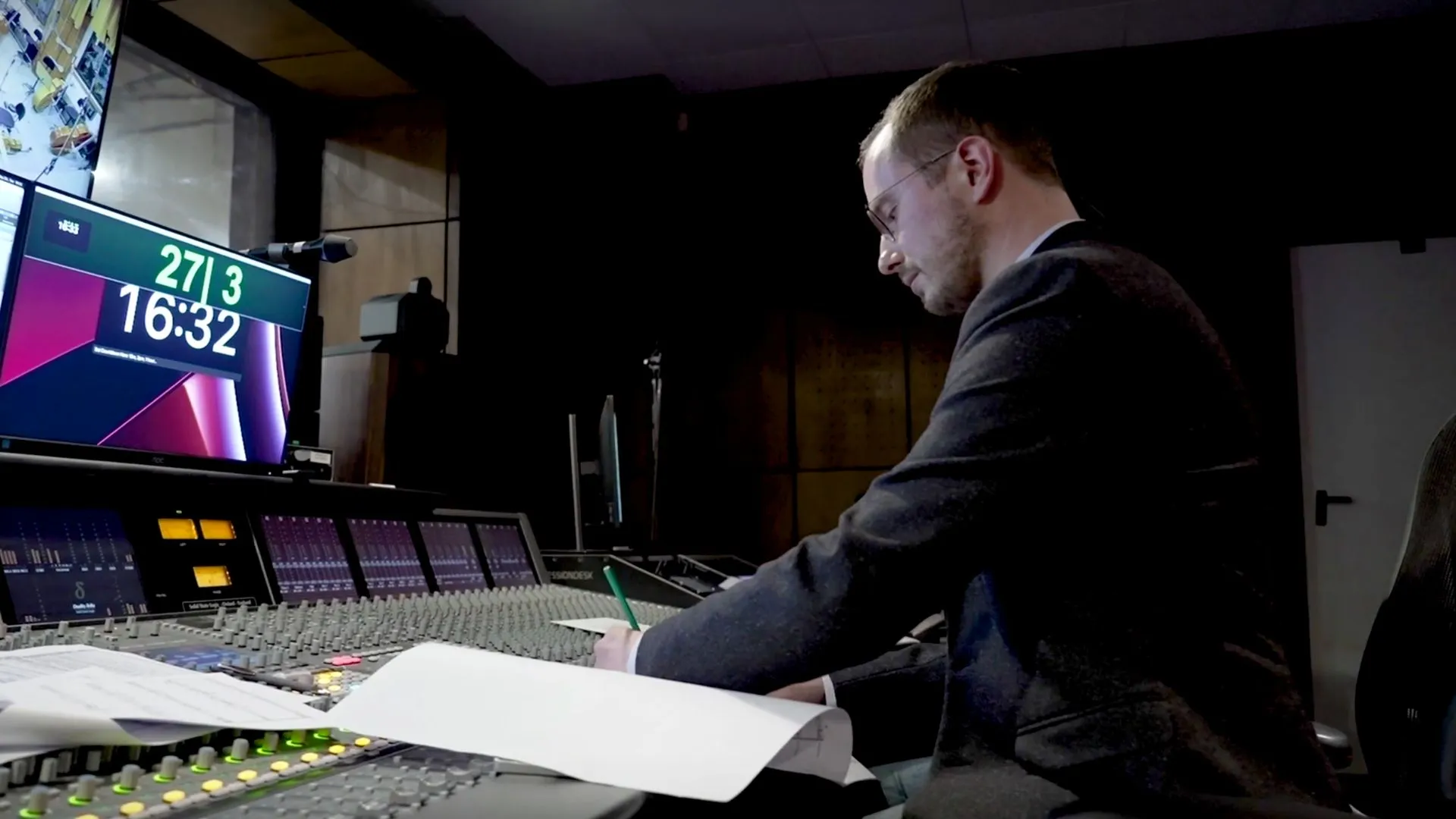
Custom wedding music doesn’t always mean starting from nothing. An arrangement takes a song that already exists, one that already carries deep meaning for the couple, and reshapes it for the musicians and setting of the wedding.
“This can be the right choice when a particular song already has deep meaning for the couple,” Lukas says, though he notes that licensing questions may need to be considered depending on how the arrangement will be used.
A fully original composition starts with no pre-existing melody at all. “The musical theme is created exclusively for the couple, so it does not carry associations with another artist, film or relationship,” he explains.
“It can also be designed from the beginning to work across the ceremony, film and future arrangements.” Some couples pick one path. Others combine both, an original theme alongside an arrangement of a song that matters to them.
Live Performance: From Solo Piano to Full Orchestra
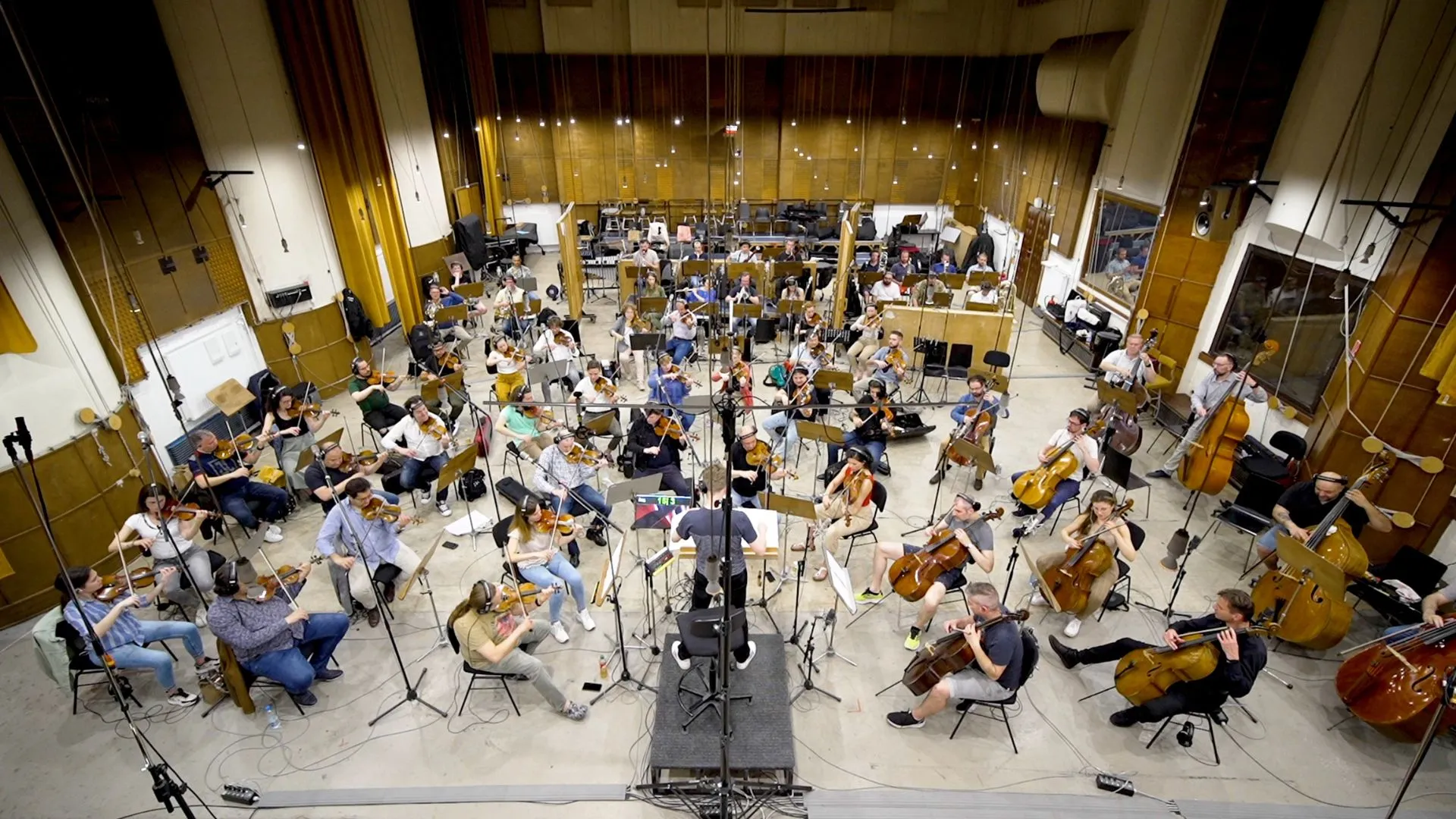
For an intimate ceremony, Lukas points to solo piano as “beautiful and complete in itself,” alongside options like piano and violin, piano and cello, voice and piano, or a string duo.
A string quartet sits in the middle, “a wider emotional and dynamic range while remaining elegant and practical for many venues.” For larger celebrations, the same material can scale up to a chamber ensemble, vocal ensemble, chamber orchestra, or full orchestra.
Importantly, none of this requires Lukas to travel with the musicians. “The composition does not have to be performed by musicians travelling with me,” he says. “I can prepare a fully edited score and individual parts for professional musicians in the wedding location and communicate with the ensemble leader or musical director in advance. Where useful, I can also attend a rehearsal remotely.”
Incorporating Japanese Musical Traditions
For couples marrying in Japan who want to honour Japanese culture through their music, Lukas is careful about how that should be approached. “The most important principle would be to approach Japanese musical elements with respect and specificity, rather than adding an instrument merely as an exotic colour,” he says.
He’d start by asking what connection the couple actually has to the tradition. Such as a family background, a particular region, an instrument one of them has studied, or simply a sound that feels meaningful to them.
From there: “A koto could become an intimate melodic voice or interact with Western strings and piano. Shakuhachi might contribute breath, space and a sense of reflection. Taiko could bring ceremonial energy to a larger celebration, although it would not automatically be appropriate for every venue or every intimate moment.”
He’s also clear that this isn’t something to attempt alone. “Ideally, I would collaborate with specialist Japanese performers so that the writing reflects the character and technique of the instruments rather than treating them as decorative effects.”
For more on blending traditions across a wedding day, read our guide to hybrid Shinto-Western weddings in Japan.
How the Process Works Remotely for a Japan Wedding
The entire creative process can happen without Lukas setting foot in Japan. “We begin with a video conversation and, where useful, a written questionnaire,” he explains. “The planner or wedding filmmaker can also join so that everyone understands where and how the music will be used.”
A first sketch follows, feedback is discussed by call or in writing, and the piece is refined toward its final version.
For the live performance, Lukas prepares the conductor’s or ensemble score, individual musician parts, and clear performance notes. He then communicates directly with the ensemble leader or local music director in Japan about instrumentation, tempo, rehearsal needs, and the venue’s acoustic conditions.
Filmmakers will also receive the audio masters, shorter versions, or stems they need. “This allows the composition to be created internationally while the live performance is realised by excellent musicians based in Japan.”
What to Look for When Hiring Local Musicians in Japan
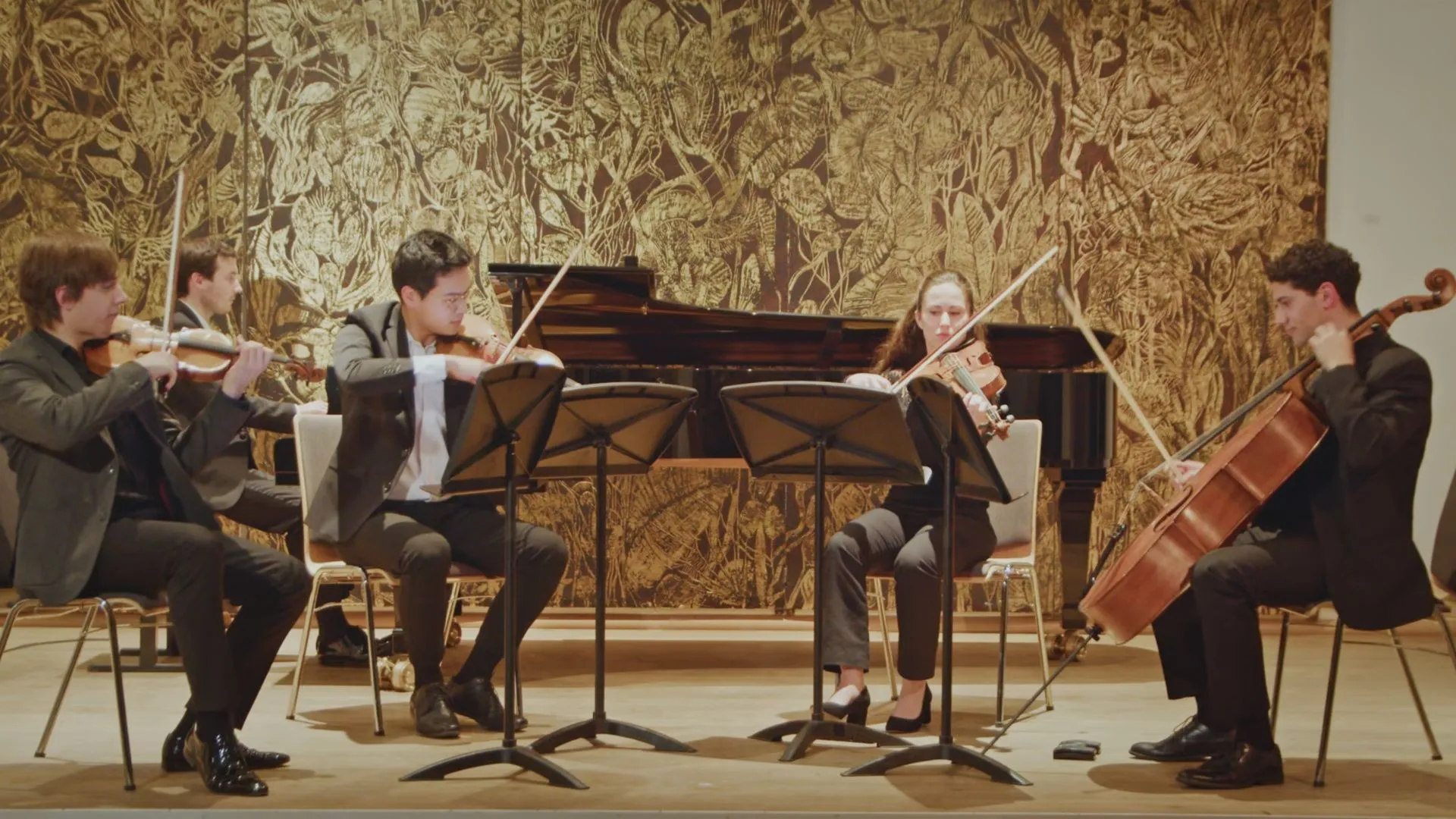
A few things worth confirming, per Lukas: the musicians should be experienced with the type of ensemble required and comfortable reading newly prepared music. “A good performance video of the ensemble in question is often more informative than a long list of repertoire.”
For a small ensemble, appoint one musician as the main point of contact. Confirm how much rehearsal time is included, since even excellent sight-readers benefit from it when the music is new and personal.
And if traditional Japanese instruments are involved, the performers should be specialists who understand the technique, tuning, and notation specific to their instrument.
“Most importantly, the musicians should understand that this is not background entertainment. They are introducing a personal piece to the couple and their families for the first time.”
When to Start, How Long It Takes, and What It Costs
Lukas suggests couples start thinking about custom wedding music once the date, venue, and overall structure of the day are reasonably settled. Roughly two to four months out.
“Starting early gives us time to understand the couple’s story, develop the theme thoughtfully and decide how the music will function throughout the day,” he says, though he’s also worked under tighter timelines when needed.
A typical first draft takes two to six weeks depending on scope, with another one to two weeks for revision, and one to three weeks for recording and mixing depending on ensemble size.
Rough Pricing
Pricing depends on the length of the piece, the size of the ensemble, whether it’s a studio recording or live performance, and the deadline. As a starting guide:
Personal Piano Theme: €900 – €1,500
Signature Duo: €1,800 – €3,500
String Quartet: €3,500 – €6,000
Wedding Film Score: €1,500 – €4,500
For couples worried it’s out of reach, Lukas is candid: “Bespoke music does not necessarily mean hiring a full orchestra. The heart of the commission is the original theme, and that can begin in a very intimate form.”
A solo piano piece with a high-quality recording and score is a complete commission on its own — and can be expanded later into a string quartet, a film arrangement, or an orchestral version when the occasion calls for it.
“It is often better to create one meaningful piece beautifully than to spread the budget across several less personal musical elements.”
The Most Meaningful Work
Asked about the most significant piece he’s written, Lukas shares about his experience writing a full-length opera. A project that brought together dramaturgy, language, character development, and orchestral composition.
“Writing an opera requires musical ideas to evolve over a long dramatic arc,” he says. “A motif may first appear in a very simple form and return much later with an entirely different emotional meaning because the characters and the situation have changed.”
The connection to wedding music, he explains, is really about the same principle at a smaller scale: “A short personal theme can accompany a couple at several moments and gather new meaning each time it returns.”
Closing
A piece of music written for one couple, and no one else, is probably one of the rarest wedding details that doesn’t end when the day does. It can be played again at an anniversary, passed down, returned to for years afterward.
If that’s something you’d like for your own wedding, in Japan or anywhere else, Dr. Lukas Schepp composes custom wedding music remotely and coordinates performance with local musicians wherever you’re getting married.
Explore his work and start a conversation at lukasschepp.com.
About the Contributor
Dr. Lukas Schepp is a composer specialising in custom wedding music and personalised wedding songs (personalized wedding songs) for couples internationally, with a background in film scoring and opera composition. He works remotely with couples worldwide, coordinating live performance with local musicians for weddings held anywhere — including Japan.

Timothy is a web builder, marketing specialist and Japan travel writer with a deep passion for Japan and its culture. He started Get Married in Japan to help international couples navigate Japan's wedding traditions — and to connect them with the people who know it best. He also writes first-hand travel guides to lesser-known corners of Japan at Nihon Travel Guide.
Connect on LinkedIn →