
TL;DR – Shugi Bukuro Wedding Money Etiquette
- – Goshugi : refers to the monetary gift itself given to the wedding couple.
- – Shugi Bukuro: Decorative envelope for monetary wedding gifts in Japan — symbolizes respect and joy.
- – Key Rules Odd amounts (e.g., 30K, 50K yen), new bills, tight mizuhiki knots (musubi kiri/awaji).
- – Preparation: Write amount/name on nakabukuro; use fukusa to protect.
- – Presentation: Hand to staff upon arrival (right side in fukusa).
- – Avoid: Even amounts, bending envelope, wrong knots (chōchō musubi).
So you have just been invited to a traditional Japanese Wedding and you remember giving monetary gifts to couples of previous western weddings that you have attended. You are about to do the same but you remember that things are done differently in Japan and decide to check some online guides.
If that is you, you have come to the right place as we are going to walk you through the proper Japanese Wedding Money Gifting Etiquette and make sure you attend that Japanese Wedding without causing any faux pas.
- What is Goshugi? (ご祝儀)
- What is Shugi bukuro? (祝儀袋)
- Cultural Significance and Respect
- How to choose the right Shugi Bukuro?
- Proper Etiquette for Preparing the Gift
- How to Present the Shugi Bukuro?
- Shugi Bukuro Common Mistakes to Avoid
- What if you make mistakes as a foreigner?
- Shūgi-bukuro is Important to Show Your Feeling of Celebration
What is Goshugi? (ご祝儀)
Goshugi (ご祝儀) refers to the monetary gift itself — the cash given to the couple as a congratulatory present at a wedding (or other celebrations like births or housewarmings). It is usually presented in a Shugi bukuro (祝儀袋). It represents your congratulations and support of the newly wed couple.
It is the standard and most common form of wedding gift in Japan, compared to gifting physical items like household goods in Western weddings. In Western weddings couples tend to have a registry for wedding gifts, however this practice is extremely rare in Japanese wedding culture. With the exception being a more modern mixed-cultural wedding.
What is Shugi bukuro? (祝儀袋)
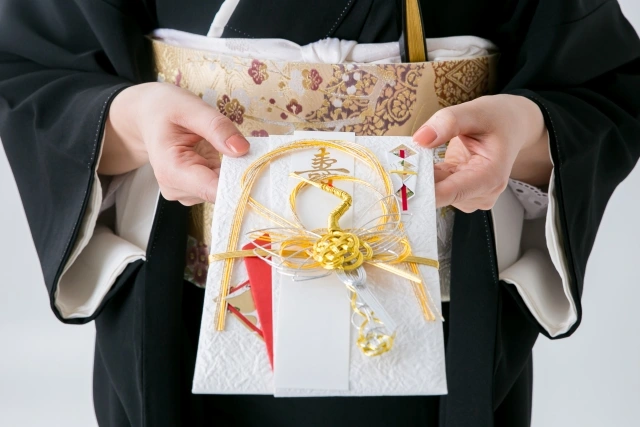
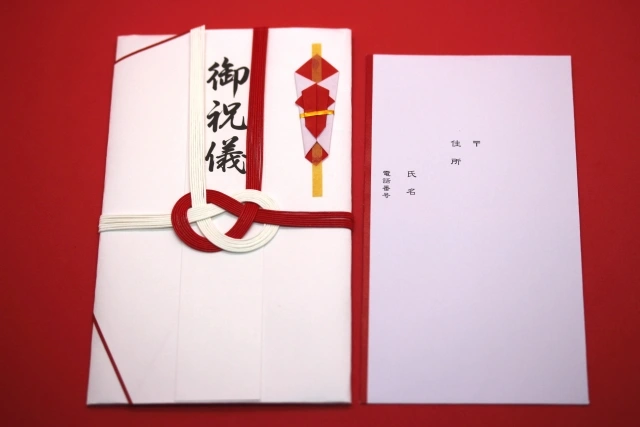
In Japanese culture, it is very common to give money packs as a gift on special occasions, such as giving birth, promotion, or entering school. This is always done using a Shugi bukuro (祝儀袋) – a decorative envelope for monetary gifts.
Especially at celebrations like weddings, we have a white hard envelope that is specifically prepared for the event. It has a few elements to note:
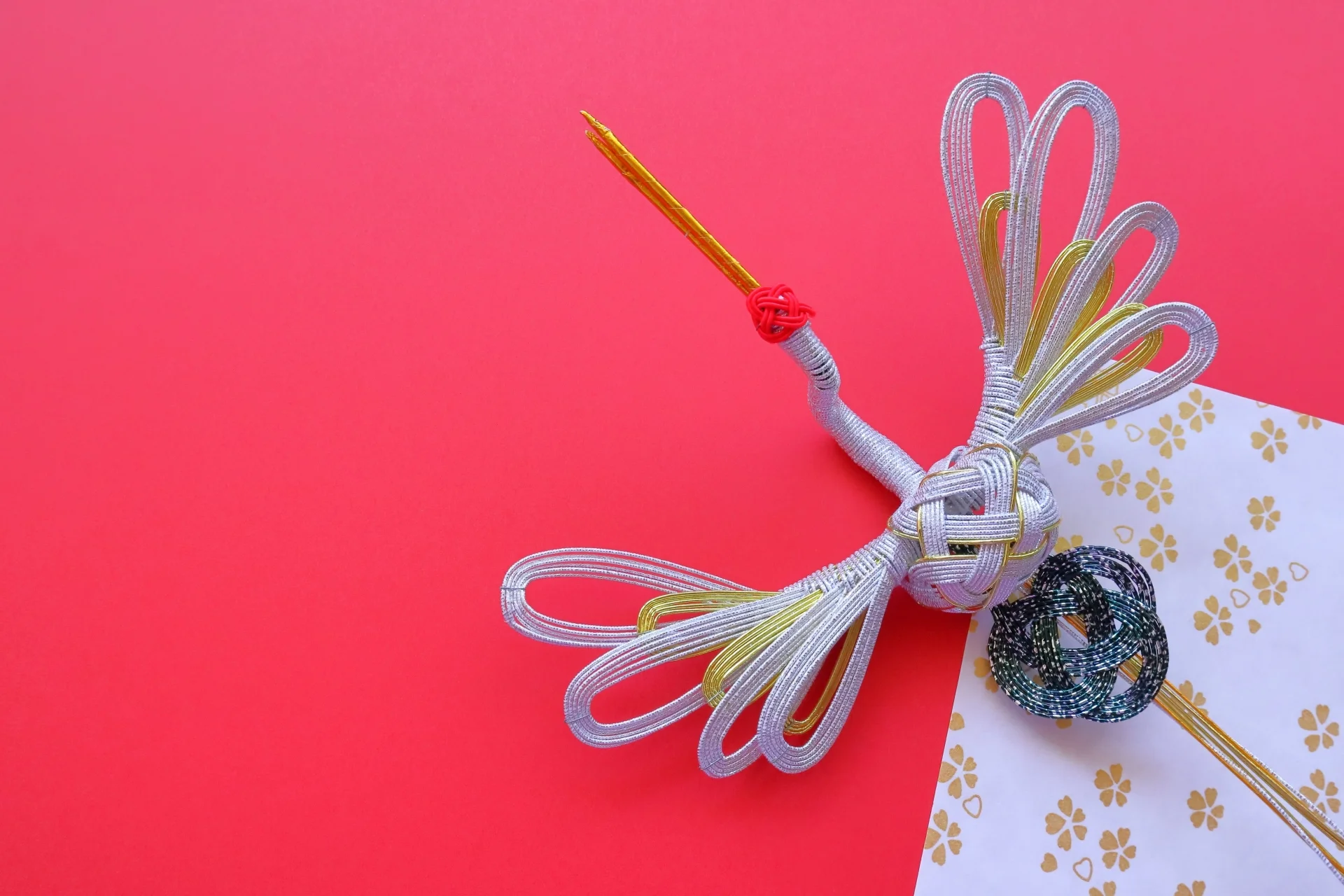
Mizuhiki(水引き): A decorative cord made from washi paper
Nakabukuro(中袋): A smaller envelope inside the Shūgi-bukuro. You must write the amount of money you enclosed
Cultural Significance and Respect
The use of a Shugi Bukuro is not merely about enclosing money but also about conveying respect and sincerity. The envelope’s design and presentation symbolize the depth of the relationship and the joy of the occasion.
Preparing it correctly shows respect to the bride and the groom, so let’s learn what needs to be done!
How to choose the right Shugi Bukuro?
We have different shūgi-bukuro for different happy occasions. For weddings, we should select an envelope with a certain mizuhiki and also change the shūgi-bukuro depending on the amount of money you prepared.
Mizuhiki(水引き)
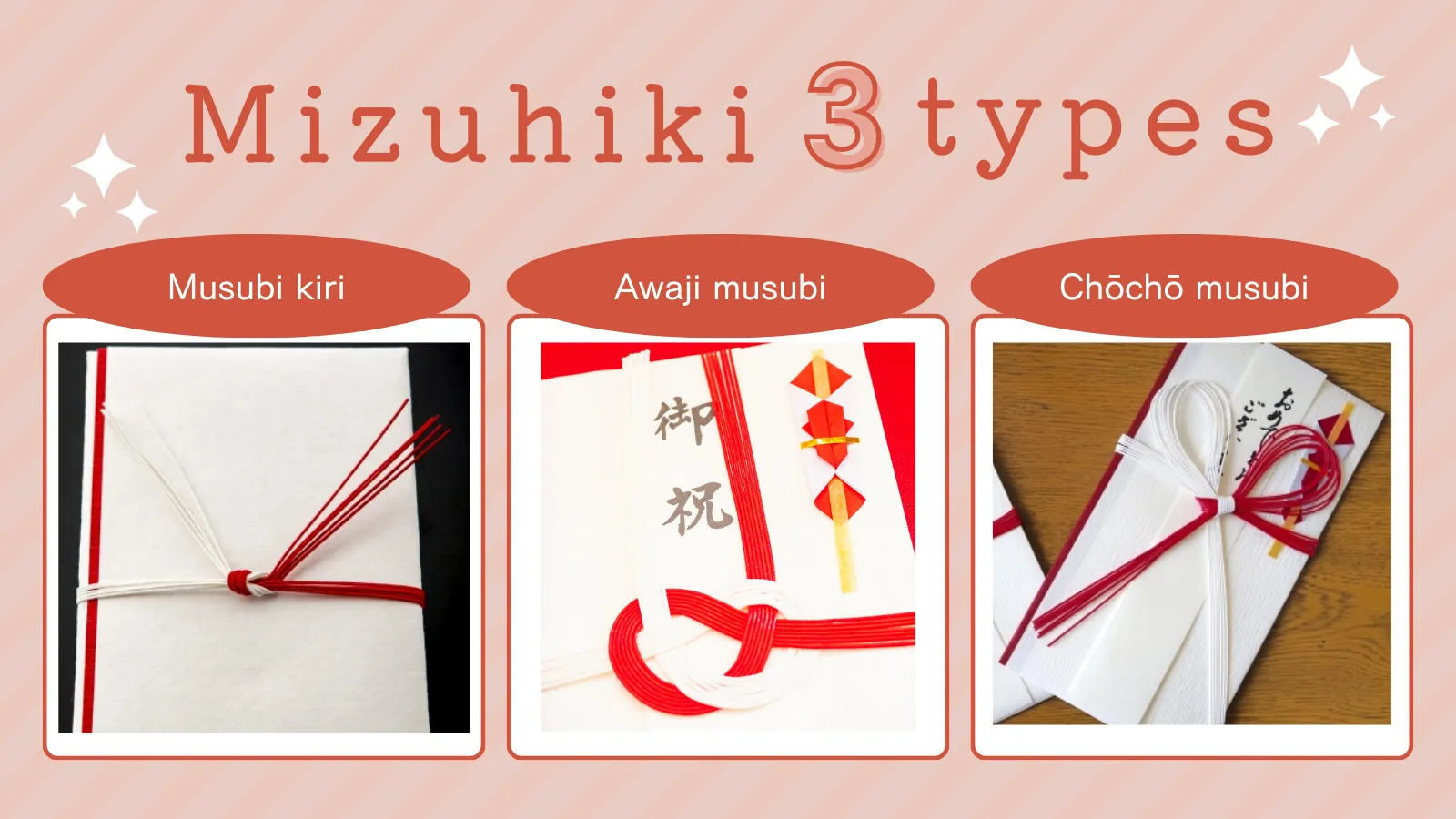
Shūgi-bukuro features a decorative knot called Mizuhiki(水引き). We have shūgi-bukuro that has different mizuhiki, and it’s appropriate to use at weddings when it is tied tightly.
Here are some common mizuhiki you will find:
Musubi kiri(結び切り): This is the most common form of ribbon for marriage. The knot signifies that “once tied, it’s not come undone”, symbolizing a strong and lasting bond.
Awaji musubi(あわじ結び): This is also suitable for weddings. The ribbon is loose, but the know will tighten when pulled.
Chōchō musubi(蝶々結び): This is not suitable for weddings because it can be loosened. It is not appropriate for one-time life events like marriage but is suitable for recurring celebrations such as giving birth.
Amount of money
If giving a large amount, you should choose a more gorgeous shūgi-bukuro. If the amount is not that much, we should use a simpler Shugi Bukuro. The amount should be determined by your relationship with your bride and/or bribe.
Generally, it’s common to give 30K yen, but it also depends on how much you would like to give to the bride and groom.
Here are general guidelines of how much to give based on your relationship with the couples:
| Amount of Money | Detail |
| 10K yen | Occasion: When you are unable to attend the wedding What kind of Shugi Bukuro: Choose the one that has 10 lines on mizuhiki |
| 20K-30K yen: | Occasion: For friends or colleagues. What kind of Shugi Bukuro: Choose the one with silver/gold or red/white mizuhiki with some simple ornaments on the pack. |
| 50K yen | Occasion: If you are joining the marriage with your partner What kind of Shugi Bukuro: choose the one with Japanese paper (和紙), and choose the one that looks even more gorgeous |
| 50K-100K yen | Occasion: If the marriage is between your relatives or your siblings. What kind of Shugi Bukuro: you should choose shūgi-bukuro that has cranes, turtles, or pine on it |
Proper Etiquette for Preparing the Gift
Here are some etiquette to remember when you prepare the Shugi Bukuro.
When preparing a Shugi Bukuro, attention to detail is crucial as it reflects your sincerity and respect for the couple. Every element, from the envelope choice to the way the money is inserted, carries cultural significance. Missteps in preparation could unintentionally convey the wrong message, so it’s important to follow proper etiquette carefully. Below are key considerations to ensure your gift is appropriate and well-received.
1) Give an odd-numbered amount
Avoid giving amounts such as 10K, 20K, or 40K. Even numbers can “split” nicely into two and we do not want that to happen to the bride and the groom.
2) Write the amount, address, and your name on naka bukuro(中袋)
Naka bukuro is the actual envelope to put money in. On the front, write the amount you provided. On the back, write the address and the name.
This helps the bride and the groom to check and total the amount they received.
3) Use new bills
You can receive new bills from banks or ATMs. New bills symbolize a fresh start and show respect for the occasion.
4) Do not bend the Shūgi-bukuro
Similar to using new bills, we want them to start their new life fresh without any bends in their life.
We use a thing called fukusa(袱紗)to protect from bending. If you do not have a fukusa with you, you can replace it with a handkerchief.
How to Present the Shugi Bukuro?
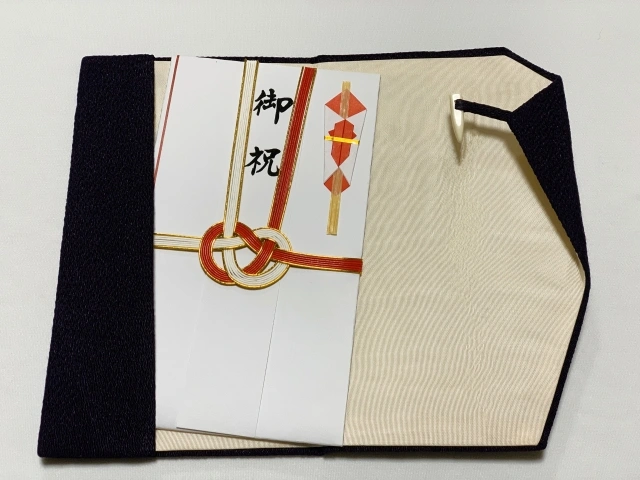
Here’s how to properly present the Shugi Bukuro to the bride and the broom in 2 steps. Let’s make sure that you can pass it smoothly.
Fold inside the fukusa
Make sure that you place the shūgi-bukuro from the right side of the fukusa, and keep it in a bag. Do not bend it or fold it.
Present the Shugi Bukuro upon arrival at the venue
Once you arrive, there will be an entrance counter where you tell your name to check in. Hand the shūgi-bukuro to the designated staff at the venue entrance.
Shugi Bukuro Common Mistakes to Avoid
Even Japanese people sometimes make mistakes with shūgi-bukuro etiquette. Be sure to review these common errors before presenting yours:
- Forgetting to include the money – always check the nakabukuro (inner envelope)
- Writing mistakes – if you make an error in the amount or your name, you may need to buy a new shūgi-bukuro. It’s best to draft it first before writing
- Placing the shūgi-bukuro into fukusa incorrectly – Inserting it from the left signifies a funeral. Always place it from the right side
What if you make mistakes as a foreigner?
What happens if you were to make a mistake as a foreigner? Generally Japanese will forgive small etiquette mistakes like using the wrong envelope. Especially if the amount and your intentions are sincere and you’re not doing it on purpose. They do understand that foreign guests may not have perfect knowledge of every rule.
That being said, it is incredibility respectful and Japanese appreciate it when foreign guests make an effort. If possible, try to ask a Japanese friend or co-worker for guidance as they can see and appreciate the effort made to follow the local customs.
Shūgi-bukuro is Important to Show Your Feeling of Celebration
Although Shugi Bukuro is just a money pack, it has many customs to show that you are celebrating sincerely.
Refer to this guide to ensure proper etiquette and best wishes for a smooth and joyous wedding!
FAQ – Shugi Bukuro Wedding Money Etiquette
1) What is Goshugi ?
Goshugi (ご祝儀) refers to the monetary gift itself given to the couple and is usually presented in a Shugi bukuro (祝儀袋).
2) What is a Shugi Bukuro?
A special decorative envelope for giving money at Japanese weddings and celebrations — conveys sincerity and respect.
3) How much money should I give in a Shugi Bukuro for a wedding?
Common: 30K yen (friends/colleagues), 50K (with partner), 50K–100K (relatives). Always odd numbers.
4) What type of mizuhiki knot is best for weddings?
Musubi kiri or awaji musubi — tight knots symbolizing a lasting bond. Avoid chōchō musubi (loose for recurring events).
5) Why must wedding gift amounts be odd in Japan?
Even numbers can “split” easily, implying separation — odd numbers symbolize unity.
6) Do I need new bills for Shugi Bukuro?
Yes — crisp, new bills represent a fresh start for the couple.
7) How do I write on the Shugi Bukuro?
Front of nakabukuro: Amount. Back: Your name/address. Draft first to avoid errors.
8) What is a fukusa and how do I use it?
A protective cloth/handkerchief — fold shūgi-bukuro inside from the right side (left is for funerals).
9) Common mistakes with shūgi-bukuro?
Forgetting money, writing errors, bending envelope, wrong fukusa side, or even amounts.