
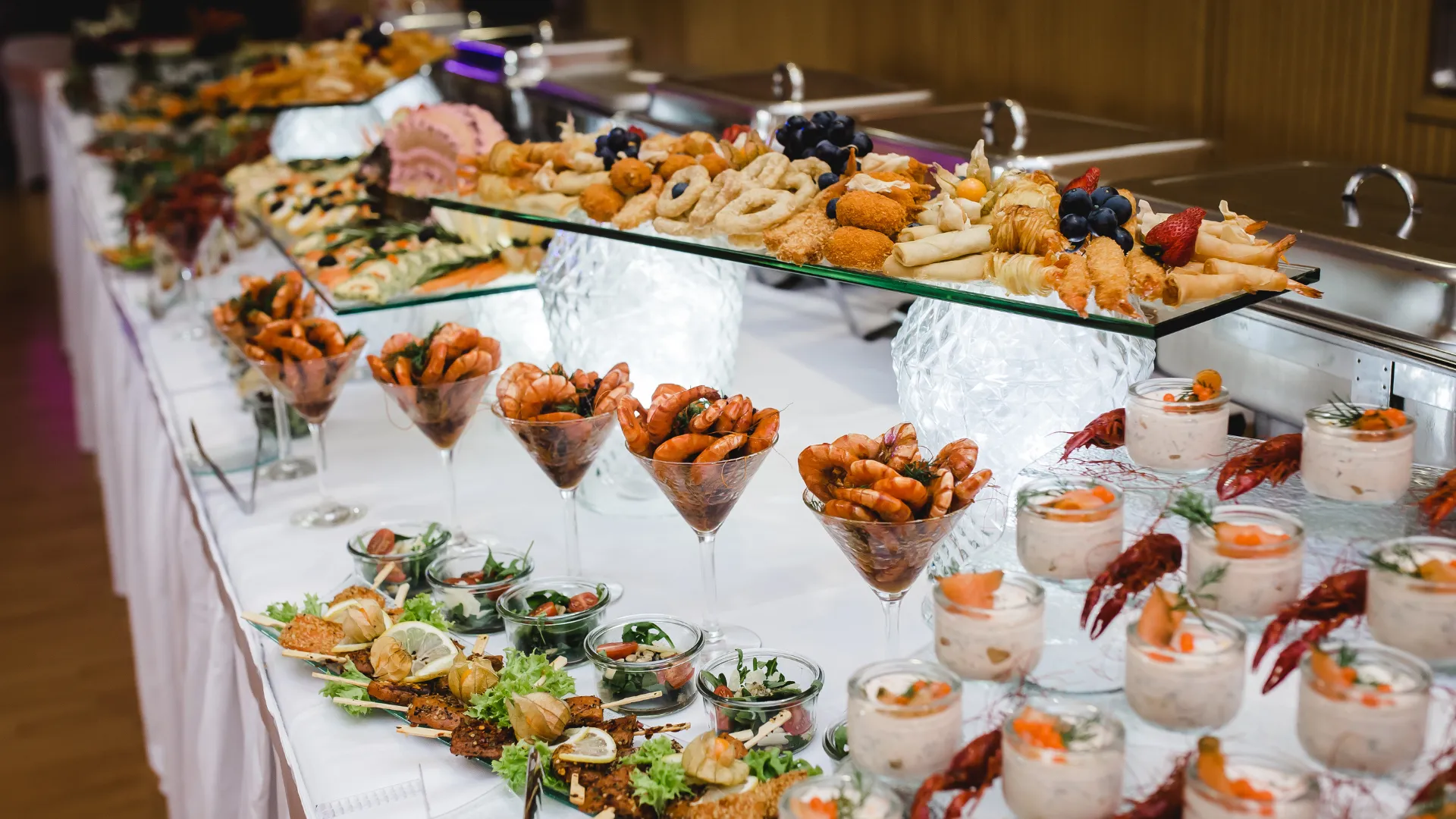
Japanese Wedding Food & Menus in 2026
A quick overview if you’re skimming this guide for kaiseki, fusion menus, sake ceremonies, and practical tips for international couples.
- MOST POPULAR CHOICE French-Japanese fusion is the most popular menu choice for destination weddings in 2026 — it’s tempo-friendly, easier to budget, and more comfortable for international palates than traditional kaiseki.
- TIMING WARNING Kaiseki’s slow multi-course service can eat into your outfit change schedule — ask your planner whether your menu leaves enough time for your planned oiro-naoshi before signing.
- Sake Ceremony Timing The kagami-biraki sake barrel ceremony works best at the opening of the reception, flowing straight into the kanpai toast — or after the oiro-naoshi when the bride’s iro-uchikake is at its most spectacular.
- DIETARY RESTRICTIONS Vegetarian, vegan, and halal requirements are genuinely difficult at most Japanese venues — if guests have strict dietary needs, make the venue’s ability to handle them your number one priority during venue selection.
- BRIDE-FRIENDLY TIP Ask your venue to pre-cut the main course into bite-sized pieces so the bride can eat between photo sessions — one of the most practical adjustments a couple can make for a long day in kimono.
Wako is a professional hairdresser with over 15 years specialising in traditional Japanese wedding hairstyles and kimono dressing. She brings deep firsthand expertise in Shinto ceremony etiquette, bridal attire, and Japan's wedding culture and trends.
Follow on Instagram →Planning a wedding in Japan is an exercise in artistry. Every detail — from the lacquered chopstick rests on the table to the cedar cups used for the ceremonial toast — has been considered with the same careful intention that goes into selecting a kimono or composing a floral arrangement.
Yet for many international couples, the food and beverage experience at a Japanese wedding reception remains one of the most exciting and unfamiliar frontiers they will encounter. With so many choices, rituals, and cultural nuances to navigate, knowing where to begin can feel overwhelming.
To find out more about Japanese Wedding Food & Menus, I interviewed Wako Koshigai, who has 15 years of experience as a professional hairdresser specialising in traditional Japanese wedding hairstyles and kimono dressing.
For international couples planning a destination wedding in Japan in 2026, food is one of the most underestimated decisions they will make. What follows is Wako’s candid, experience-driven guide to navigating it well.
- Section 1: Kaiseki vs. French-Japanese Fusion — The Decision That Shapes Your Day
- Section 2: The Sake Experience — Ceremonies, Rituals, and the Full Drinks Picture
- Section 3: The Cake Question — and Japan’s More Spectacular Alternatives
- Section 4: 2026 Trends — Interactive Food as Entertainment
- Section 5: Dietary Requirements — The Honest Reality
- Section 6: Making International Guests Feel at Home at the Table
- Section 7: Wako’s Stylist Pro-Tips for the Bride
- Section 8: Planning Timeline and Remote Couples
- Closing: Food as a Cultural Performance
Section 1: Kaiseki vs. French-Japanese Fusion — The Decision That Shapes Your Day
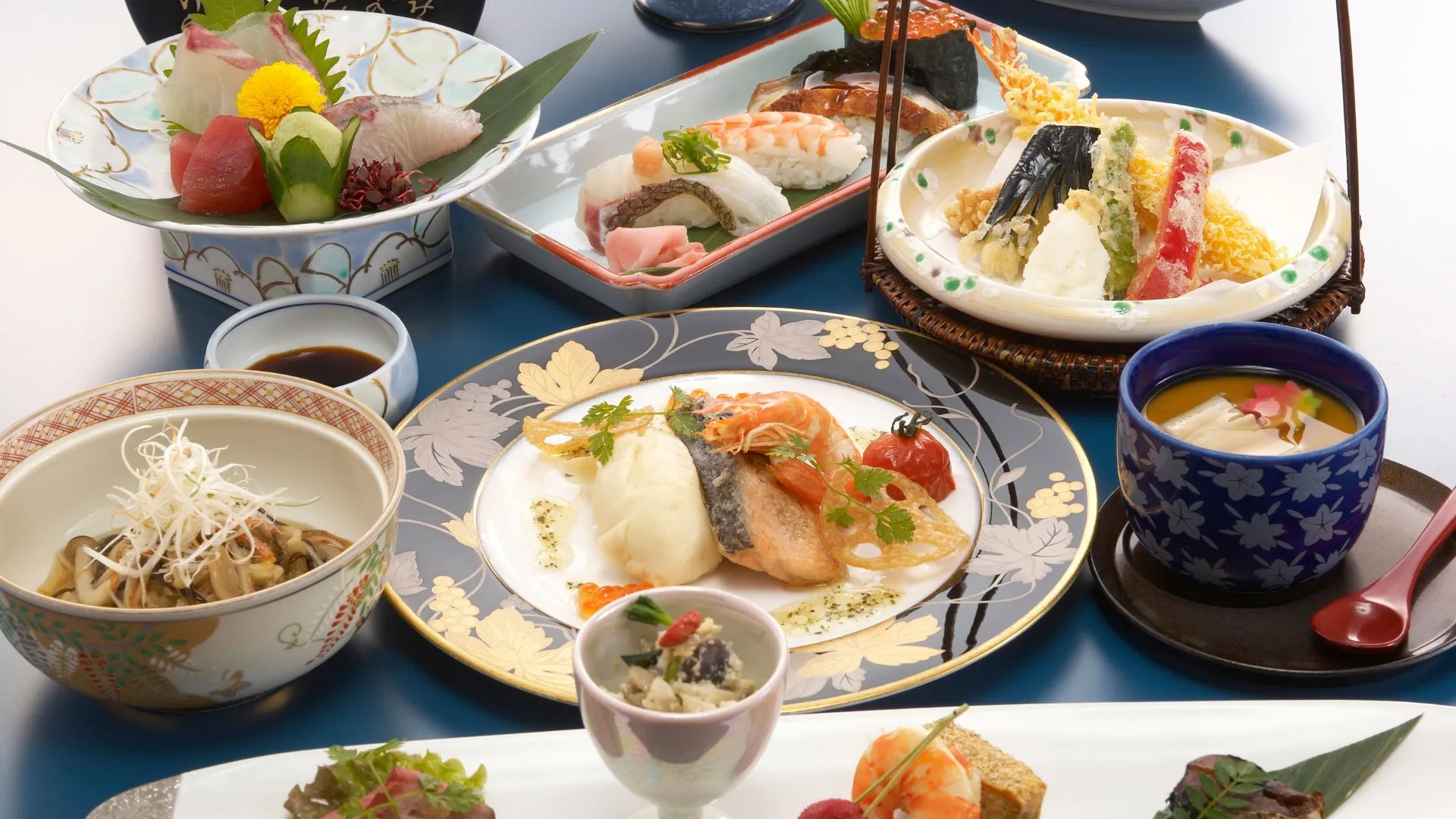
The Case for Authentic Kaiseki
Authentic kaiseki is Japan’s most elevated culinary tradition — a multi-course meal built around the concept of Shun, or seasonality, in which every ingredient is chosen at the precise peak of its natural quality. It is served on artistic ceramics that are themselves considered part of the dining experience, each vessel chosen to complement the colour and texture of what it holds.
For international guests, a kaiseki wedding menu is the most immersive way to encounter Japanese culinary philosophy, a meal that tells the story of the country’s relationship with nature, craft, and hospitality through every small, considered plate.
But kaiseki comes with a dimension that most couples do not anticipate when they see it described in a venue brochure. It is a material-driven cuisine, meaning the price is directly dictated by the quality of the raw ingredients — the grade of the fish, the brand of the Wagyu beef, the rarity of the seasonal vegetable.
Many small courses also mean more labour for kitchen and service staff, and the use of expensive, specialised ceramics that are factored into the final invoice. While base prices for both kaiseki and French-Japanese fusion typically start between ¥15,000 and ¥25,000 per person, the potential for kaiseki costs to escalate significantly above that starting point is considerably higher.
There is also a dimension that only someone with Wako’s vantage point would think to mention. “Kaiseki takes a long time to eat,” she explains. “Because it consists of many small, delicate plates, the service is naturally slower.
I always ask my brides: how many times do you want to change your outfit? If you are planning two oiro-naoshi — outfit changes — a slow kaiseki meal might mean you spend almost the entire reception in the dressing room instead of with your guests.”
It is the kind of observation that no caterer would ever make, and it is the most practical argument for pausing before choosing kaiseki purely on aesthetic grounds.
Why French-Japanese Fusion Leads in 2026
French-Japanese fusion is the most popular menu choice for destination weddings in Japan in 2026, and the reasons are both practical and emotional. The format combines sophisticated French culinary technique with distinctly Japanese ingredients — miso glazes, yuzu citrus, dashi broth — to create a meal that feels simultaneously familiar and culturally specific.
It is typically served Ohashi-style, meaning the portions are sized and presented so that guests of any nationality can eat comfortably with chopsticks, removing the anxiety that some international diners feel when faced with a traditional kaiseki spread.
From a scheduling perspective, fusion is what Wako calls “tempo-friendly.” The service pace can be adjusted to match the couple’s programme, creating space for the photographer, for speeches, and for the oiro-naoshi without the meal falling behind. “When you are choosing your menu,” she advises, “don’t just look at the price.
Ask your planner: will this menu allow me enough time for my outfit changes and photos?
Choosing a style that matches your desired pace is the secret to a stress-free day.” It is a question that most couples never think to ask.
If you are planning two changes — from a kimono to a wedding dress, and then to a party dress — a kaiseki menu may mean you spend almost the entire reception in the dressing room rather than with your guests. French-Japanese fusion is far more tempo-friendly, allowing the venue to adjust the pace of service to match your programme.
To understand how outfit changes work within the full ceremony and reception flow, read our complete guide to Shinto wedding ceremonies in Japan.
Section 2: The Sake Experience — Ceremonies, Rituals, and the Full Drinks Picture

The Kagami-biraki (鏡開き) — Opening the Way to Fortune
The kagami-biraki — the sake cask breaking ceremony — is one of the most photographed and most memorable moments of a Japanese wedding reception, and its placement within the day’s programme matters enormously.
The ceremony involves breaking open the lid of a sake barrel with wooden mallets called kizuchi, symbolising the opening of the way to good fortune. The freshly opened sake is then ladled into traditional cedar cups called masu and shared among guests.
The most common and seamless placement is at the very opening of the reception. After the couple makes their grand entrance and delivers their opening remarks, they perform the kagami-biraki together, and the sake is used immediately for the kanpai toast, creating a flowing celebratory moment that feels both traditional and theatrical.
An alternative timing that Wako particularly favours places the ceremony after the oiro-naoshi outfit change, when the bride has changed into her vibrant iro-uchikake silk kimono.
The ceremony is also an opportunity for family involvement — both sets of parents typically join the couple at the barrel to symbolise the bonding of the two families, and close friends or honoured guests are often invited to join the count, a moment that reliably generates energy in the room.
For a deeper dive into the history, meaning, and full step-by-step process of the sake barrel ceremony, read our dedicated guide to the kagamibiraki sake ceremony.
Beyond Sake — The Full Reception Drinks Experience

Japanese wedding receptions operate on an all-you-can-drink system called nomihodai, meaning that once the toast is made, guests can freely order from a broad selection of beverages throughout the evening.
Beer is, as Wako describes it, the “king” of Japanese weddings — bottled beer is traditional for pouring and sharing between guests, though many modern couples now offer premium Japanese craft beers as an elevated alternative.
Highballs — Japanese whiskey with soda — are enormously popular, and Japanese whisky’s global reputation makes it a reliable highlight for international guests.
Red and white wine, alongside easy-drinking cocktails such as cassis orange or gin and tonic, round out the standard offering.
Non-Alcoholic Options
The non-alcoholic offering has been dramatically elevated in 2026. Premium cold-brew green tea served in wine glasses — with complex flavour profiles of umami, sweetness, and bitterness — pairs as thoughtfully with a kaiseki course as any sake.
Refreshing ume (Japanese plum) and yuzu citrus drinks function as sophisticated palate cleansers between courses. For the kanpai itself, high-quality non-alcoholic sparkling wine or cider ensures that every guest, regardless of their drinking preferences, can raise a bubbling glass and feel fully part of the celebration.
Some traditional venues also offer amazake — a sweet fermented rice drink whose non-alcoholic version is sometimes called “drinking IV” for its nourishing qualities — as a culturally distinctive option for guests seeking something deeply rooted in Japanese tradition.
For a complete picture of how food costs sit within your overall wedding spend, read our Japan destination wedding cost guide.
Section 3: The Cake Question — and Japan’s More Spectacular Alternatives
The wedding cake cutting ceremony is popular in Japan — most venues will offer a fresh wedding cake as part of the reception programme — but it is by no means mandatory, and in 2026 a growing number of international couples are choosing Japanese alternatives that create a considerably larger visual impact.
Three options stand out for their combination of theatrical effect and cultural authenticity:
Chirashi-Sushi ちらし寿司
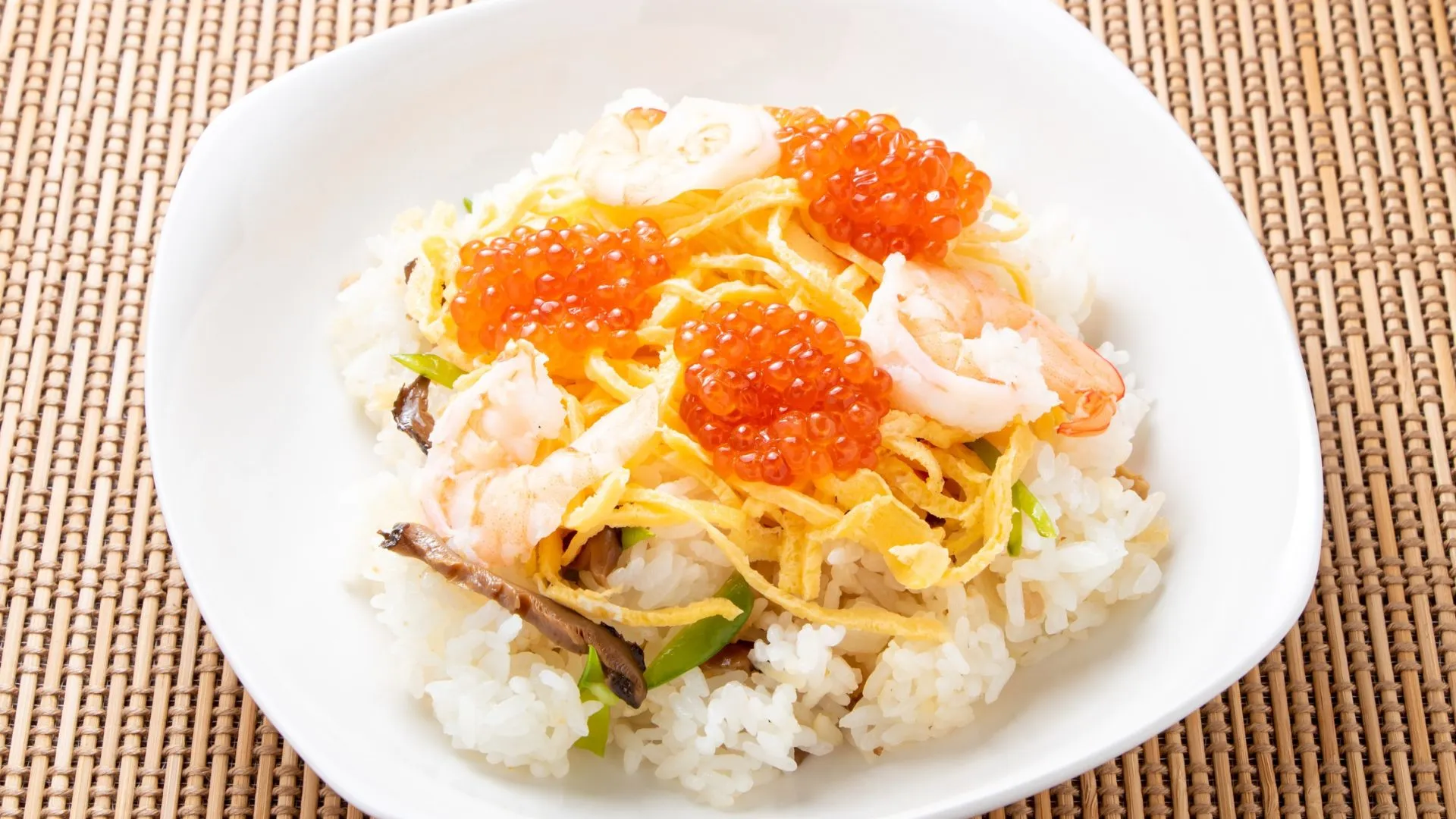
The chirashi-sushi (ちらし寿司) “cake” involves a large, beautifully decorated base of vinegared rice topped with colourful sashimi, gold leaf, and salmon roe. Rather than a cake knife, the couple uses a large wooden rice paddle called a shamoji, or a decorative blade, to “cut” into it. The ceremony is practical as well as theatrical — the chirashi-sushi can be served as the final rice course of the meal.
Mitarashi Dango みたらし団子
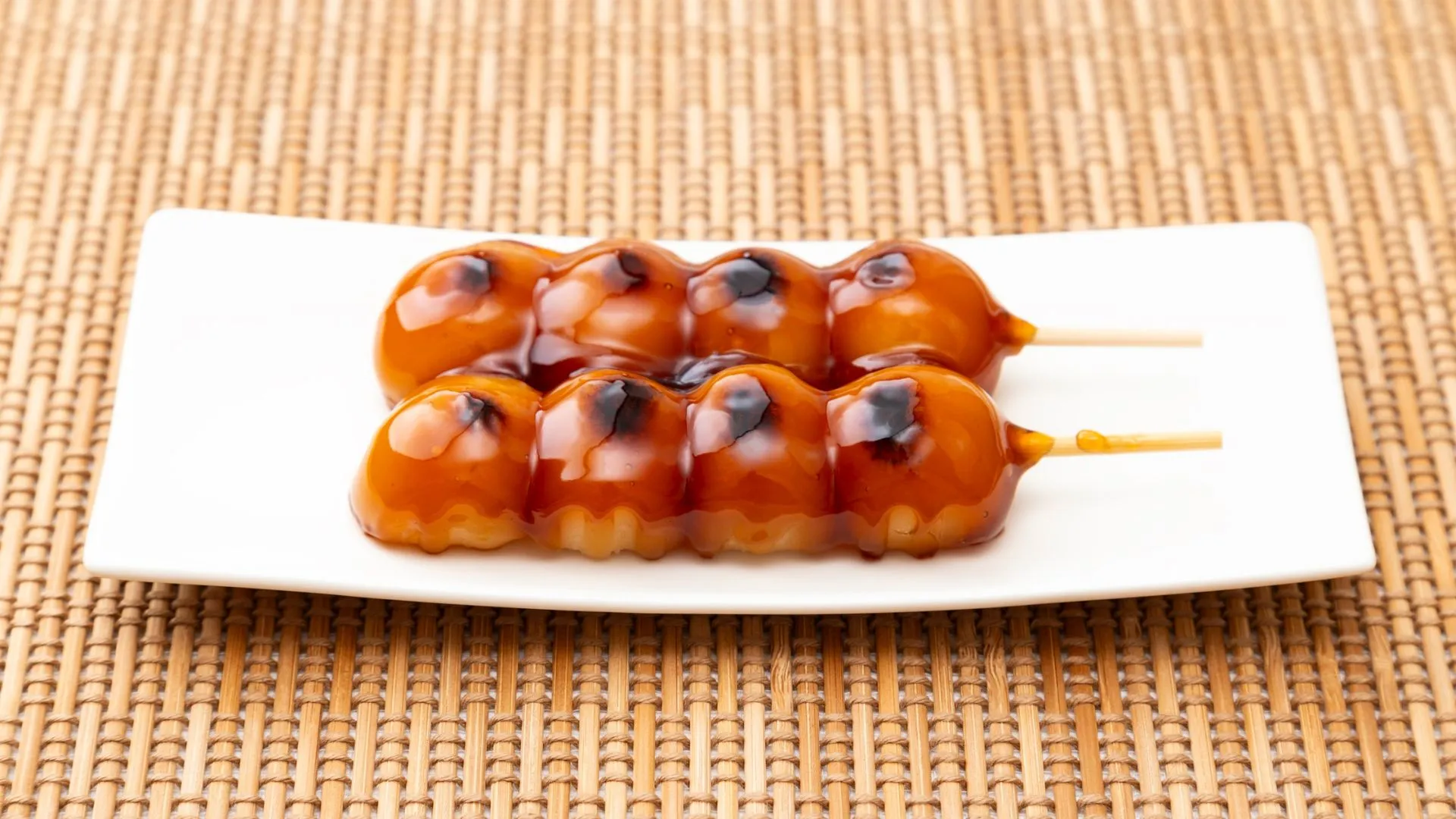
The mitarashi dango ( みたらし団子) sauce pouring — known as taredare — takes a different approach: instead of cutting, the couple pours a glossy sweet-savoury soy glaze over a tower of white dango rice dumplings, creating a moment that is exceptionally photogenic and highly suited to video-first social media content.
Mochi-tsuki Ceremony 餅つき式
The Mochi-tsuki Ceremony (餅つき式) is the most participatory of the three — traditional rice pounding with large wooden mallets, performed by the couple and their guests together. It is loud, high-energy, and creates what Wako describes as an extraordinary sense of collective unity in the room.
Wako’s styling perspective on this decision is characteristically specific. “If you are wearing a vibrant iro-uchikake, a traditional Western cake can sometimes look a little out of place,” she observes. “But performing a sushi cutting or mochi pounding while dressed in traditional silk creates a stunning, cohesive visual that looks incredible in photos.”
Her advice for couples who choose a savoury alternative for the main cutting ceremony is to pair it with a wagashi dessert buffet later in the reception — featuring Japanese sweets like matcha mousse or yuzu jellies — so that guests’ sweet tooth is still satisfied while the entertainment remains culturally coherent throughout.
Performing a chirashi-sushi cutting or a mochi-tsuki pounding while dressed in traditional silk, on the other hand, creates a cohesive visual that feels completely intentional — and looks extraordinary in photographs. The ceremony becomes an extension of the attire, not a contrast to it.
For expert advice on which attire works best with each ceremony style, read our guide to choosing between a Shiromuku, Iro-uchikake, and a modern wedding dress.
Section 4: 2026 Trends — Interactive Food as Entertainment
Two of the strongest food trends in Japanese destination weddings for 2026 share a common quality: they turn eating into a spectacle.
Live Craft Stations
Live craft stations, where a professional chef prepares sushi or fries tempura in front of guests during the reception, have become one of the most popular additions to a modern wedding programme.
Wako is particularly enthusiastic about the timing logic behind them. During the oiro-naoshi — the bride’s outfit change — there is a natural lull in the programme when guests would otherwise simply be waiting.
A live cooking station fills that moment with genuine entertainment, ensuring the energy in the room never drops.
Wagashi Dessert Buffet
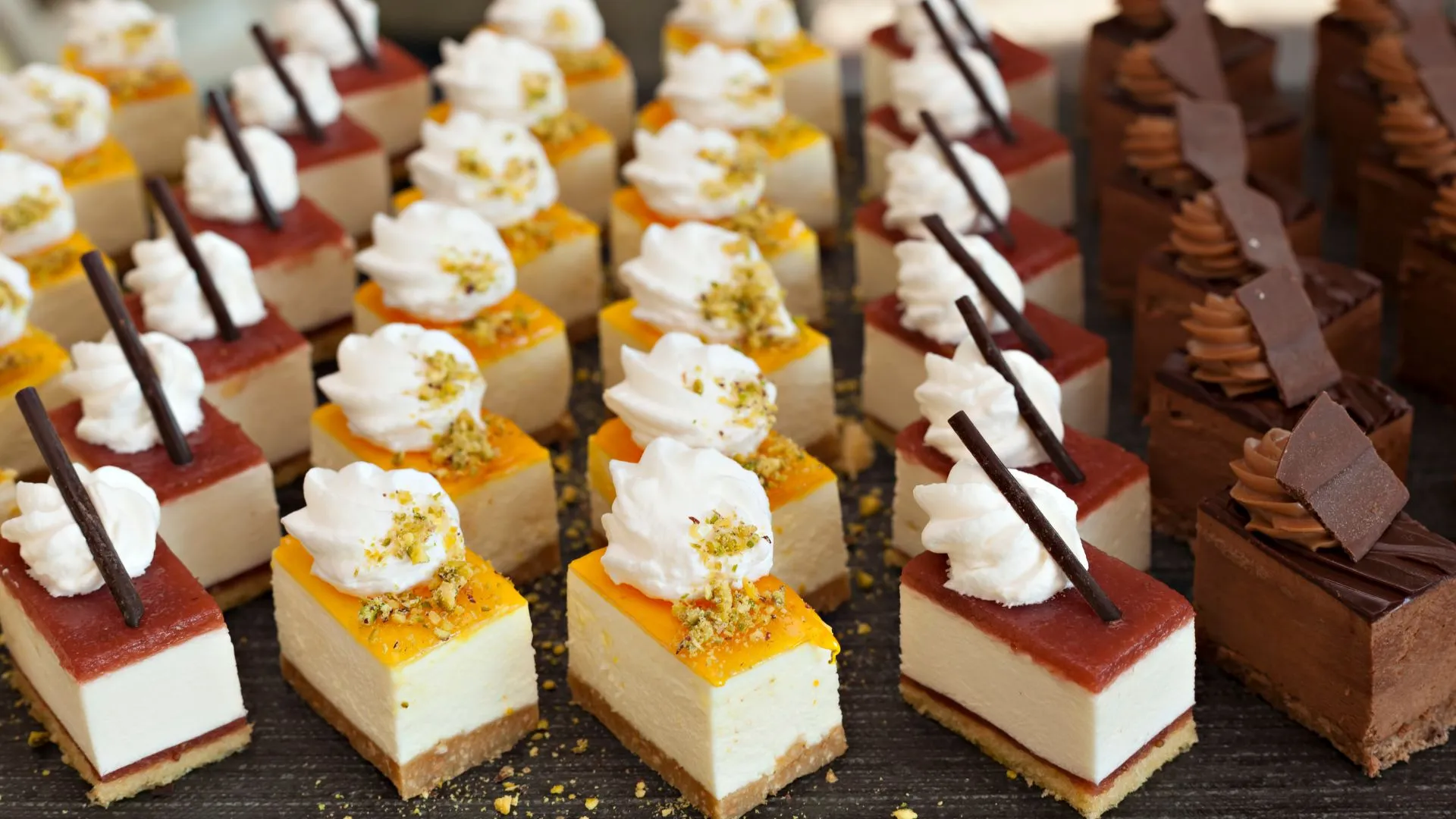
The wagashi dessert buffet is the other standout trend — a spread featuring not only Western-style cake but Japanese sweets including matcha mousse, warabi-mochi (a soft, translucent jelly dusted with kinako soy flour), and yuzu jellies, all served in small portions designed for exploration rather than full servings.
The buffet format allows guests of varying appetites and adventurousness to try flavours at their own pace, turning the dessert course into a guided tasting experience rather than a single plate placed in front of them.
Section 5: Dietary Requirements — The Honest Reality
On the subject of dietary requirements, Wako is refreshingly candid in a way that most venue brochures are not. Japan’s approach to dietary restrictions is fundamentally different from what international couples may be accustomed to, and understanding this early is one of the most important things a couple can do to protect their guests’ experience on the day.
Allergy Requirements
Severe allergies are handled with high reliability. Because this is a matter of safety, most Japanese venues will cooperate fully to create a menu that completely excludes specific ingredients — eggs, dairy, shellfish — for affected guests.
The cultural emphasis on precision and care that defines Japanese hospitality extends strongly to this area. Vegetarian, vegan, and halal requirements, however, present a genuinely difficult reality. “In many traditional venues, the concept of vegetarianism is still not widely understood,” Wako explains.
“You may find that ‘no meat’ still results in fish being served.” Some high-end international hotels and modern venues can create specialised vegetable-only courses, but this is the exception rather than the rule.
Strict halal — certified meat and dedicated kitchens — is almost non-existent outside a handful of specialised hotels in major cities.
The golden rule Wako offers is direct: if you have guests with strict dietary requirements, make the venue’s ability to handle those requirements your number one priority during the selection process, before any other consideration. These requirements cannot be negotiated after the contract is signed.
“If a venue seems hesitant during the first meeting,” she says, “they will likely struggle on the wedding day.” Hesitation at the enquiry stage is the most reliable indicator of how a venue will perform under pressure.
Section 6: Making International Guests Feel at Home at the Table
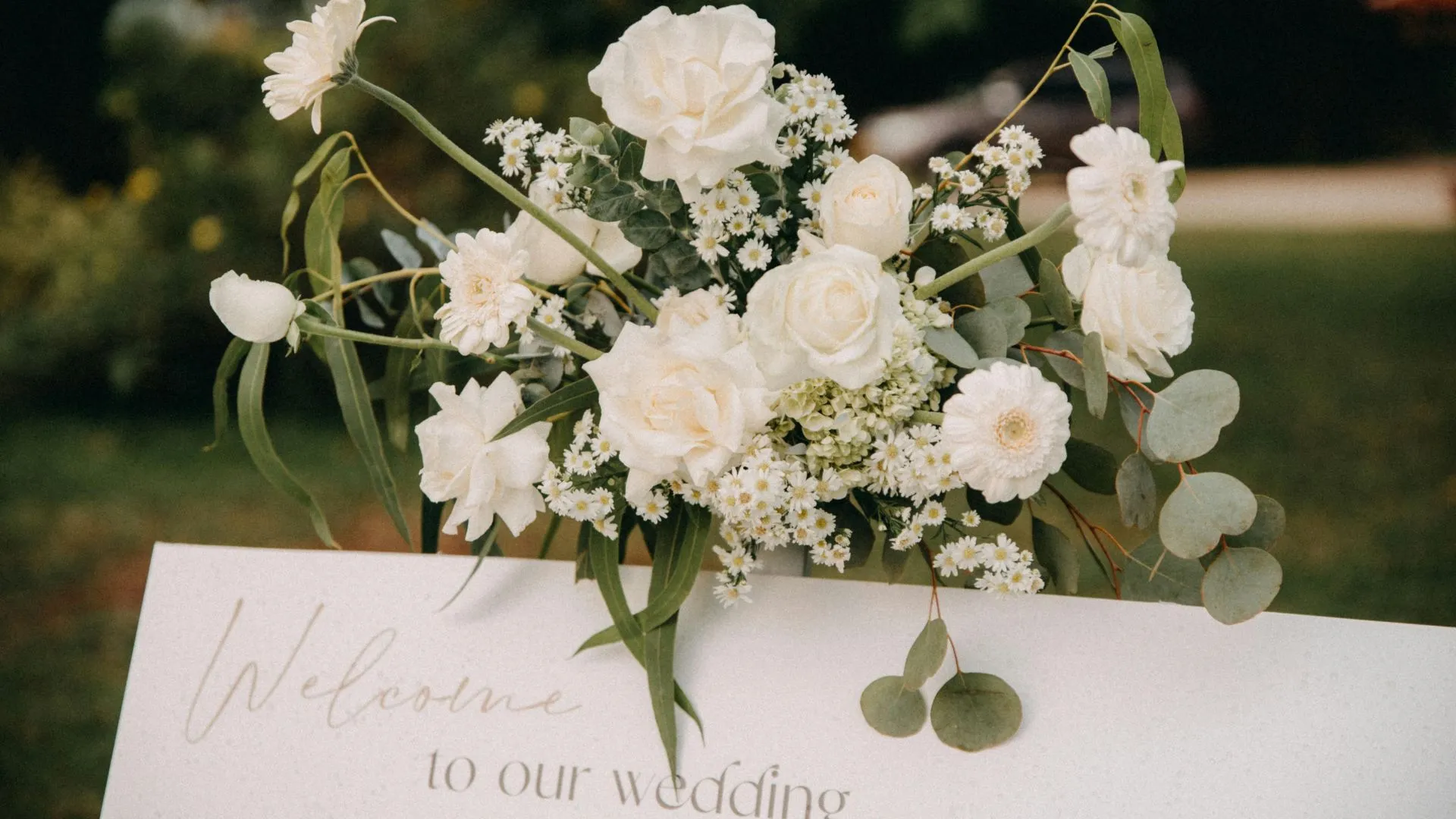
Japanese hospitality philosophy is built on the idea of anticipating needs before they are expressed, and the dining table offers one of the richest opportunities to put this into practice for international guests.
Menu Card Stories メニューカード
The simplest and most effective touch Wako recommends is the menu card story — a short English description on the menu that transforms each dish from an unfamiliar name into a cultural experience.
“Local Wagyu Beef” or “Traditional Dashi Broth” tells the guest something about what they are eating and why it matters. The meal becomes a guided journey through Japanese culinary culture rather than a sequence of plates whose contents remain mysterious.
Personalised Place Cards 席次カード
Personalised place cards with each guest’s name written in both English and Japanese katakana characters are another gesture that lands with remarkable warmth. Seeing one’s own name rendered in Japanese script — a language most guests cannot read — consistently produces surprise and delight, and the card frequently becomes a souvenir taken home.
A handwritten English message alongside, even as simple as “Thank you for flying all the way to Japan,” amplifies the effect considerably.
Commemorative Chopsticks お箸
Commemorative chopstick rests in shapes like Mt. Fuji or sakura blossoms, accompanied by a small note inviting guests to take them home, serve simultaneously as table decoration, cultural object, and wedding favour.
Personalised chopsticks engraved with each guest’s name take this a step further into genuinely high-end territory. A small, beautifully designed English-language card explaining basic Japanese dining etiquette — how to use chopsticks, the meaning of the warm oshibori towel — turns potential confusion into a moment of pleasant discovery.
Something as simple as “Local Wagyu Beef from Miyazaki Prefecture” or “Traditional Dashi Broth — the soul of Japanese cuisine” transforms each course from an unknown dish into a small story. The meal becomes a guided journey through Japanese culinary culture — something guests will talk about and remember long after the reception ends.
For a full guide to Japanese wedding gift-giving customs and what international guests should know before they arrive, read our guide to goshugi and shugi bukuro etiquette.
Section 7: Wako’s Stylist Pro-Tips for the Bride
The single most practical piece of food advice Wako offers to every bride she works with costs nothing and requires only one conversation with the venue coordinator.
“Request your venue to pre-cut the main course into bite-sized pieces,” she says. Having the steak or fish served already portioned into small, manageable pieces means the bride can take a quick bite in the few seconds between photo sessions, without requiring the full use of a knife and fork or risking the kind of movement that would disturb a carefully arranged kimono.
It is a small adjustment that makes a significant difference to energy levels across a long day in heavy ceremonial dress.
The broader principle behind this advice is one that applies to every food decision a couple makes: think about the whole day, not just the plate. The pace of the meal service, the number of courses, the timing of the ceremonial moments — all of these connect directly to the bride’s energy, her schedule, and her ability to be present with her guests.
The simplest fix costs nothing and requires one sentence to your venue coordinator: request that the main course — the steak or fish — be served pre-cut into bite-sized pieces. This allows the bride to take a quick bite in the few seconds between photo sessions, without needing to use a knife and fork or risk disturbing a carefully arranged kimono.
“You will be busier than you imagine on the day,” Wako reflects. “Talk to your venue in advance about how to make eating smart and quick, so you can keep smiling until the very end.”
Section 8: Planning Timeline and Remote Couples
Menu Finalisation
Japanese venue schedule management is precise in ways that international couples sometimes underestimate. Menu finalisation typically occurs two to three months before the wedding, following a tasting session where the couple confirms the specific course and any customisations.
Confirming Final Guest Count
The more critical deadline is the final guest count, which closes at ten to fourteen days before the event — the point at which the venue places its final ingredient orders. Once that window closes, a guest who cancels will almost certainly be charged one hundred per cent of the meal cost.
Refunds are virtually non-existent because the ingredients have already been sourced. Attempting to downgrade the entire course to a lower-priced tier within a month of the wedding is generally not permitted, or carries significant administrative fees.
Remote Planning
For couples planning remotely — which describes most international destination wedding clients — Wako identifies four questions that should be asked of every venue before signing.
Four Essential Questions to Ask Before Signing
The first is how much customisation is truly allowed — not whether the food is good, but whether specific dishes can be swapped or ingredients from the couple’s own culture incorporated. A venue that offers set menus with no flexibility may struggle to accommodate an international palate.
The second is whether the venue can provide actual photographs of their vegetarian or vegan courses, not simply a verbal assurance. A photo will immediately reveal whether the chef has genuine experience with plant-based cuisine.
The third is whether English-speaking staff members can explain each dish to guests during service — even the most exquisite meal loses its impact if guests do not understand what they are eating.
The fourth, and most telling, is whether the couple can arrange a video call directly with the head chef to discuss their vision. “A venue that allows a remote couple to speak directly with the chef,” Wako says, “is one you can trust. It is the ultimate test of their commitment to hospitality.”
When you cannot taste the food in person, these questions will reveal the venue’s true flexibility and quality — before you commit.
Closing: Food as a Cultural Performance
Choosing the right menu for a Japan destination wedding in 2026 is not simply a matter of taste. It is a matter of understanding how food functions within the broader cultural choreography of the day — and making decisions that serve not just the palate, but the experience as a whole.
Once the wedding day is planned, read our guide to Japanese wedding honeymoon ideas for 2026 for inspiration on where to celebrate next.
Key Questions to Ask Your Venue Before Signing
These questions will help you understand menu flexibility, dietary support, timing, and practical bride-friendly adjustments before committing.
How much customisation is truly allowed — can specific dishes be swapped or cultural ingredients incorporated?
Can you provide actual photos of your vegetarian or vegan courses?
Are there English-speaking staff members who can explain each dish to guests during service?
Can we arrange a video call directly with the head chef to discuss our vision?
What is the final menu confirmation deadline, and what are the penalties for late changes?
Will this menu allow enough time in the schedule for our planned outfit changes?
Can the main course be pre-cut into bite-sized pieces for the bride?
Japanese Wedding Food & Menus in 2026 — Frequently Asked Questions
Quick answers to the most common questions international couples ask about wedding catering, kaiseki, fusion menus, sake ceremonies, and dietary needs in Japan.
What is the difference between kaiseki and French-Japanese fusion at a Japanese wedding?
How much does wedding food cost per person in Japan?
What is the kagami-biraki ceremony and when does it happen?
Can Japanese wedding venues accommodate vegetarian, vegan, or halal guests?
Do I need a Western-style wedding cake at a Japanese wedding?
What non-alcoholic drinks are available at a Japanese wedding reception?
How far in advance do I need to confirm my menu?
About the Contributor
Wako Koshigai is a professional hairdresser with over 15 years of experience specialising in traditional Japanese wedding hairstyles and kimono dressing. With deep knowledge of Japan’s wedding culture and trends, she has worked with both Japanese and international couples across the country’s most celebrated venues, shrines, and heritage settings.

Timothy is a web builder and marketing specialist with a deep passion for Japan and its culture. He founded Get Married in Japan to help international couples navigate Japan's wedding traditions — and to connect them with the people who know it best.
Connect on LinkedIn →