Hybrid Shinto-Western Weddings in Japan
A quick overview if you’re skimming this guide for ceremony formats, styling tips, and key planning advice.
- BOTH CULTURES, ONE DAY A hybrid wedding in Japan blends Shinto shrine rituals with Western ceremony elements — you don’t have to choose one culture over the other.
- THE SHINTO PRIEST The Kannushi speaks in ancient Japanese prayers, not English — shrines provide English program booklets and pre-ceremony rehearsals so all guests can follow along.
- WAKO’S 3-STEP FORMAT Wako’s personal recommended format is a 3-step transformation: Shiromuku at the shrine, Iro-uchikake at the reception, and a Western wedding dress for the finale.
- LEGAL REALITY Shinto and Western ceremonies have no legal standing in Japan — most international couples marry legally at home and treat the Japanese ceremony as a spiritual celebration.
- CHOOSE YOUR SHRINE CAREFULLY Not all shrines allow hybrid elements — ask four key questions about attire rules, bring-in vendors, English support, and ring exchange flexibility before committing.

There is a moment that Wako Koshigai describes with quiet pride — standing at the end of her own wedding day, having moved through three complete transformations: the solemn beauty of a Shinto shrine ceremony in a pure white Shiromuku, the vibrant colour of an Iro-uchikake at the reception, and finally the emotional release of a Western wedding dress.
“I felt a huge sense of accomplishment,” she recalls, “having fulfilled all my dreams in one day.” It is a sentiment that more and more international couples are beginning to share.
Hybrid Shinto-Western weddings — ceremonies that weave together the ancient rituals of Japan with the personalised warmth of Western celebration — are growing in appeal for couples who refuse to see their wedding as a choice between two cultures.
For Wako, a professional hairdresser with over 15 years of experience specialising in traditional Japanese wedding hairstyles and kimono dressing, the idea of choosing is itself a false premise.
To find out more, I interviewed Wako to find out more about her philosophy. Her personal experience, refined through countless weddings, is straightforward: you do not have to choose. You can do both, and the result can be extraordinary.
What follows is her candid, expert guide to making it work — from understanding what a Shinto ceremony actually is, to navigating shrine logistics, legal realities, and the creative decisions that turn a hybrid wedding into a cohesive, unforgettable story.
- Section 1: Understanding the Shinto Ceremony
- Section 2: Integrating Western Traditions
- Section 3: Creative Hybrid Formats — How to Structure Your Day
- Section 4: Hybrid Attire & Styling
- Section 5: Shrine Logistics and Restrictions
- Section 6: The Legal Side — What’s Actually Binding
- Section 7: Beyond the Shrine — Alternative Venues for Hybrid Weddings
- Section 8: Advice for 2026 — Avoiding Regrets
- Closing: Do Both, Not One
Section 1: Understanding the Shinto Ceremony

A Sacred Ritual, Not a Performance
For international couples, the Shinto ceremony is often the most mysterious and misunderstood part of a Japan wedding. It is not a performance designed for an audience, nor is it a straightforward equivalent of a Western church service.
At its heart, a Shinto ceremony is a ritual performed before the Kami — the deities of the Japanese spiritual tradition — in which a couple vows their union not only to each other, but to their two families and to the divine forces that the shrine represents.
The shrine itself, with its aged timber, sacred rope, and layered atmosphere of centuries, provides what Wako describes as “a sacred, timeless atmosphere” that no purpose-built venue can replicate.
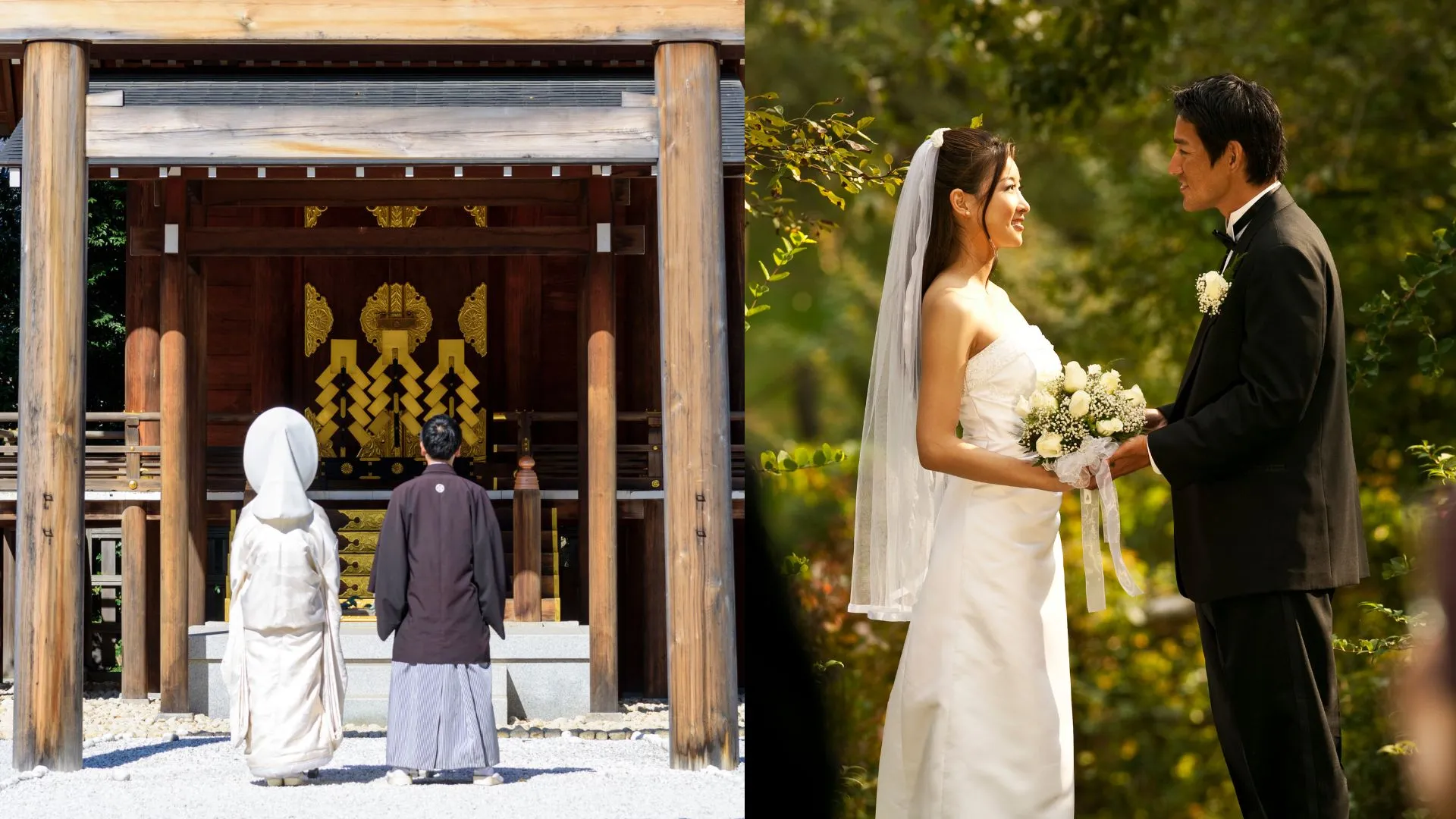
The visual spectacle of a Shinto ceremony is one of its great gifts to a wedding day. The bride dressed in a Shiromuku — the iconic pure white kimono — the groom in a Montsuki Hakama, and the haunting sound of Gagaku, Japan’s ancient court music, filling the air.
Shrine maidens known as Miko move through the ceremony with choreographed elegance. The ritual sake-sharing known as san-san-kudo, in which the couple and their families drink from three cups of increasing size, is among the most intimate and symbolically rich moments in any wedding tradition.
The Role of the Kannushi and the Language of the Sacred
Central to the Shinto ceremony is the Kannushi — the Shinto priest — whose role is frequently misunderstood by international couples expecting someone akin to a Western officiant. The Kannushi does not speak to the couple or their guests in the way a minister might.
His primary role is to offer Norito — ancient prayers spoken in a classical form of Japanese that even most modern Japanese people do not use in daily conversation. The focus, Wako explains, is not on comprehension but on sacred resonance: the quality of the priest’s voice, the solemnity of the moment, the sense of something ancient and beyond ordinary language.
This is not a barrier to be overcome so much as a different kind of communication entirely. “Don’t view the language barrier as a hurdle,” Wako advises. “The silence and the unspoken elements — like the elegant movements of the Miko and the sound of the flute — are powerful forms of communication.
Embrace the spiritual atmosphere as a unique Japanese experience that transcends language.” In practice, most shrines and planners provide an English program booklet so that guests can follow each stage of the ceremony, and a detailed rehearsal with an English-speaking staff member typically takes place beforehand to explain the etiquette — how to hold the Tamagushi sacred branch, the steps of the san-san-kudo, and what to expect at each turn.
For a deeper understanding of every ritual element and what to expect on the day, read our complete guide to the Shinto wedding ceremony.
Section 2: Integrating Western Traditions
Making Every Guest Feel Part of the Story
The power of a Western ceremony element — whether held in a chapel, a garden, or woven directly into the Shinto ritual — lies in its emotional accessibility. For international guests who have travelled far to witness this day, a moment in which the couple speaks their vows directly to each other in a shared language, or exchange rings before the people who love them most, provides an anchor. It ensures that no guest feels like a spectator to something entirely foreign.
Wako is particularly enthusiastic about the possibility of blending the san-san-kudo with a Western ring exchange within a single ceremony. This combination — the ritual sake sharing of Japan alongside the universal symbolism of the wedding ring — is one of the most elegant expressions of a hybrid ceremony, showing genuine respect for both cultures without either feeling like an afterthought.
Personalised vows, spoken in the couple’s own words, add another layer of intimacy that resonates with guests of any cultural background.
To learn more about the role of sake in Japanese wedding ceremonies, read our guide to the kagamibiraki sake ceremony.
Navigating Guests with Religious Beliefs
One consideration that couples sometimes overlook is how guests of strong religious faith might feel participating in a Shinto ritual. Wako’s approach here is one of considered hospitality. In a Shinto ceremony, guests are rarely required to perform religious acts — they are present as witnesses rather than active participants — and couples can communicate this clearly in advance.
A simple note on the wedding website or invitation, explaining that guests are welcome as “honoured observers of a cultural tradition” and are free to participate only to the extent they feel comfortable, can resolve this entirely. “Your presence is what matters most to us,” she suggests as a closing line — warm, inclusive, and respectful of every belief.
If you are an international guest attending a Japanese wedding, read our guide to the Shinto wedding ceremony dress code for foreign guests so you arrive feeling confident and prepared.
Section 3: Creative Hybrid Formats — How to Structure Your Day
Two Paths, One Day
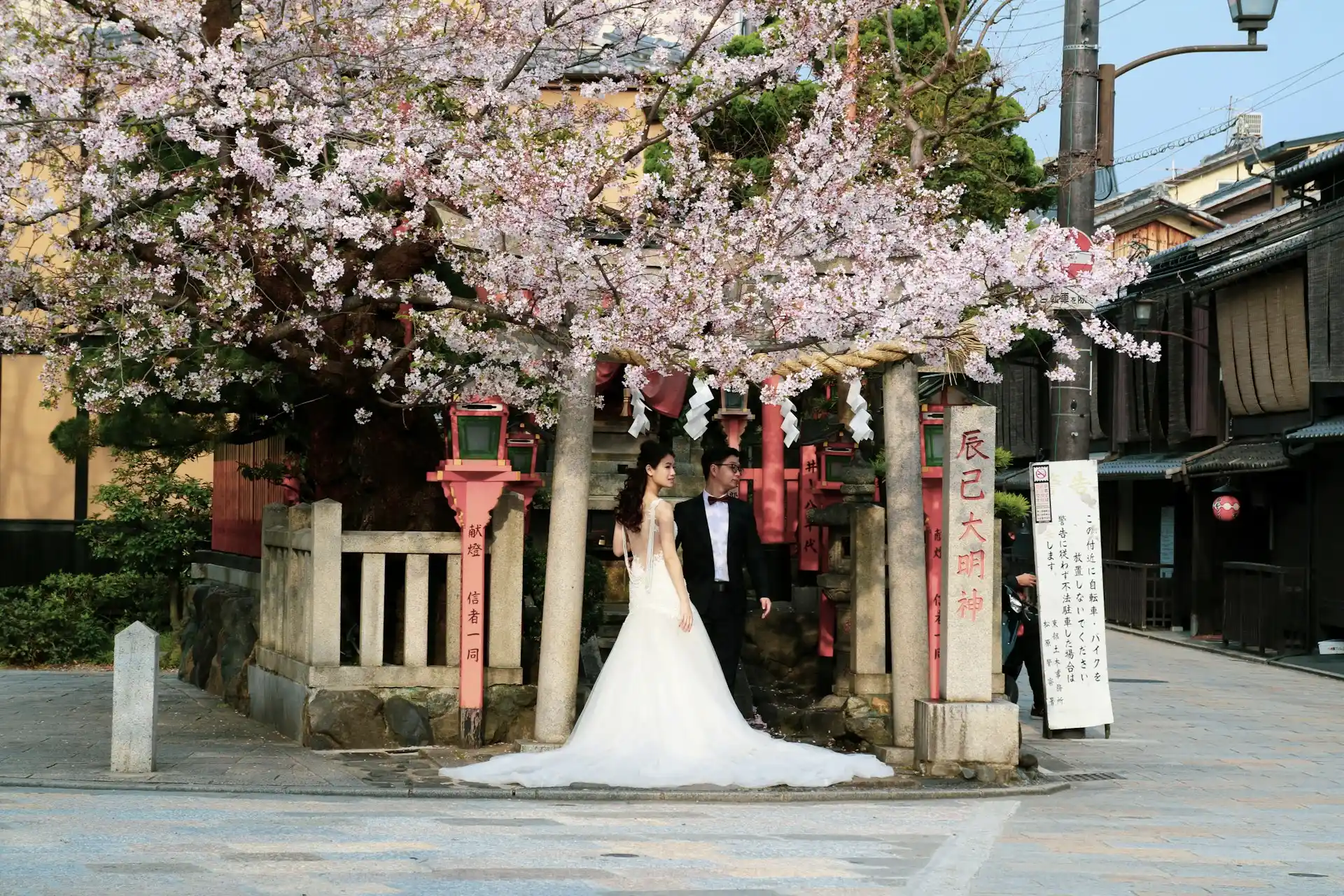
Structuring a hybrid wedding day requires both creative vision and logistical discipline. Wako outlines two primary approaches. The first is what she calls the Classic Path: a full Shinto ceremony at a shrine in traditional kimono attire, followed by a move to a reception venue where the bride changes into a wedding dress.
This arc — from deeply Japanese to personally Western — creates a natural narrative progression to the day, and the outfit change itself becomes a theatrical moment that guests anticipate with genuine excitement.
The second approach, the Garden or Chapel Mix, inverts the formula: the couple wears traditional Japanese attire — the Shiromuku and Montsuki Hakama — but performs a Western-style ceremony in a beautiful garden or chapel setting. This works particularly well for couples who want the visual impact of kimono dressing but prefer the ceremony itself to feel emotionally familiar to their guests. The contrast between the Japanese attire and the Western ceremonial format creates its own kind of hybrid beauty.
Wako’s Personal 3-Step Flow
Based on her own wedding experience, Wako’s most personally recommended format is a three-stage transformation that she describes as the “3-Step Flow for 100% Satisfaction.”
It begins at the shrine: the bride arrives in a Shiromuku and the traditional Wataboshi hood — a large, rounded white hood that covers the entire face and head — lending the ceremony an air of mystery and ancient dignity. This first step honours the traditions of Japan at their most authentic.
At the reception, the Wataboshi is removed to reveal the bride’s face and, simultaneously, the vibrant colour of an Iro-uchikake — a richly embroidered silk kimono in deep reds, golds, or other jewel tones — replaces the white of the shrine ceremony.
A modern hair arrangement with beautiful accessories completes the transformation, creating what Wako describes as “a stunning surprise for the guests.”
The third and final change, into a white Western wedding dress, provides the emotional climax of the evening. “The transition from ‘Traditional’ to ‘Personal’ creates an amazing energy in the room,” she says.
For couples willing to commit to the logistics, this three-act structure offers the most complete and satisfying expression of a hybrid wedding.
The 3-Step Transformation for 100% Satisfaction
Wako’s personally recommended hybrid wedding format — three outfit changes that take you from ancient tradition to personal celebration.
Section 4: Hybrid Attire & Styling
The Western Veil and the Shiromuku
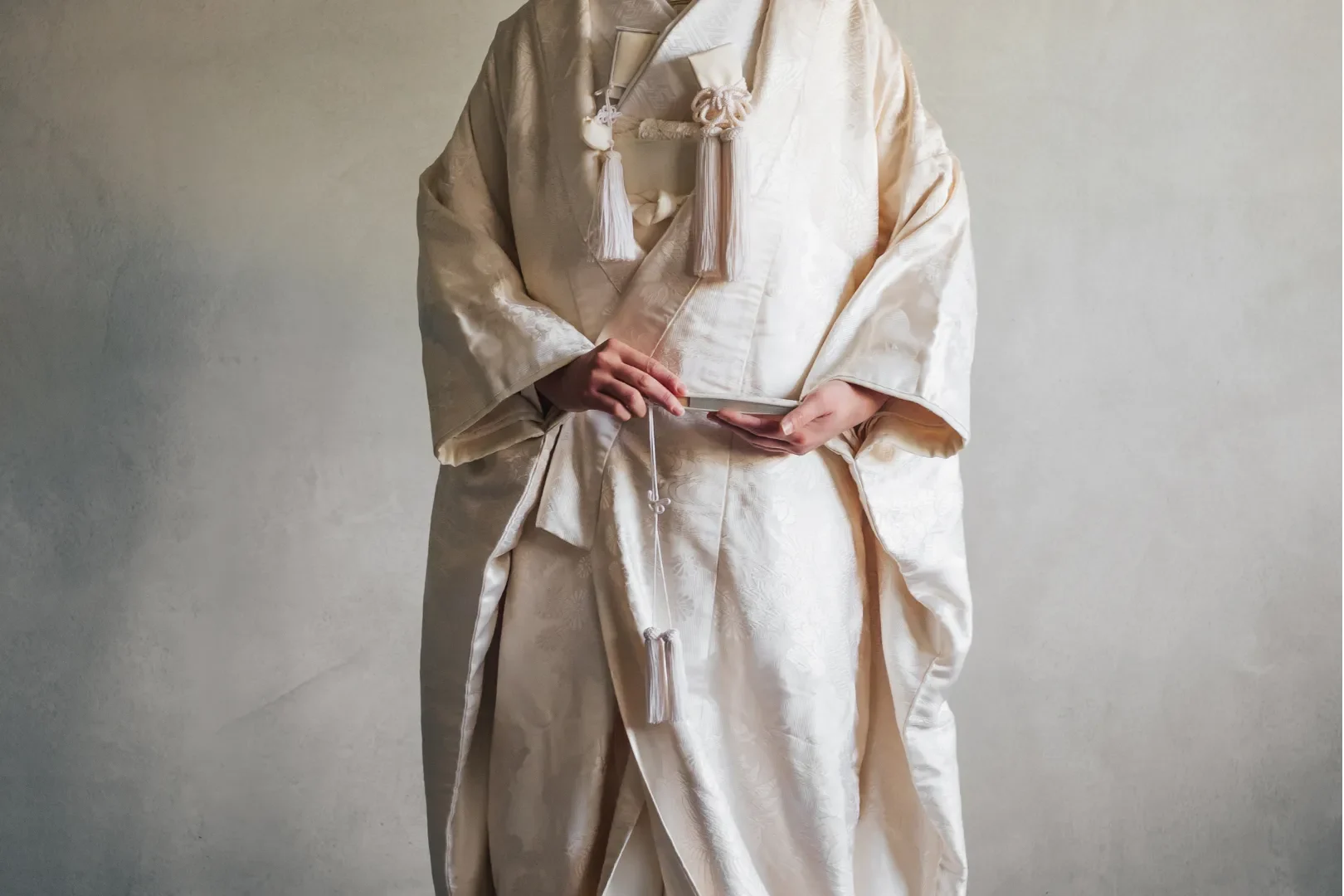
Few styling decisions in a hybrid wedding are more visually arresting — or more technically demanding — than pairing a Western veil with a Shiromuku. The effect, when done well, is simultaneously traditional and modern: a look that sits in neither culture exclusively and belongs entirely to the couple wearing it. But achieving this requires careful thought on several fronts.
Wako notes that strict shrines may still require the Wataboshi hood to be worn during the Shinto ritual itself, to preserve the sanctity of the ceremony. The practical solution she recommends is to wear the Wataboshi for the ceremony, then transition to the Western veil for the photo session on the shrine grounds and the reception entrance. This approach respects the shrine’s traditions while still fully realising the couple’s creative vision.
Colour coordination is another critical detail. The Shiromuku is not always a uniform white — it ranges from a crisp stark white to a warm ivory known as Kinari, and a veil that doesn’t match the specific tone of the kimono will immediately read as mismatched. “A veil that is too bright against an ivory kimono can make the kimono look aged,” Wako cautions.
The weight and substance of the veil matters equally: the Shiromuku is a heavy, voluminous garment, and a thin or short veil will look lost beside it. A veil with some delicate embroidery or embellishment that echoes the kimono’s patterns creates the most cohesive silhouette.
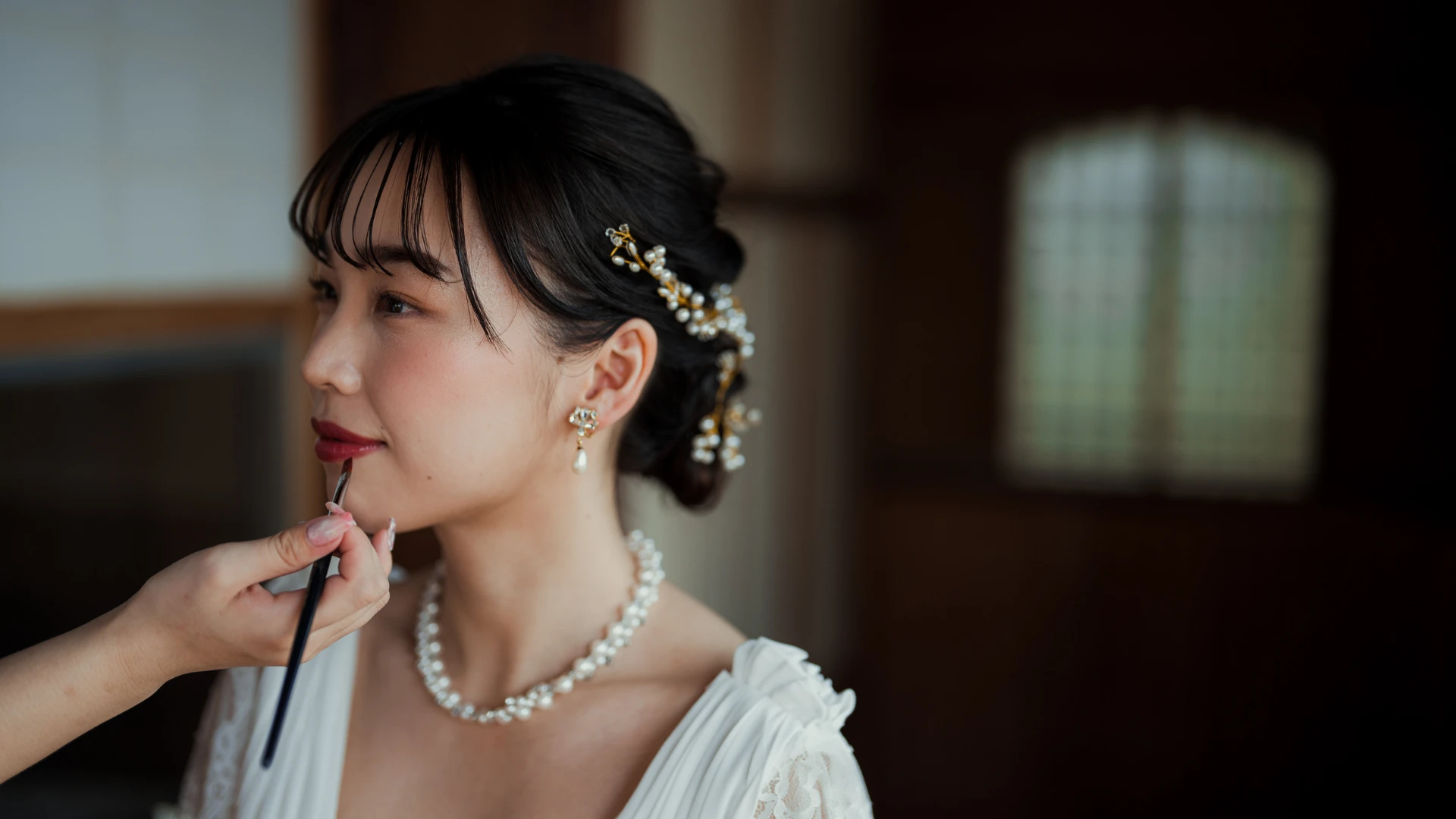
Underpinning all of this is the hair itself — which needs to be styled in a way that supports the veil securely while remaining elegant enough to transition smoothly into the look required for the wedding dress later in the day.
To find out more about each attire option available for your Japanese wedding, read our in-depth guide to choosing between a Shiromuku, Iro-uchikake, and a modern wedding dress.
Honouring the Groom’s Heritage

A hybrid wedding should feel balanced, and that means attending to the groom’s cultural identity with the same care given to the bride’s styling.
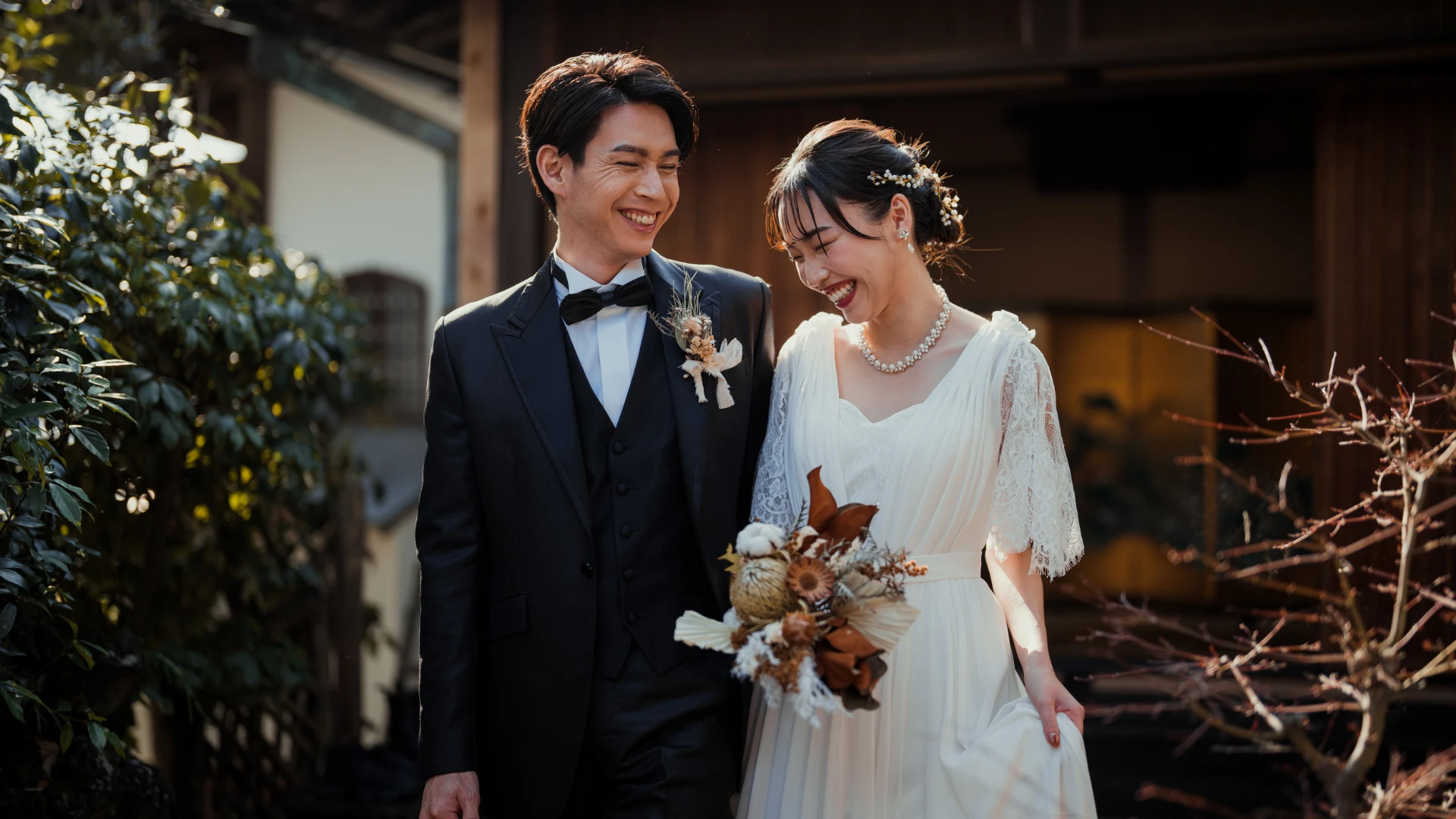
For grooms who choose a classic Western suit or tuxedo alongside a bride in kimono, Wako recommends subtle “link” items that create visual unity across the two styles: a pocket square in the same silk as the bride’s kimono, or a boutonniere in colours that echo the Iro-uchikake. These small details, easy to overlook in planning, are often what guests remember.
For grooms who choose to wear the Japanese Montsuki Hakama, personal heritage can still be woven in through meaningful objects — antique pocket watches, family cufflinks, or other heirlooms worn beneath or alongside the traditional attire. Wako has seen this done to beautiful effect, the groom carrying his own history into a ceremony steeped in someone else’s.
A popular strategy is for the groom to wear full traditional Japanese attire for the shrine ceremony out of respect for the setting, then change into his own style for the reception — allowing both cultures to take their rightful place in the day’s story.
Section 5: Shrine Logistics and Restrictions
What to Expect on the Ground
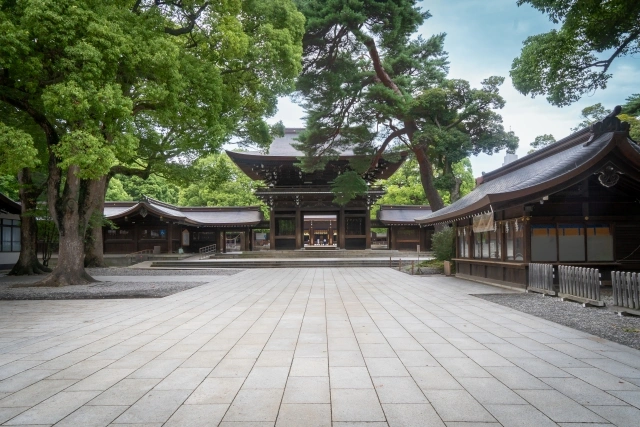
Shinto shrines are active places of worship, and this shapes the experience of a wedding held within them in ways that couples should understand well in advance. Photography is one of the most significant areas of variation between venues.
Most shrines allow photography on the grounds, but many restrict or prohibit it during the most sacred parts of the ceremony inside the Main Hall. Some venues operate an exclusive photographer policy, permitting only their own contracted staff to shoot inside.
Couples should clarify photo-free zones with their shrine before briefing their own photographer, so that the day’s visual story can be planned around the venue’s rules rather than discovered on the morning.
The physical environment of a shrine also warrants practical preparation. The indoor ceremony space is often surprisingly intimate — groups of 20 to 30 guests usually fit comfortably, but larger parties may find some guests watching from outside.
Many historic shrine buildings lack air conditioning or heating, making seasonal planning important: a summer ceremony in Japan’s humidity or a midwinter ceremony in an unheated wooden hall requires guests to be forewarned and dressed appropriately.
For a full breakdown of what each season brings in terms of weather, scenery, and planning considerations, read our guide to Japanese wedding seasons.
The beautiful gravel paths known as Tamajari and the steep wooden stairs that characterise many shrines can be challenging for guests in high heels or those with limited mobility.
Wako herself often assists brides through these sections by managing the hem of the kimono — a practical reminder of why the attending stylist is so valuable beyond the preparation room.
The Four Questions That Reveal Everything
When enquiring about a shrine’s suitability for a hybrid wedding, Wako recommends four specific questions that she describes as “litmus tests” — the answers to which will immediately reveal how experienced and flexible the venue is with international couples.
First: does the shrine provide an English program or a briefing on ceremony etiquette for non-Japanese guests?
Second: are there restrictions on attire during the ceremony — specifically, can the bride wear a veil with a kimono, or can the groom wear a tuxedo inside the Main Hall?
Third: what is the venue’s policy on bring-in professionals, such as an external stylist, interpreter, or photographer?
And fourth: can a Western ring exchange be incorporated into the Shinto ritual? “A shrine that is open to blending this tradition,” Wako notes, “is usually more hybrid-friendly overall.”
Together, these four questions can save couples months of misaligned expectations.
Four questions that reveal if a shrine is hybrid-friendly
Ask these before committing to any shrine — the answers will immediately show how experienced and flexible they are with international couples.
Do you provide an English program or a briefing on ceremony etiquette for non-Japanese guests?
This reveals whether the shrine has hosted international couples before and has the tools to make your guests feel included.
Are there restrictions on attire during the ceremony — specifically, can the bride wear a veil with a kimono, or can the groom wear a tuxedo inside the Main Hall?
Some traditional shrines have strict Japanese attire-only rules for the ritual.
What is your policy on bring-in professionals such as an external stylist, interpreter, or photographer?
Many shrines only allow their own contracted vendors — for a destination wedding, having your own stylist and interpreter is often essential.
Can we incorporate a Western ring exchange into the Shinto ritual?
“A shrine that is open to blending this tradition is usually more hybrid-friendly overall,” Wako notes. It’s the single best test of a venue’s flexibility.
Section 6: The Legal Side — What’s Actually Binding

One of the most liberating facts about planning a hybrid Shinto-Western wedding in Japan is also one of the least understood: neither a Shinto ceremony nor a Christian or Western ceremony has any legal standing in Japan. Under Japanese law, a wedding ceremony is considered a purely cultural or religious event.
To be legally married in Japan, a couple must submit a Marriage Registration — the Kon-in Todoke — to a local municipal office and have it officially accepted. This is an entirely separate administrative process from whatever takes place at the shrine or chapel.
In practice, most international destination wedding couples complete their legal marriage paperwork in their home country before or after their time in Japan, treating the Japanese ceremony as a Spiritual Wedding or a Celebration of Vows.
Beyond avoiding complex foreign paperwork, this approach has a significant creative upside: because the ceremony itself carries no legal weight, the Japanese government places no restrictions on its format.
Couples are entirely free to design a hybrid ritual that blends Shinto and Western elements in whatever proportion feels right to them. The freedom is complete.
For couples navigating the paperwork side of marrying in Japan, our guide to where to get wedding documents translated in Tokyo is a practical next step.
Section 7: Beyond the Shrine — Alternative Venues for Hybrid Weddings
When More Flexibility Is Needed
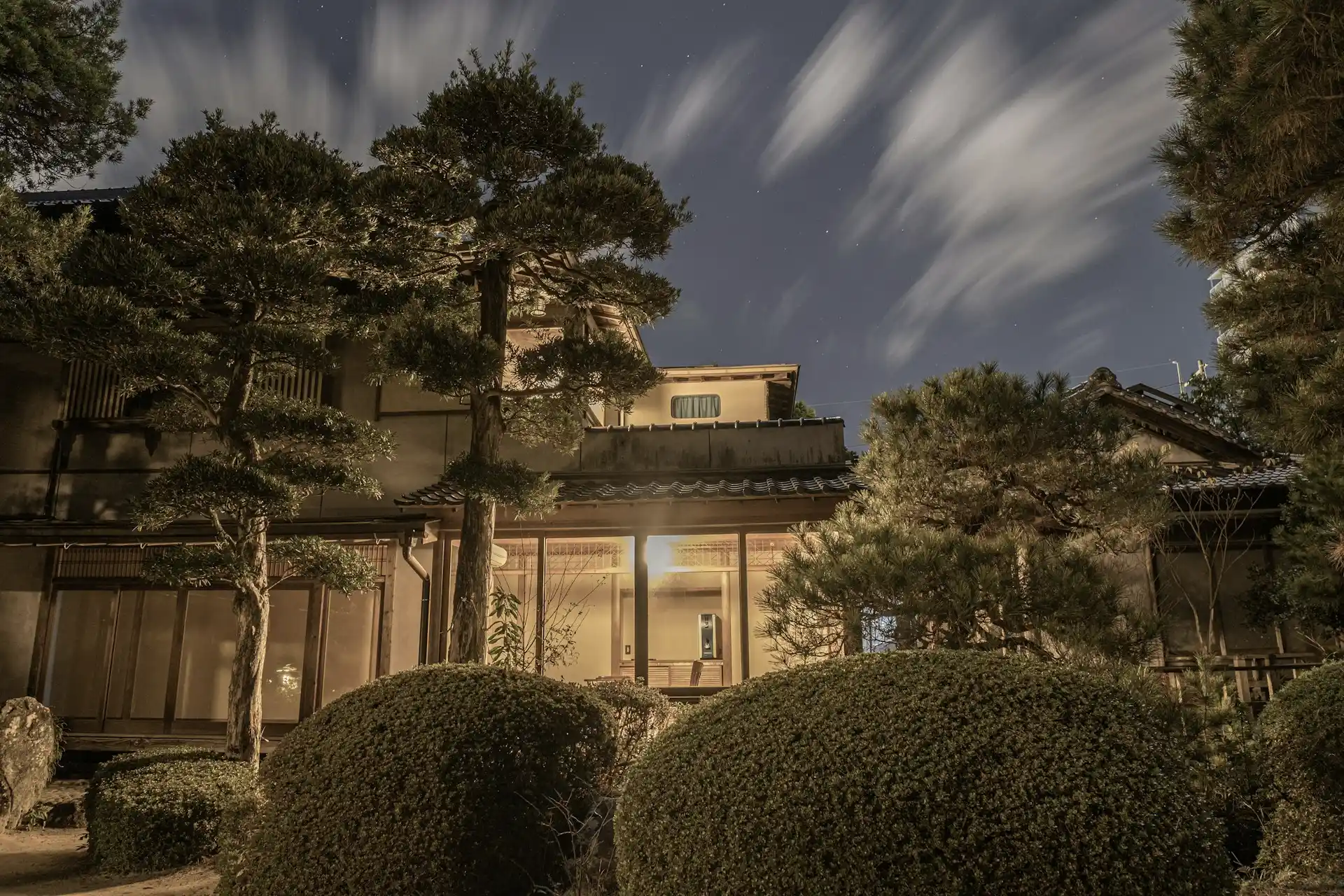
Not every couple’s vision fits within the physical or ceremonial constraints of a traditional Shinto shrine, and Wako is emphatic that a shrine is not the only path to an authentically Japanese hybrid wedding. Japan’s extraordinary range of heritage venues offers several alternatives, each with its own character and advantages.
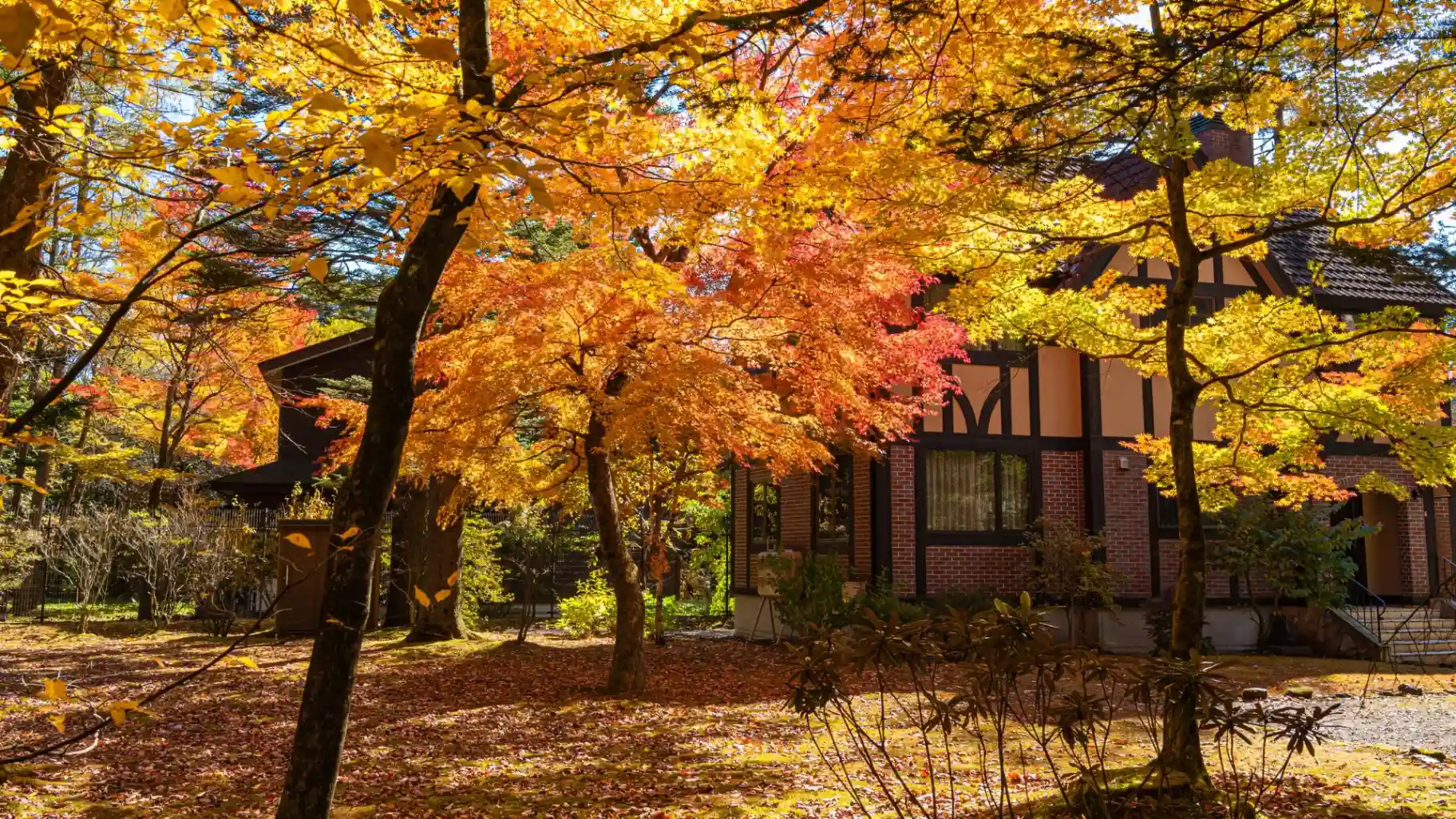
Traditional Japanese gardens — Teien (庭園) — are among the most versatile settings, offering nature as a neutral backdrop that flatters both the heavy silk of a Shiromuku and the delicate lace of a wedding dress equally well.
Happo-en in Tokyo, with its stunning historical gardens and capacity for both Shinto and Western ceremonies, is Wako’s recommended example: ceremony in the garden, reception in a modern hall, with outfit changes made straightforward by the close proximity of the spaces.
Historical estates and Western-style residences from the Meiji and Taisho eras — known as Yokan — are what Wako describes as the “original hybrids”: architecture that already blends Japanese aesthetics with European luxury, making them a natural fit for a wedding that attempts the same.
The Former Maeda Family Mansion and Ogasawara-tei, both in Tokyo, offer this cinematic quality. Kominka — traditional folk houses — suit couples seeking a more intimate, rustic atmosphere, with the private Omotenashi hospitality experience of a high-end retreat; Akasaka Kakinokizaka in Tokyo and various renovated Machiya townhouses in Kyoto are notable examples.

For couples seeking maximum impact, castle grounds offer an extraordinary scale of history. Nagoya Castle’s Honmaru Goten palace is, remarkably, an accessible option for ceremonies, providing a sense of grandeur that few venues anywhere in the world can match.
For another breathtaking example of what a castle wedding in Japan can look like, read our guide to getting married at Kumamoto Castle.
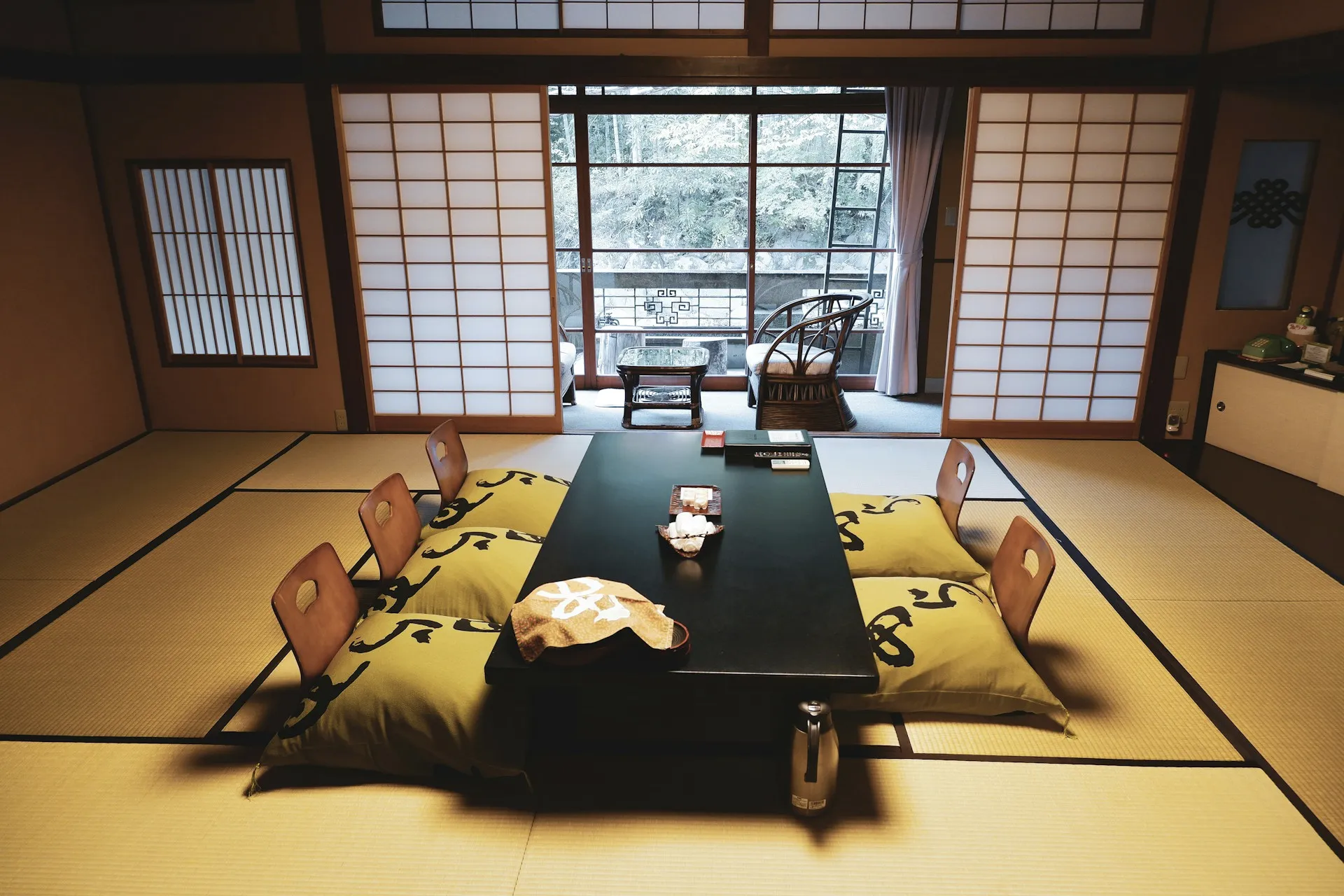
And for those who want to marry, celebrate, and stay all in one place, a luxury ryokan offers perhaps the most complete expression of Japanese hospitality.
Iwaso on Miyajima Island — situated beside the iconic Itsukushima Shrine with its torii gate rising from the sea — combines the spiritual atmosphere of a shrine setting with the private flexibility of a traditional inn.
A ryokan also makes particular sense when the couple’s guest list includes those of religious faith who might find a Shinto ritual uncomfortable: the space is secular, the hospitality inclusive, and the ceremony entirely designed by the couple themselves.
To find out why a ryokan might be the perfect setting for your Japan wedding, read our guide to choosing a ryokan for your Japan destination wedding.
Section 8: Advice for 2026 — Avoiding Regrets
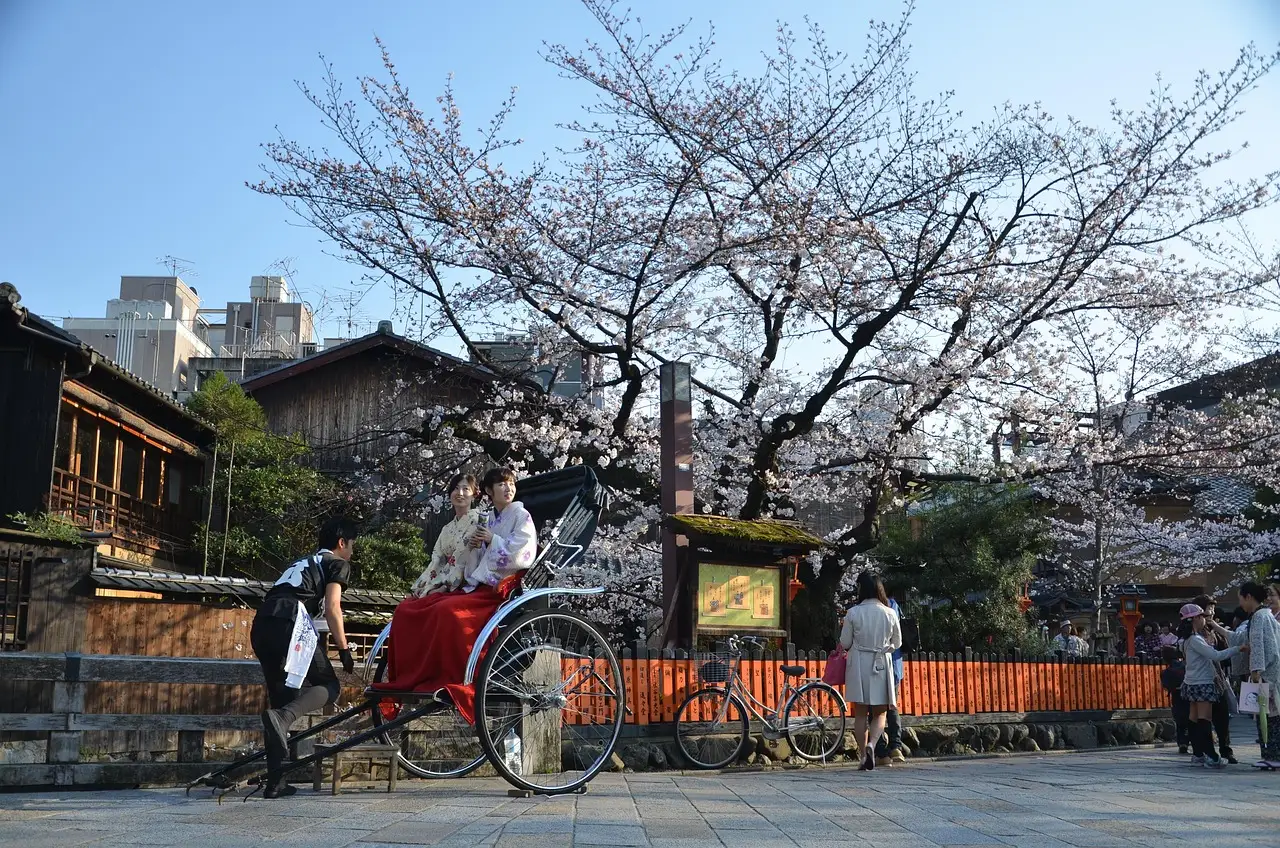
As 2026 approaches and Japan’s destination wedding market continues to grow, Wako’s practical advice becomes more important than ever. The most common source of regret she encounters is couples who fall in love with a venue before checking whether it actually suits their hybrid vision.
Not all shrines allow Western elements inside the Main Hall, not all venues permit external stylists or photographers, and not all spaces can accommodate the outfit changes and logistical flow that a three-stage day demands. Confirming these details early — before any emotional attachment to a location sets in — is essential.
Bring-in policies deserve particular attention. For a destination wedding, having a stylist who understands the couple’s specific needs and a skilled interpreter present throughout the day is often non-negotiable.
If the venue restricts external vendors, this can fundamentally change what the day looks like in practice. The four litmus-test questions outlined earlier should be asked of every shortlisted venue before any deeper conversations begin.
For inspiration on what a specialist stylist can achieve, browse our guide to Japanese wedding bridal hairstyles to see the range of traditional, modern, and fusion looks available.
Buffer time is another underestimated element of a well-run hybrid day. Outfit transitions — particularly changes involving kimono, which requires specialist dressing and takes considerably longer than a Western dress — need dedicated time built into the schedule.
Guest briefings before the shrine ceremony, travel between locations, and the natural delays of a large group all compound without adequate allowance. A hybrid wedding is a more complex production than a single-format day, and the scheduling should reflect that honestly.
Closing: Do Both, Not One
Wako Koshigai’s central message, drawn from both professional experience and the memory of her own wedding day, is that a hybrid wedding is not a compromise. It is an achievement.
It requires more planning, more coordination, and more willingness to navigate complexity — but what it produces, when done well, is something that neither a purely Shinto nor a purely Western wedding can offer alone: a day that belongs entirely to the couple, shaped by both of the worlds they come from.
“Many couples struggle to choose between tradition and their own culture,” she reflects. “My advice is: don’t choose — do both. Blending them is the secret to making your Japan wedding a truly once-in-a-lifetime memory.”
The photographs will capture the Shiromuku at the shrine, the Iro-uchikake at the reception, and the wedding dress at the finale. The guests will carry home the memory of ancient prayers they didn’t need to understand, of sake cups passed between families, of vows spoken in a language they knew by heart.
And the couple will carry both — every bit of it — forward together.
Ready to start planning? Our Japan destination wedding cost guide breaks down everything you need to budget for, from venue tiers to styling services.
Key questions to ask before committing to a hybrid venue
Ask every shortlisted venue these six questions — the answers will reveal how hybrid-ready they really are.
FAQ – Hybrid Shinto-Western Weddings in Japan
1) What is a hybrid Shinto-Western wedding in Japan?
A hybrid wedding blends the ancient rituals of a Japanese Shinto shrine ceremony — including the Shiromuku kimono, san-san-kudo sake sharing, and Gagaku court music — with Western elements like personalised vows, a ring exchange, and a Western wedding dress. The couple honours both cultures within a single wedding day.
2) Do I need to speak Japanese to have a Shinto ceremony?
No. The Shinto priest recites ancient prayers in classical Japanese, but shrines typically provide an English program booklet so guests can follow along. A staff member or interpreter also conducts a detailed rehearsal before the ceremony to explain each step, including the Tamagushi offering and san-san-kudo.
3) Can I wear a Western veil with a Shiromuku kimono?
Yes, but with care. Strict shrines may require the traditional Wataboshi hood during the ceremony itself — the veil can then be worn for photos and the reception. Colour matching is critical: choose a veil tone that matches your specific kimono, as stark white and ivory (Kinari) read very differently against each other.
4) Is a Shinto ceremony legally binding in Japan?
No. Neither a Shinto nor a Western ceremony has legal standing in Japan. To be legally married, couples must submit a Marriage Registration (Kon-in Todoke) to a local municipal office. Most international couples complete their legal paperwork at home and treat the Japan ceremony as a spiritual celebration, giving them full creative freedom over the ceremony format.
5) What are the best alternative venues to a shrine for a hybrid wedding?
There are several excellent options:
- Traditional Japanese gardens like Happo-en
- Meiji/Taisho-era historical estates (Yokan)
- Kominka traditional folk houses
- Castle grounds like Nagoya Castle’s Honmaru Goten
- Luxury ryokans like Iwaso on Miyajima
6) What questions should I ask a shrine before booking a hybrid wedding?
Ask these four key questions:
- Does the shrine provide an English program for guests?
- Are there attire restrictions such as a veil with kimono or a tuxedo inside the Main Hall?
- What is the bring-in policy for external stylists, interpreters, and photographers?
- Can a Western ring exchange be incorporated into the Shinto ritual?
About the Contributor
Wako Koshigai is a professional hairdresser with over 15 years of experience specialising in traditional Japanese wedding hairstyles and kimono dressing. With deep knowledge of Japan’s wedding culture and trends, she has worked with both Japanese and international couples across the country’s most celebrated venues, shrines, and heritage settings.