
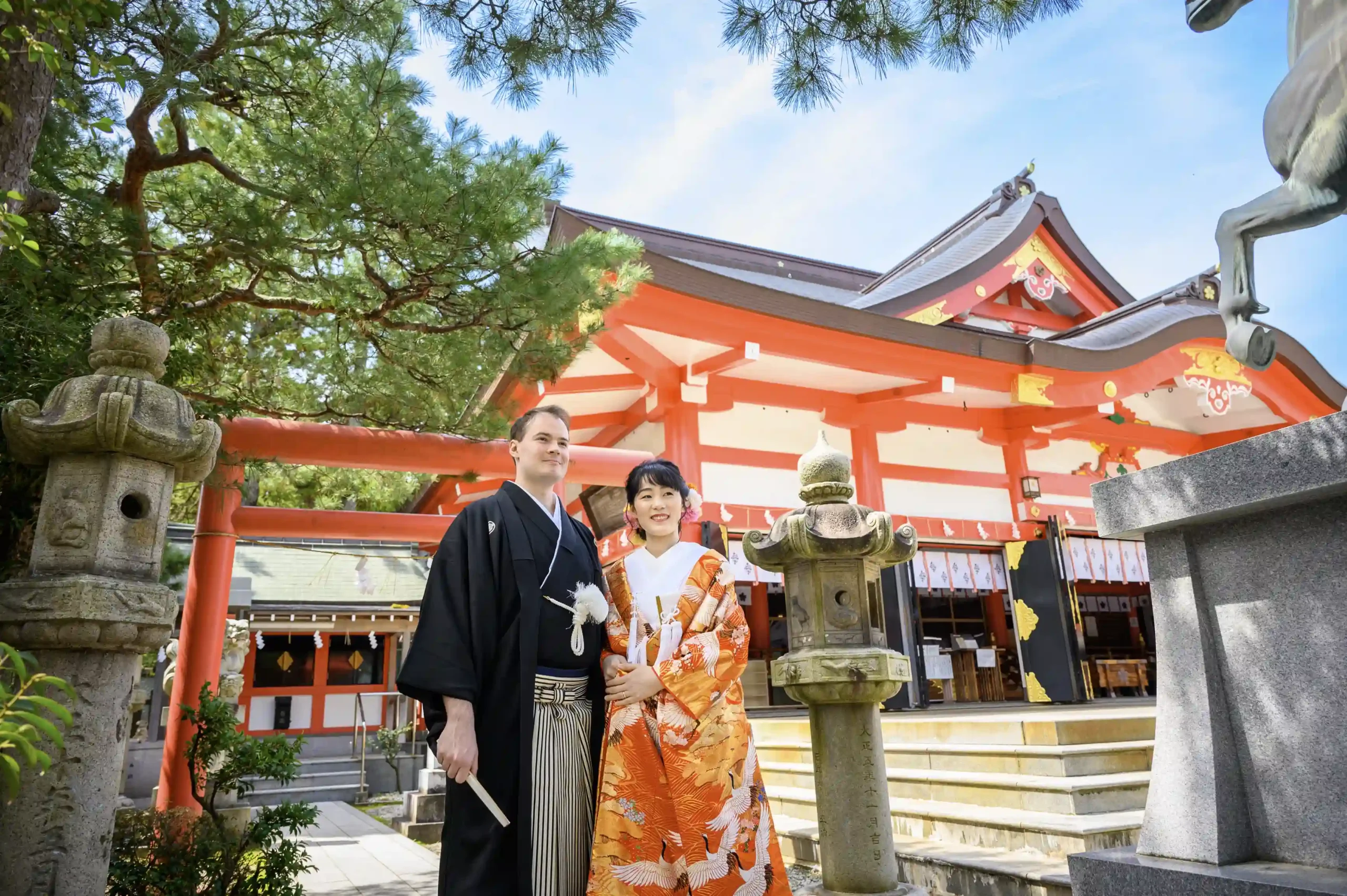
Niko, from Austria, and Tatsui, from Japan, met in Nagoya in 2018 and now live in Austria with their young daughter. Together they run The Red Value, a YouTube channel about the joy of travelling in Japan, along with short videos about learning Japanese. They planned their Shinto wedding at Hie Shrine in Toyama entirely from overseas.
Welcome to Get Married in Japan and in this series we talk to couples who have gotten married in Japan to find out what it was like. We talk about the planning, the good, the bad, the surprises and advice for couples who might be thinking of doing the same.
In this article, I had the privilege of interviewing Niko and Tatsui from The Red Value, a couple from Austria and Japan who planned a Shinto Wedding all the way from Austria.
- Meet Niko and Tatsui
- Why They Chose a Shrine Over a Western Wedding
- Planning a Japan Wedding From Austria
- The Budget Spreadsheet That Avoided Surprises
- Choosing the Outfits
- The Wedding Day: The Ceremony
- The Wedding Day: The Reception
- What Surprised Them
- The Legal Side
- Their Advice for International Couples
- What's Next for Niko and Tatsui
Meet Niko and Tatsui
Niko grew up in Austria and Tatsui is Japanese. They met at a party in Nagoya in 2018, when Niko was on a university exchange, and then spent three tough years in a long-distance relationship before Tatsui moved to Austria so they could finally live together. Today they live there with their young daughter.
Together they run The Red Value, a YouTube channel about the joy of travelling in Japan, along with short videos about learning Japanese. Planning their own wedding in Japan, though, was a very different kind of adventure.
Why They Chose a Shrine Over a Western Wedding
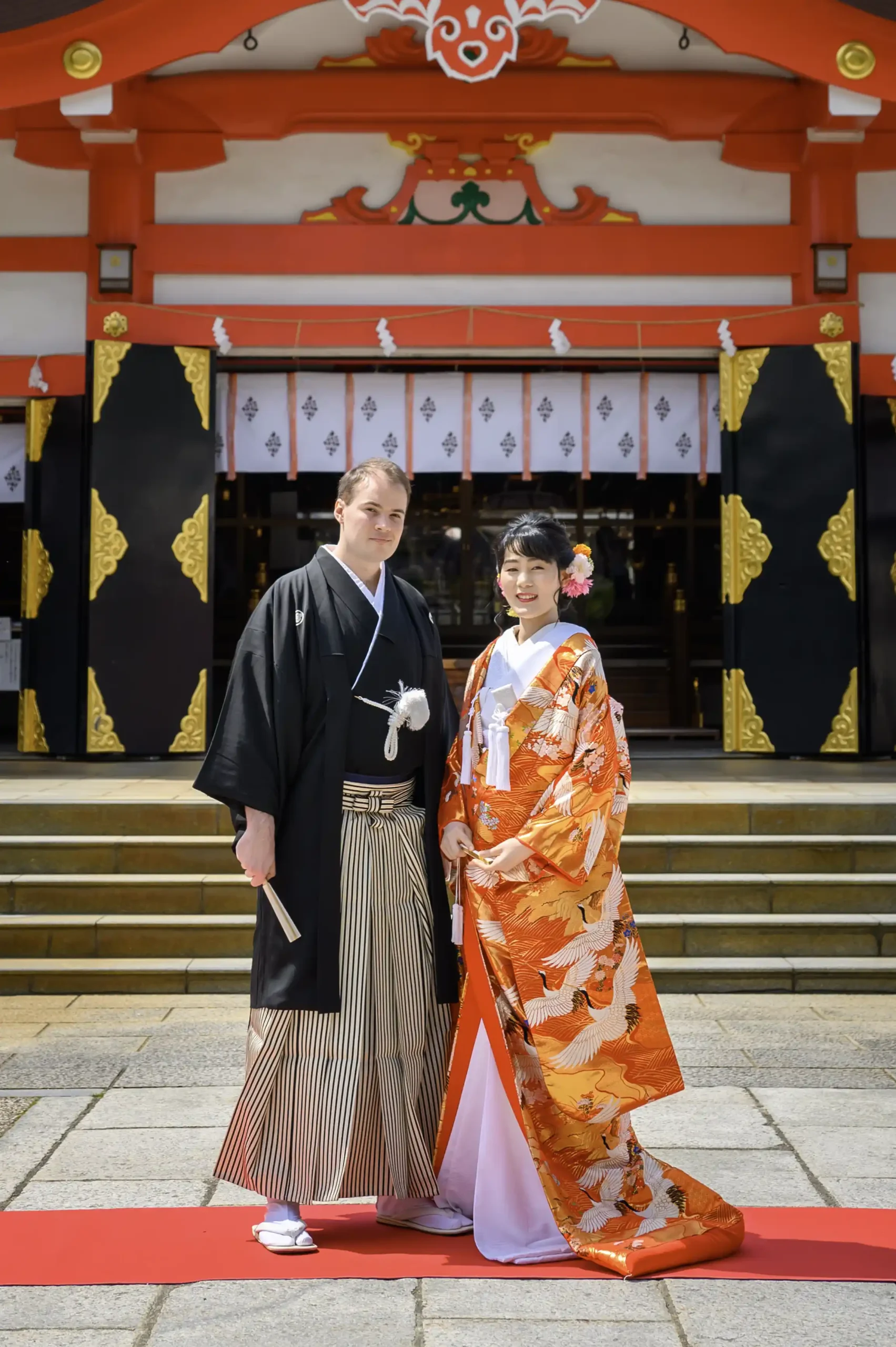
Initially, Tatsui’s first instinct was a Western-style wedding because they’re popular in Japan. But the first responses from wedding planners were expensive and asked for deposits straight away. “It felt like those businesses were only in it for the money,” they say.
And Niko had another reason. In Japan, chapel-style weddings often use hired “priests” who aren’t actually clergy, and the couple wanted something genuinely Japanese rather than an imitation of a Western wedding. Niko had also been to plenty of Western weddings already. So they went the traditional route instead: a Shinto wedding at a shrine.
It turned out to be special for the Japanese side of the room too. With Western weddings now so common in Japan, a traditional shrine wedding felt unusual and memorable for Tatsui’s family and friends as well.
Their verdict on the decision: “an absolutely excellent call.“
“Don’t bother with the Western-style weddings in Japan. Just go straight to the Shinto shrine. Seriously, having this kind of traditional Japanese experience was so fresh and surprisingly emotional to us both.”
Are you new to Shinto weddings? Read our guide to what a Shinto wedding is and how the ceremony works.
Planning a Japan Wedding From Austria
The planning took just over a year, and most of it landed on Tatsui. Niko’s (partial, affectionate) list of what she handled: the invitations, the photographer, hair and makeup, the seating plan, communication with the shrine’s wedding planner, the speeches, and bringing him bubble tea every now and then. His contribution, he says, was paying, “and kisses.”
They made two trips to Japan. In October 2023 they visited the shrine, where they were served tea, shown around, and walked through what the shrine could offer, which included hosting the reception on site as well as the ceremony. They also tried on kimono during that trip. In April 2024 they came back for the wedding itself.
The hardest part, Tatsui says, was pulling together all the separate pieces: kimono rental, hairdressers and the photographer. The shrine had its own package and partner vendors, but they weren’t the right fit, so she went online and found their own photographer, arranging everything by text message and checking in with Niko along the way.
“The shrine also had its own wedding planner that I chatted to using LINE. We messaged very often for about 3 months. While I was able to call her, it was quite difficult with our newborn daughter that I had to take care of and the 7 to 8 hour time difference between Austria and Japan.”
Her mother was a huge help on the ground in Japan, researching locations and kimono rentals and, during their visit, driving them around Toyama, where public transport is limited and a car is almost essential.
Not everything was easy on the family side either.
Planning and financial expectations “initially brought some trouble,” they admit. Tatsui’s parents were positive from the start. For Niko, the challenge was getting people to Japan. In the end, his parents, his older sister and her family, and one friend made the trip. His younger sister couldn’t come, though she had been at the ceremony in Austria, which softened the blow.
The Budget Spreadsheet That Avoided Surprises
Niko is, in his own words, in love with spreadsheets, and they credit one with keeping the wedding on budget.
Their method was simple. They listed every part of the wedding, from kimono rental to the reception, and gave each one a minimum cost and a maximum cost, along with how important it was to each of them.
That showed them the cheapest and most expensive possible version of the wedding from the start. As they made decisions, choosing a simpler package here or a nicer option there, the range narrowed until they reached the final figure.
The result? No surprise unexpected costs on the day.
They also point out something many international couples don’t expect: in Japan, guests give money as a wedding gift, called goshugi, typically around ¥30,000 per guest or ¥50,000 for a couple attending together. Their guests were generous, and it helped with the cost of the day.
Learn how goshugi works in our guide to Japanese wedding money gift etiquette.
Choosing the Outfits
Wedding kimono can cost upwards of $10,000 to buy, so like most couples in Japan, they rented. They tried two rental shops, and the recommended ones felt too expensive and not quite to their taste.
So Tatsui’s mother took them to her favourite kimono shop instead, where they found exactly what they wanted, while their daughter ran happily around the displays on the tatami.
“Without my mother it would have been very difficult to find the kind of wonderful outfits that we did.”
Tatsui wore a vivid iro-uchikake for the whole day. That’s worth noting, because many guides (including ours) describe the white shiromuku for the ceremony followed by a change into the iro-uchikake for the reception.
Tatsui wore one kimono throughout, which means one rental and one dressing session instead of two. Niko wore hakama, which he describes simply as his “samurai outfit.”
Beautiful, but not easy to wear. “The kimono was really heavy and so hot too!” Tatsui says. “The multiple layers of clothes as well as the spotlight that kept shining on me did not make that any easier!”
Read our complete guide to the iro-uchikake, including colours, motifs and rental costs.
The Wedding Day: The Ceremony
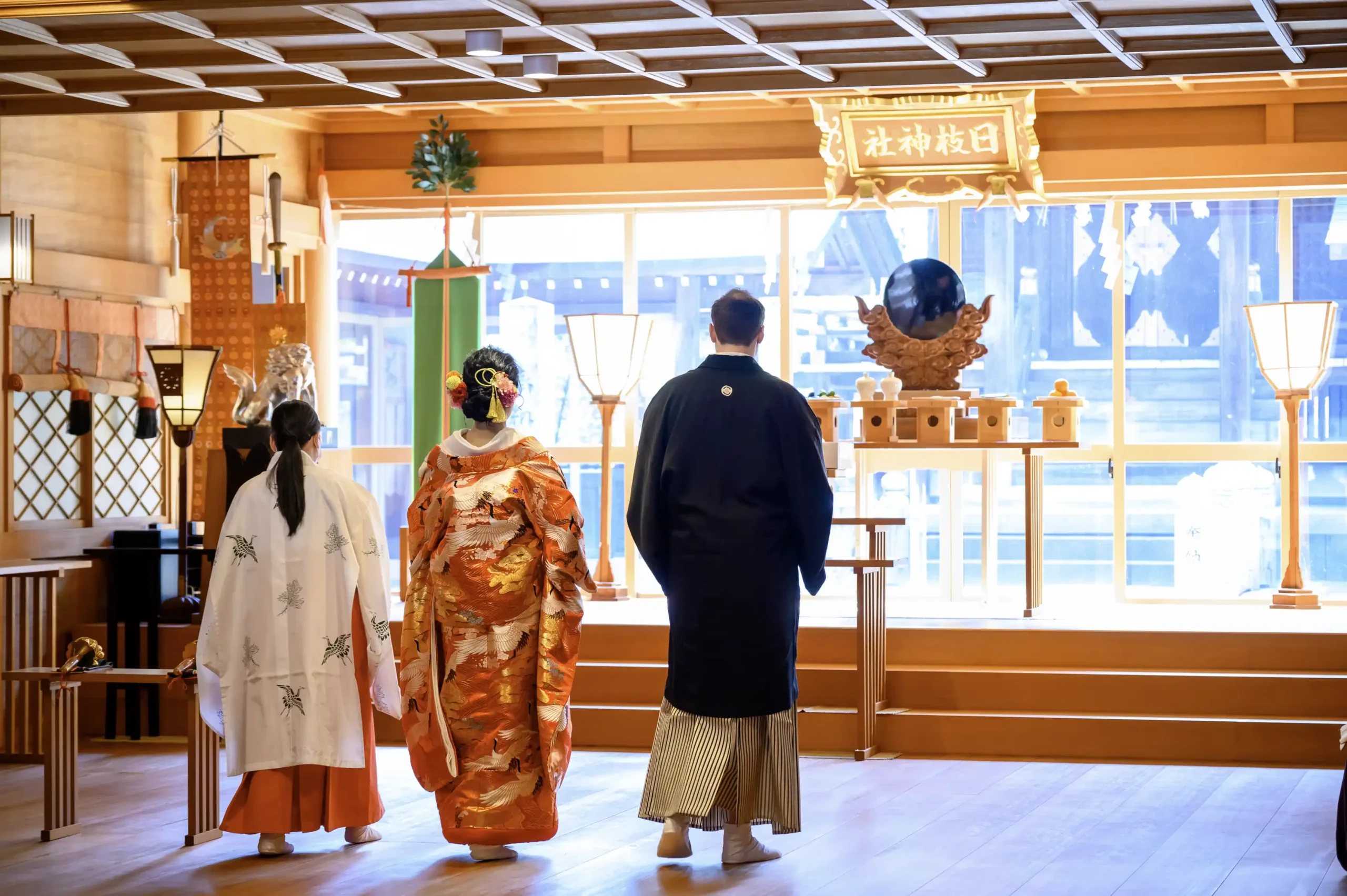
Niko barely slept the night before as he had prepared well, reading up online and watching YouTube videos, so much so that Tatsui says she didn’t need to explain much to him. But he was still terrified of getting something wrong.
They drove to the shrine early in her dad’s car, hours before the guests arrived around midday. Niko was dressed quickly. Tatsui’s hair and kimono took nearly two hours. And unlike a Western wedding, where the groom traditionally doesn’t see the bride before the ceremony, Niko sat and watched her get ready while he practised the welcome speech he had to give in Japanese.
Before the ceremony they were given their instructions: when to drink the sake, how to present the sacred branch. Niko’s reaction was mostly panic. And the sake came with a complication.
“Unexpected was the amount of sake you are supposed to drink during the ceremony. Since I had to drive a car afterwards though, I had to just ‘pretend’ to drink it.”
The ceremony began with everyone walking together around the shrine and through the torii gates, then purifying their hands, a symbolic passage from the everyday world into a sacred one. Then came the rituals themselves, the sake and the offering of the tamagushi branch.
Niko admits he mostly followed instructions he didn’t fully understand, but the atmosphere stayed with them both: “traditional and calm. Kind of serene even.”
The Wedding Day: The Reception
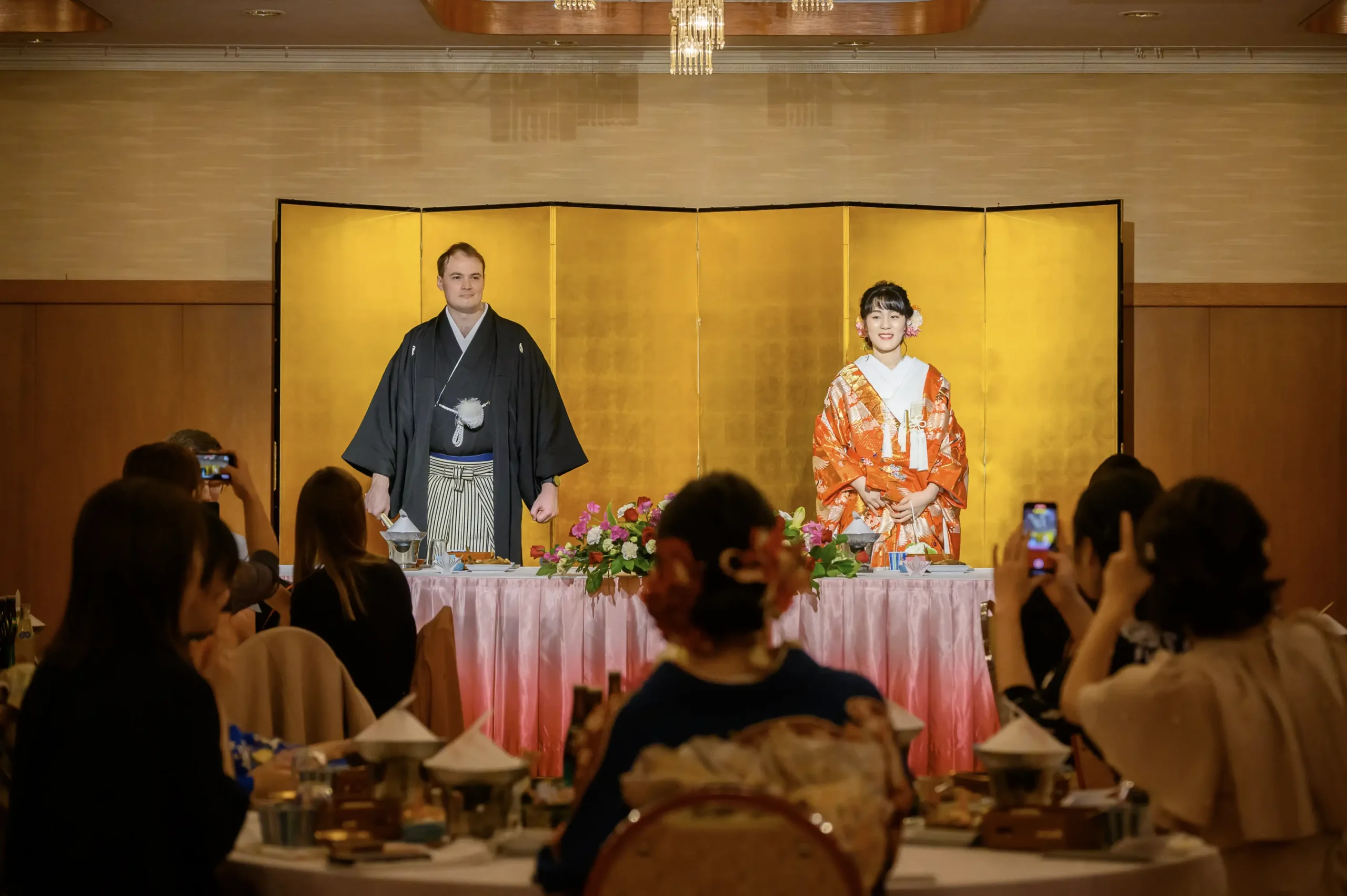
The reception was held at the shrine, and the mood changed completely. “The party was quite fun and energetic though,” they say. And very precisely timed: “There is a strict schedule. For food, for speeches, for going to the toilet even!”
A few details stood out to Niko such as the families were seated at the back of the room, rather than at the front as at many Western weddings, so that they could look out over the whole celebration.
Kagami-Biraki
They also held a kagami-biraki, breaking open a sake barrel and then visiting each table. And even Tatsui’s break was made into a moment: she walked around the room with both sets of parents, stepped out, and came back in under traditional Japanese umbrellas.
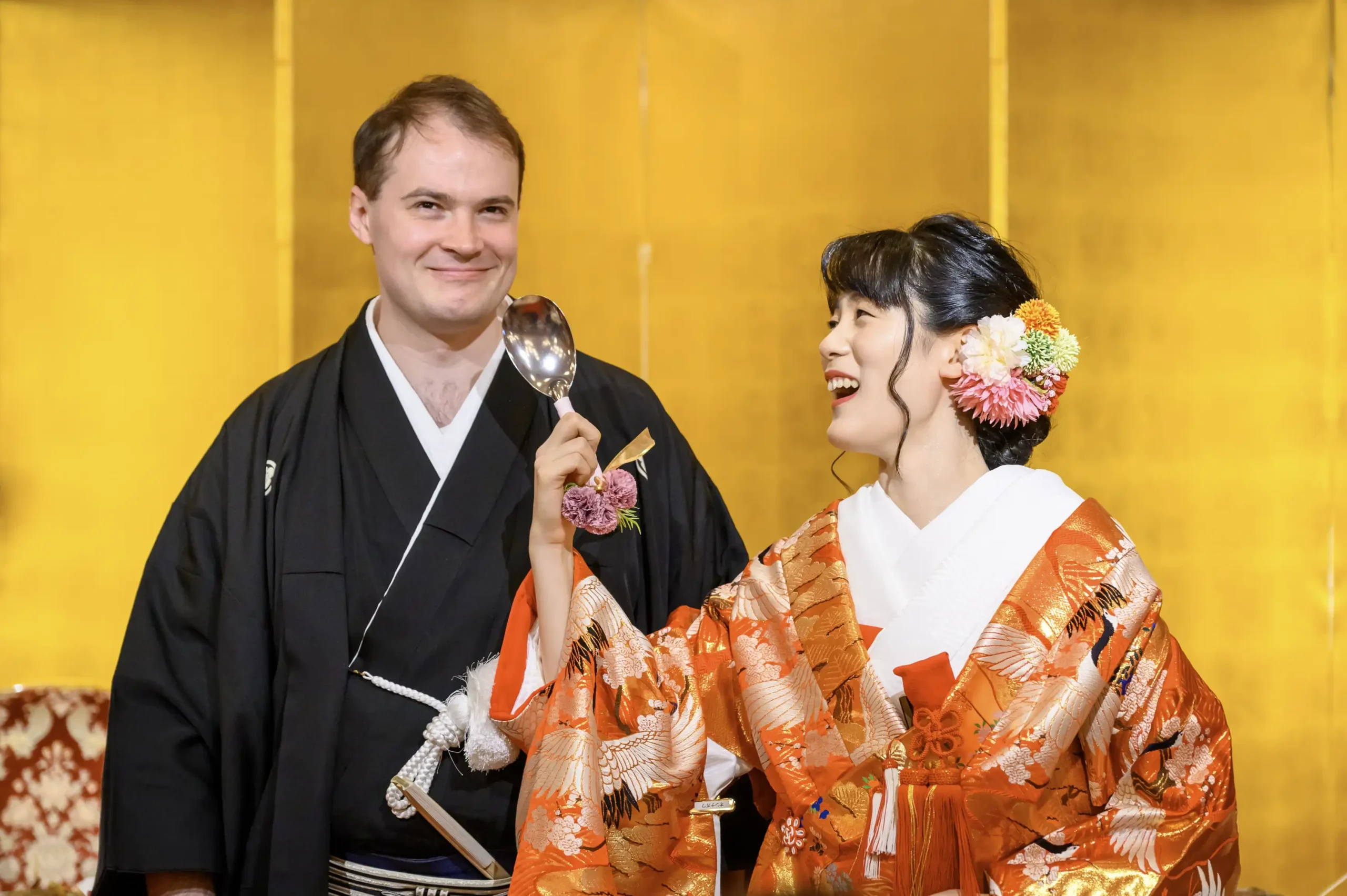
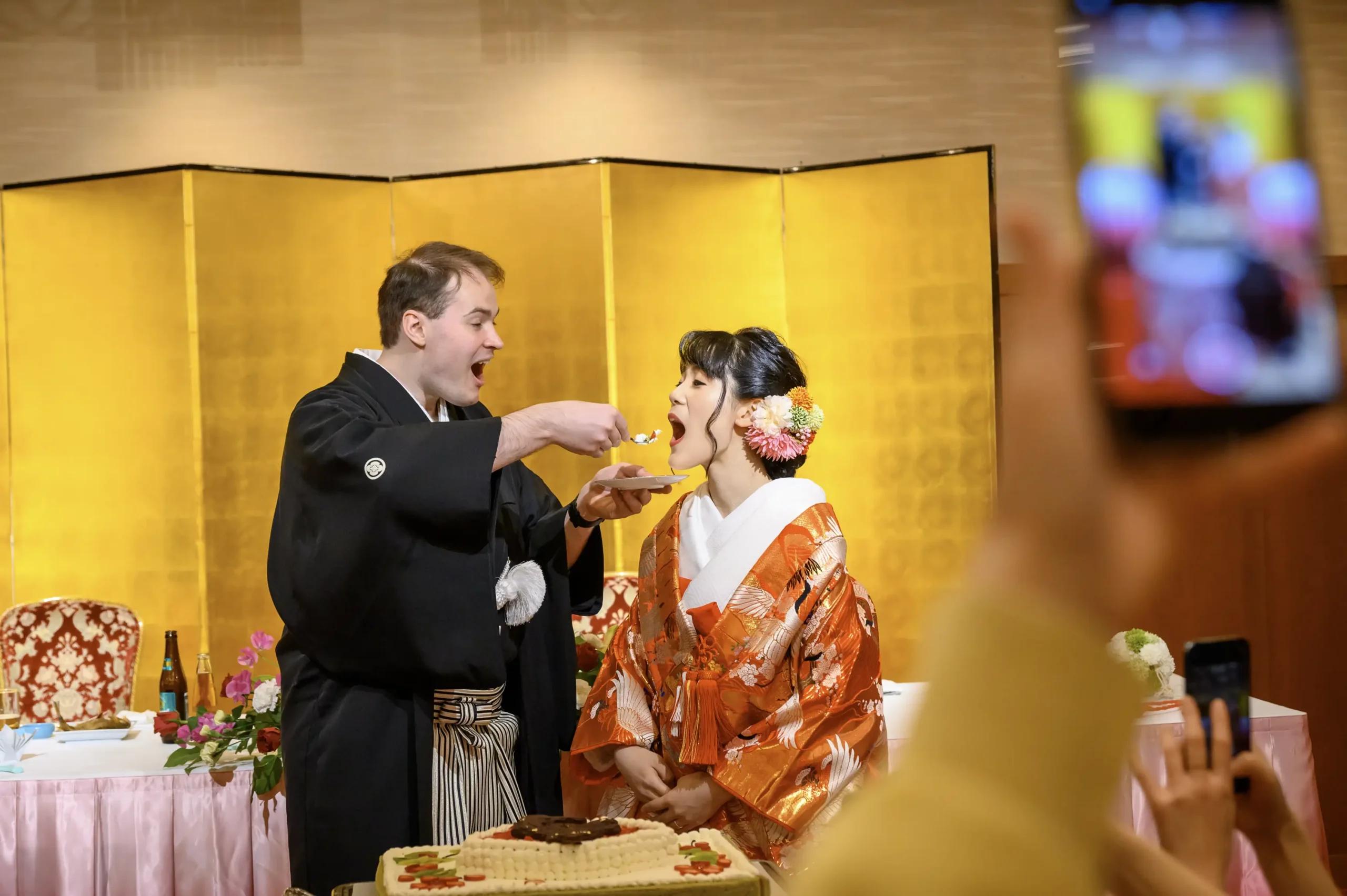
Then came the cake. While Niko was handed a tiny spoon to feed Tatsui. Tatsui was handed what Niko calls “the spatula of Hercules” to feed him.
“But Niko somehow managed to still properly eat the cake and the crowd went nuts. That was an awesome moment.”
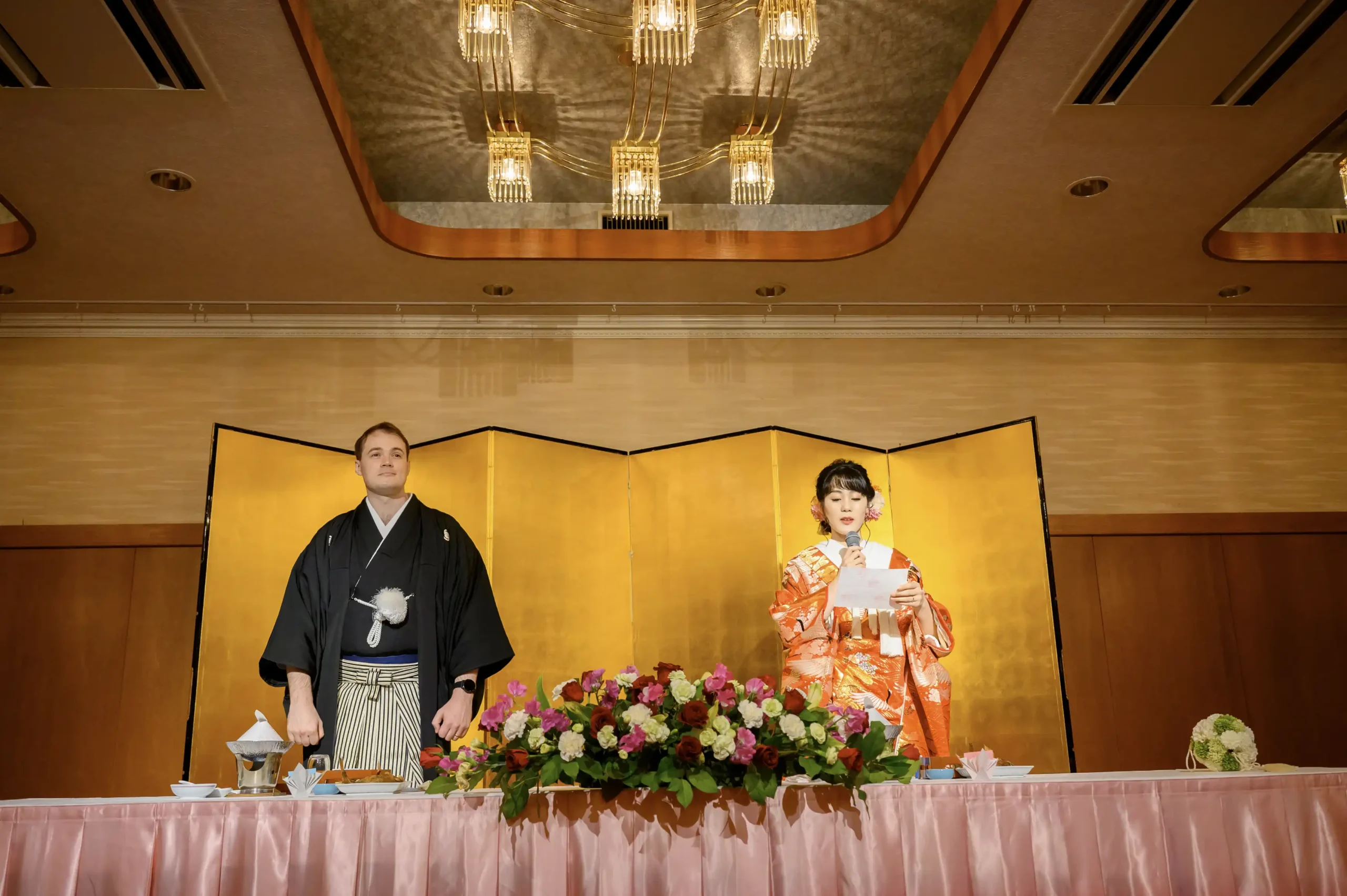
The other moment neither of them will forget came at the end, when Tatsui read a letter to her parents and they cried. The bride’s letter to her parents is one of the most emotional traditions at a Japanese wedding reception, a thank-you for everything they’ve done, read aloud in front of the guests.
Read about the kagami-biraki sake ceremony and what it means.
The Wedding Food
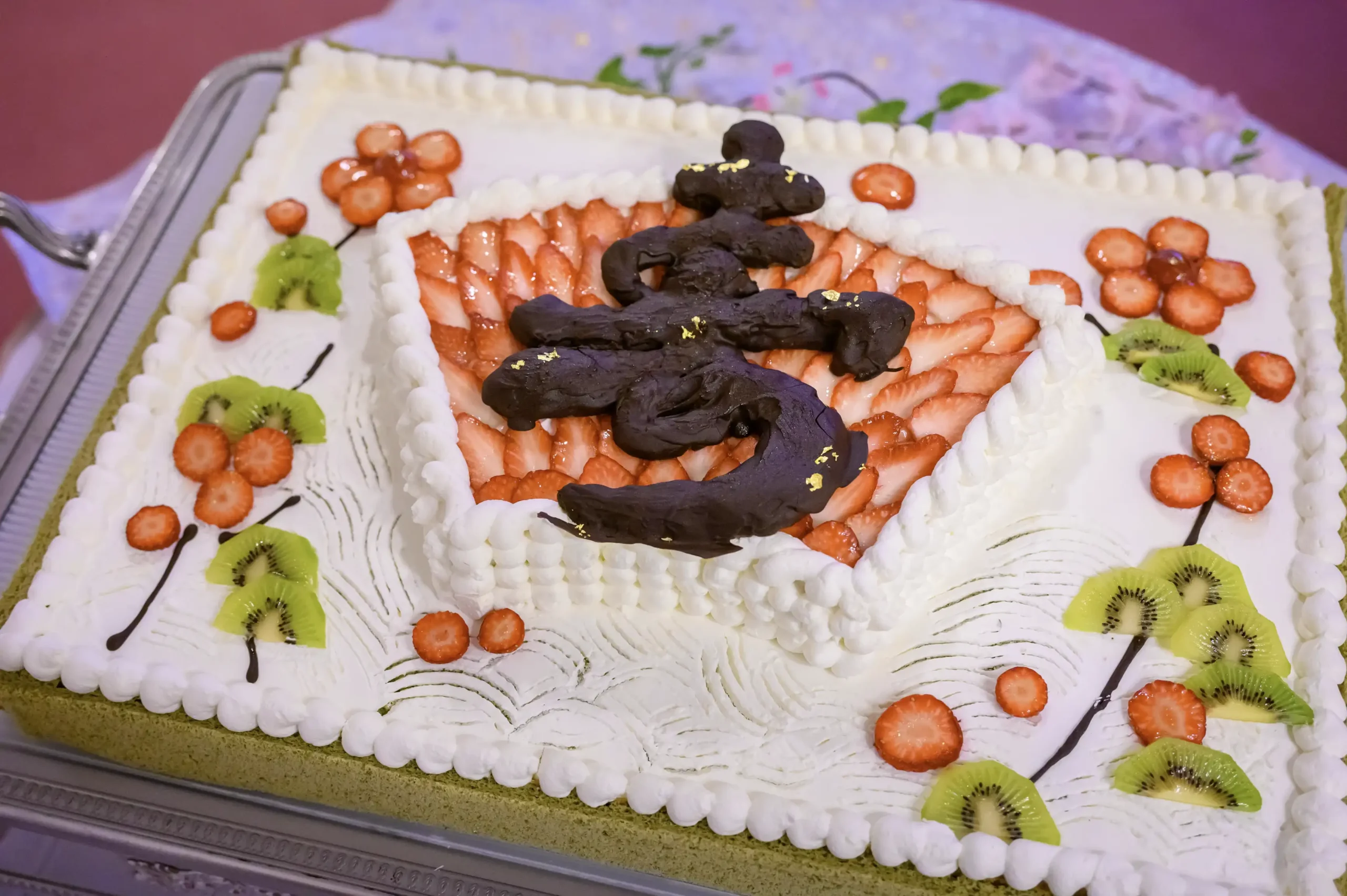
And the food? “This is the reason to have a wedding in Japan,” Niko says. “The food is so good.” His one regret: no leftovers.
After about two hours, guests left with gifts from the couple. There was no dancing and Niko counts this as a win.
See what’s typically served at a Japanese wedding reception.
What Surprised Them
For Niko it was the length of the day. “While I was promised a 3 hour party only, Tatsui and I had to arrive way earlier to prepare! So it was more like 8 to 10 hours for us.”
For Tatsui it was the timing. “Though we planned very precisely, we ended up having less time for the reception than I thought, so a few things had to be cut a bit short and done very fast!”
Tatsui also experienced the traditions with fresh eyes. Shinto weddings aren’t as common in Japan as they used to be, so the ceremony was new to her too. And having been to several European weddings, she loved how short and relaxed a Japanese wedding felt by comparison.
Would they change anything? Not much.
“It is honestly hard to imagine what could have made it any better,” Niko says, though he admits a few meditation techniques for a better night’s sleep might have helped.
The Legal Side
Because they were already legally married in Austria, the Shinto ceremony in Japan had no legal role, which is true of any shrine wedding in Japan. Their paperwork was about getting Japan to recognise the Austrian marriage.
Tatsui first obtained a certificate of legal capacity to marry before the Austrian wedding. Afterwards, they sent the Austrian marriage certificate together with her koseki tohon (family register) to the Embassy of Japan in Austria, which handled the rest. They describe it as “rather straightforward.”
For the full process, read our guide to the legal requirements for getting married in Japan as a foreigner.
Their Advice for International Couples
Tatsui’s advice is aimed squarely at couples like them, with one Japanese partner and one foreign.
“The foreign spouse will likely not be able to help their Japanese partner much when planning the wedding. The wedding planners typically only speak Japanese, so the language barrier might be too large. Thus, it is important for the foreign spouse to take care of their Japanese partner and help them in other ways. The planning process is exhausting, so it is important to remind yourselves that you are a team.”
Niko’s takeaway is about where the money went. Rather than paying for an imitation of a Western wedding, their spending went to local businesses and to the shrine itself, helping to keep the tradition alive. “That money went somewhere where it creates a net positive effect,” he says.
And from both of them: Japanese Weddings are short and they count that as a recommendation.
What’s Next for Niko and Tatsui
Guides can tell you how a Shinto wedding works, but what Niko and Tatsui’s story shows is what it actually feels like: the year of LINE messages across time zones, the mother who knew the right kimono shop, the nerves, the spatula, and a letter that made two parents cry.
They do plan to move to Japan in a few years but in the meantime, Tatsui keeps joking about having a third wedding in China. Niko does not find this very funny.
Thank you Niko and Tatsui, for letting us share your story. It’s the kind of experience we hope will help other couples in planning their own wedding in Japan.
You can follow their journey on YouTube, Instagram and Facebook at The Red Value.
[PHOTO CREDIT: All wedding photos by One Film Wedding.]

Timothy is a web builder, marketing specialist and Japan travel writer with a deep passion for Japan and its culture. He started Get Married in Japan to help international couples navigate Japan's wedding traditions — and to connect them with the people who know it best. He also writes first-hand travel guides to lesser-known corners of Japan at Nihon Travel Guide.
Connect on LinkedIn →