
- Iro-uchikake (色打掛): Colourful reception kimono worn after the Shinto ceremony. Any colour except white, heavily embroidered with symbolic motifs.
- Popular Colours: Red (good fortune, most traditional), Gold (prosperity, often paired with red), Black (bold & modern), Navy (elegant & understated).
- Embroidery Motifs: Cranes (longevity), Peonies (prosperity), Phoenix (rebirth), Pine/Bamboo/Plum (resilience).
- Oiro-naoshi: Costume change from shiromuku to iro-uchikake (20–30 minutes). Built into the reception as a theatrical moment.
- Rental: ¥100,000–¥250,000. Renting from the same shop as your shiromuku ensures better coordination and fittings.
Wako is a professional hairdresser with over 15 years specialising in traditional Japanese wedding hairstyles and kimono dressing. She brings deep firsthand expertise in Shinto ceremony etiquette, bridal attire, and Japan's wedding culture and trends.
Follow on Instagram →While the shiromuku is the ceremony, quiet, white and deliberate, the iro-uchikake is the moment the room changes temperature.
If you’ve already read about the shiromuku and you’re wondering what comes next on a Japanese wedding day, this is it. The iro-uchikake (色打掛), also written as irouchikake or iro uchikake, is Japan’s vibrant embroidered reception kimono.
The garment a bride changes into after the wedding ceremony, in any colour except white, covered in embroidery that actually means something.
Though not used in the ceremony itself, it’s not a smaller decision than the shiromuku and has different things to consider when selecting one.
To find out more about the iro uchikake, I interviewed Wako Koshigai, a professional Japanese hairdresser with over 15 years of experience specialising in traditional Japanese wedding hairstyles and kimono dressing. She has styled hundreds of brides through the oiro-naoshi transformation and experienced it herself on her own wedding day.
赤 · 金 · 黒
The Colours
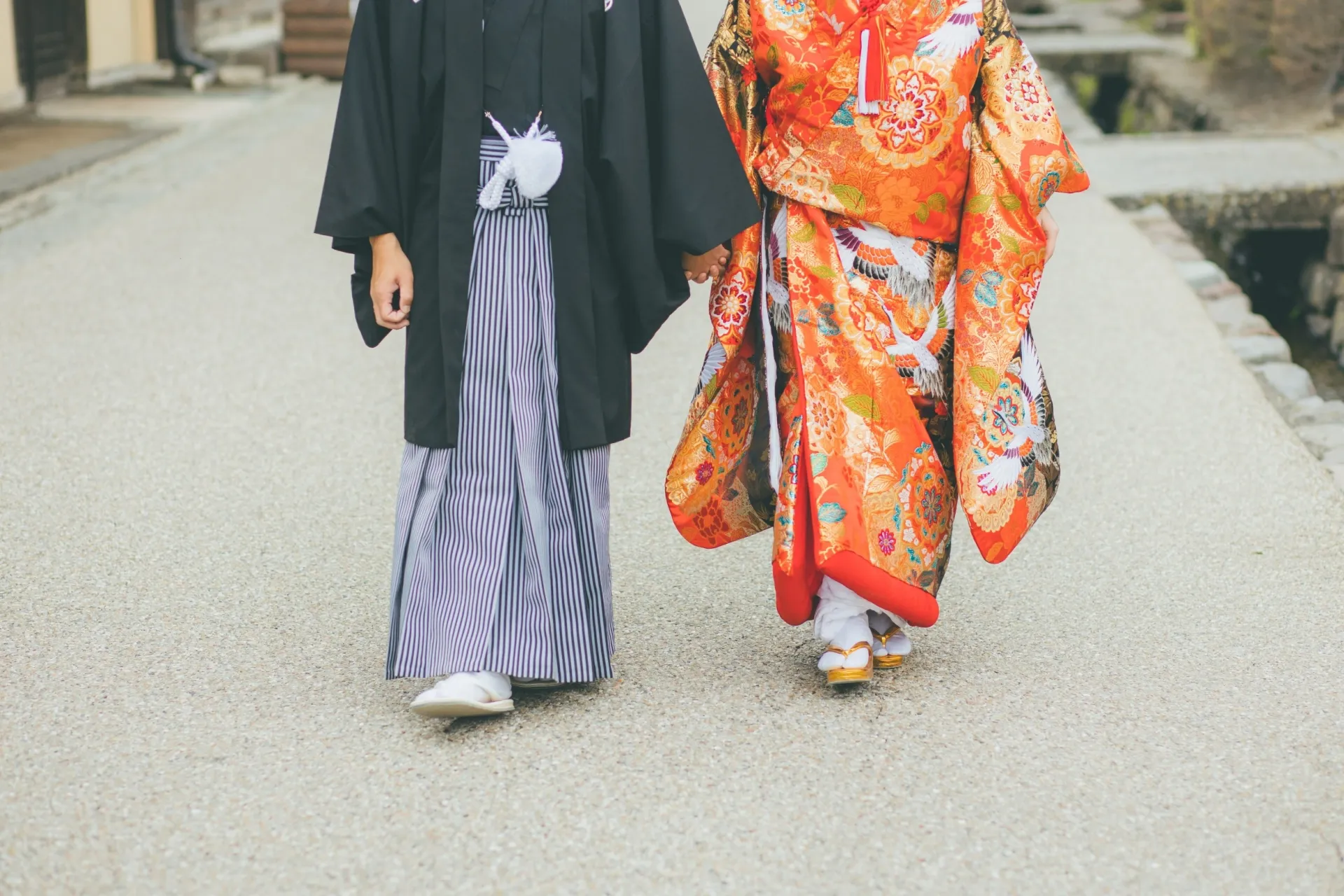
Any colour except white. Red is the most traditional and stands for good fortune. Gold signals prosperity, and black is the bold modern choice.
Reception kimono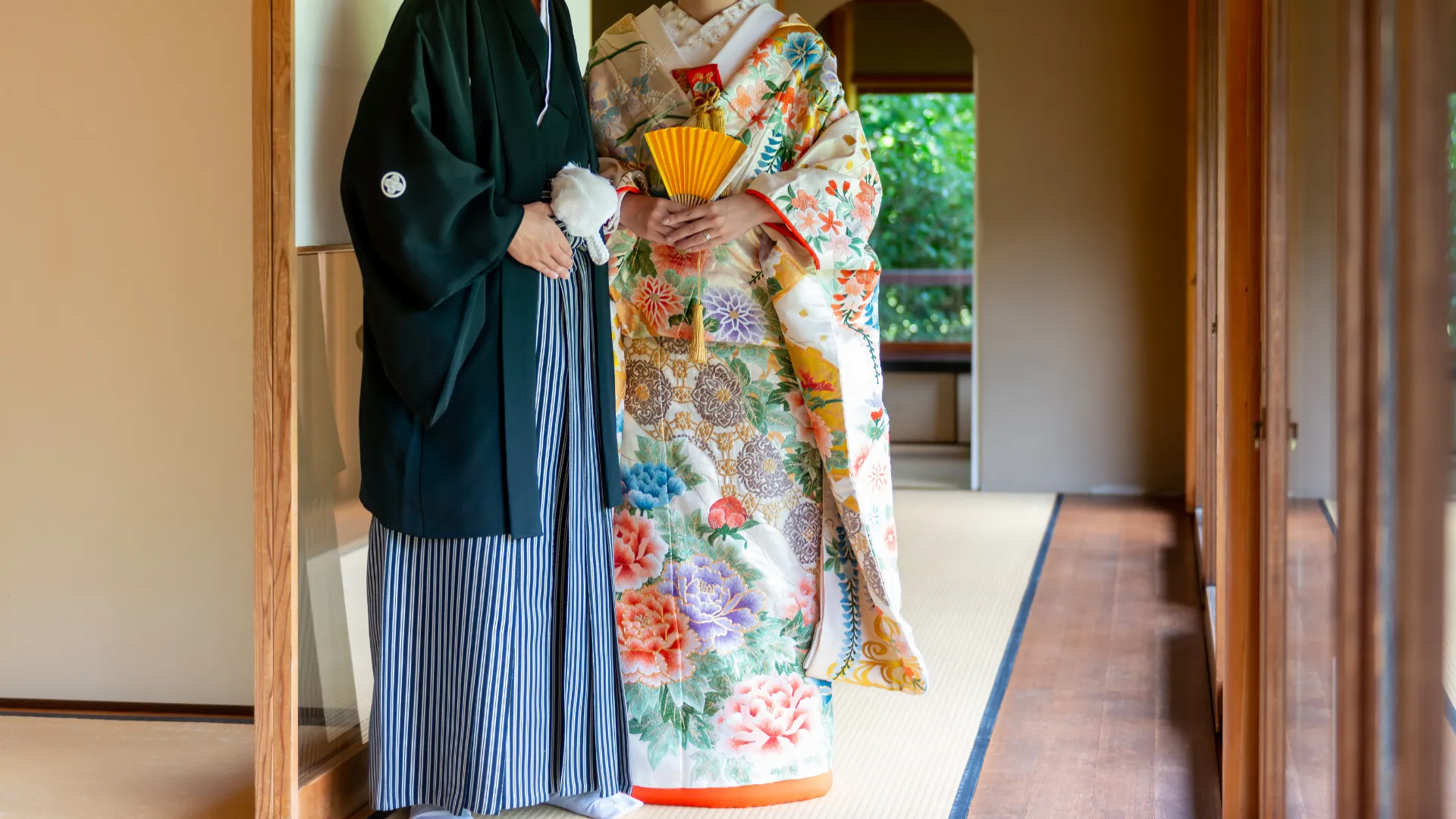
柄
The Embroidery
Every motif carries a wish for the couple: cranes for longevity, peonies for prosperity, the phoenix for rebirth.
Symbolic motifsWhat Is the Iro Uchikake?
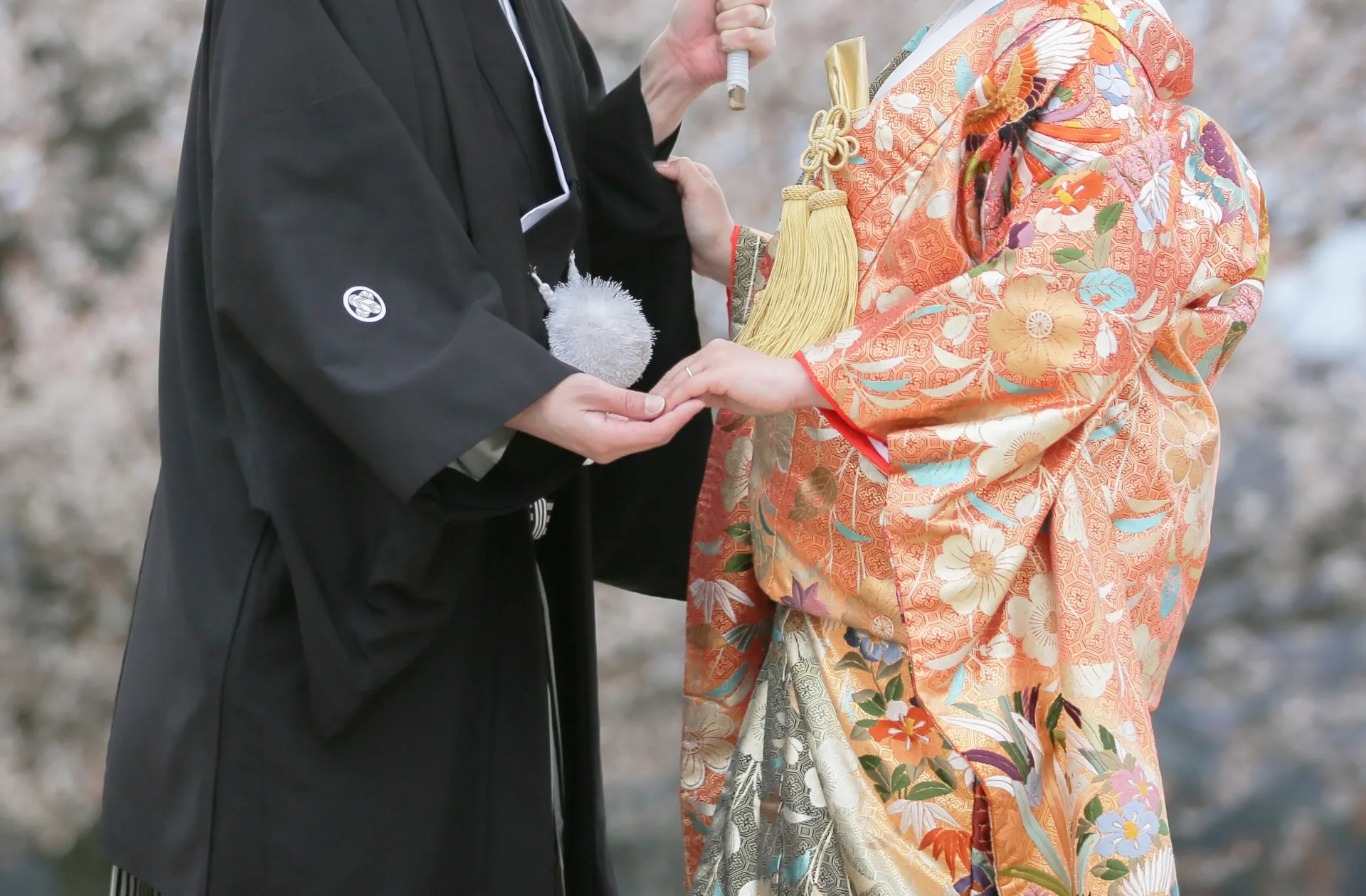
Structurally, the iro uchikake kimono (sometimes searched simply as kimono uchikake) isn’t far from the shiromuku.
Both have outer kimono robes worn over a kakeshita base layer, the same heavy, trailing silhouette.
The difference is everything else.
Colour, embroidery, and where it sits in the day.
The shiromuku is worn for the ceremony inside the shrine. The iro-uchikake comes out afterward, for the reception, when the formality of the ritual gives way to celebration.
Where the shiromuku is pure white and restrained, the iro-uchikake can be any colour except white. It is almost always heavily embroidered with motifs that carry their own meaning, which is something most international brides don’t find out until someone tells them.
As one half of Japan’s most recognisable japanese traditional wedding attire, the iro-uchikake sits alongside the shiromuku as the two defining pieces of japanese wedding clothes worn across a single ceremony day.
What do the Colours Mean?
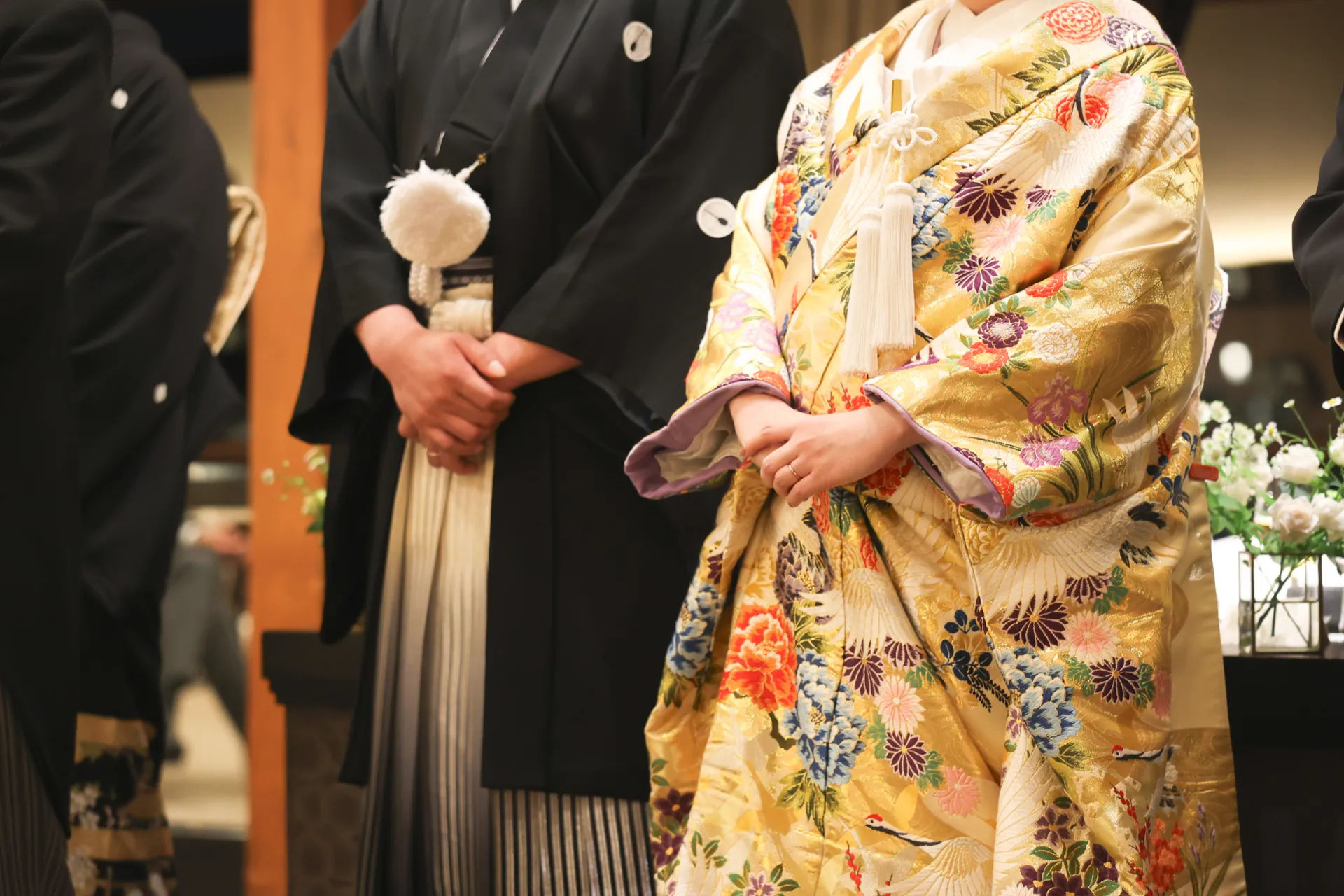
Red is the most traditional and most popular choice. It represents good fortune and vitality, and against the memory of the white shiromuku it creates the strongest possible visual contrast — which is part of why the oiro-naoshi works so well as a moment.
Gold represents prosperity and wealth, frequently paired with red rather than worn alone, since the combination amplifies both.
Black has become a popular modern choice — bold, striking, a deliberate departure from anything expected.
Navy and deep blue read as elegant and understated, increasingly chosen by international brides who want the iro-uchikake’s drama without quite as much intensity.
And a white-on-white iro-uchikake exists too. The embroidery is still present, just without the colour shift, for brides who want the second kimono without changing the day’s overall palette.
So how do you actually choose?
Skin tone matters more than people expect. A colour that looks striking on a hanger can read completely differently against your complexion.
Venue lighting matters too: a colour that glows under the natural light of a shrine garden might flatten under indoor reception lighting. But honestly, the answer Wako gives most often isn’t about any of that. It’s about which colour feels like you when you put it on. The photos follow from there.
“The shiromuku is tradition. The iro uchikake is expression. When I help a bride choose her colour and her motif, I am helping her tell her story.” – Wako Koshigai
What does the Embroidery Mean?
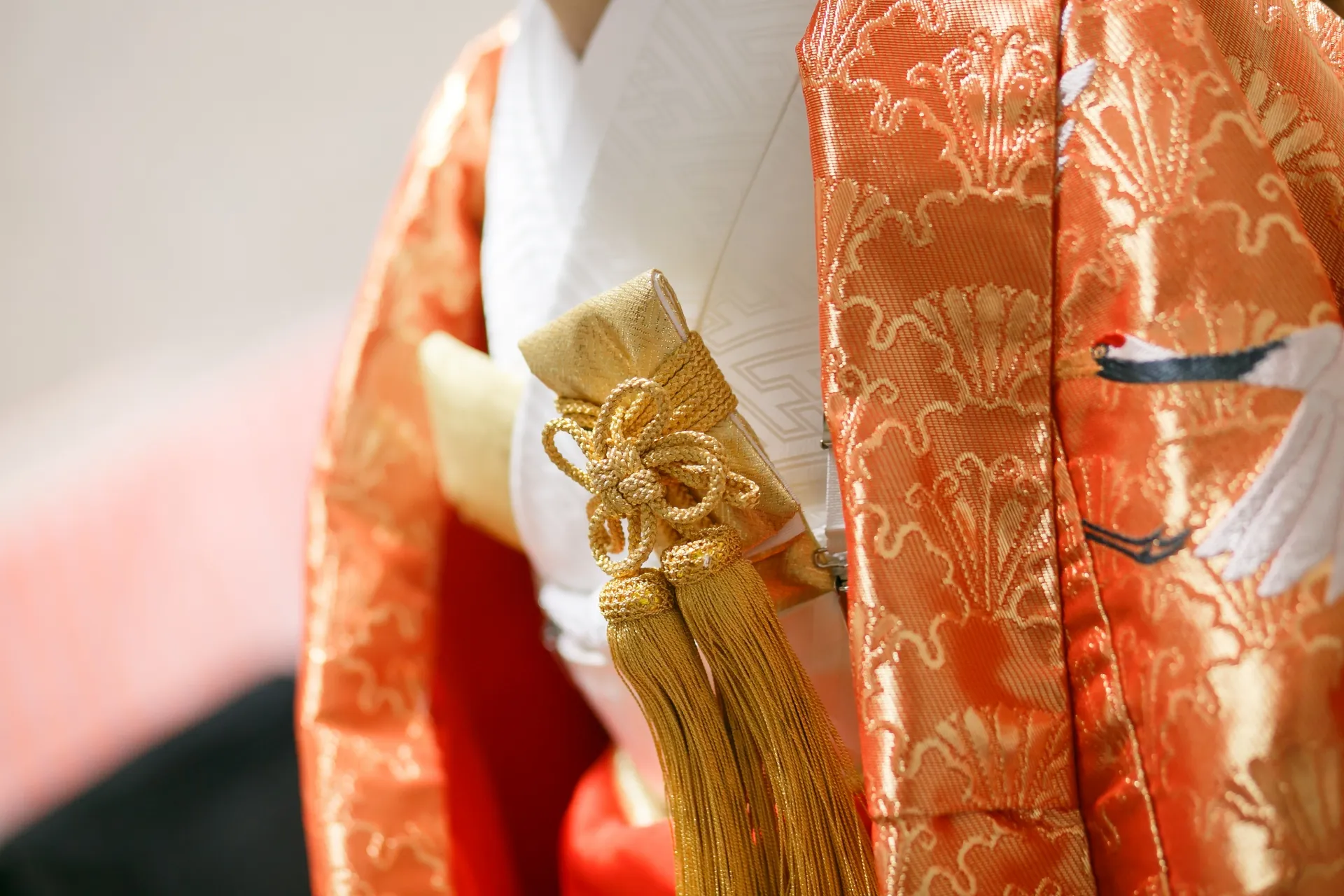
This is the part of the iro uchikake most international brides have no idea about until they’re already holding the fabric. Every motif means something.
Cranes (tsuru) are the most common motif and represent longevity and fidelity as a crane is said to live for a thousand years, and the symbolism carries directly into the marriage.
Peonies (botan) represent prosperity and good fortune, big and bold and unmistakable even from across a reception room.
The phoenix (hou-ou) is rarer and more dramatic. Meaning grace and rebirth, an auspicious choice for a bride who wants something distinctive.
Pine, bamboo, and plum together (shochikubai) are known as the three friends of winter, symbolising resilience and steadfastness through hardship. A quietly meaningful choice for a couple who want their kimono to say something about endurance rather than just celebration.
Waves and seasonal florals are more contemporary options, chosen more for visual harmony with the wedding’s overall aesthetic than for symbolism.
While none of this may be necessary to know to choose a beautiful iro-uchikake, finding out turns the decision from an aesthetic into personal one. That’s usually the moment a bride stops comparing options and just knows.
The Oiro-Naoshi: The Moment Everything Changes

The oiro-naoshi is the reception costume change: from the shiromuku to iro uchikake. It’s built deliberately as a moment, not just a wardrobe logistics problem.
The bride disappears from the reception for 20 to 30 minutes. The room knows something is coming. And then she returns, completely transformed, into a wedding that suddenly feels different from the one guests were just sitting in.
Wako’s own wedding followed exactly this arc, and her description of it is the best explanation of why the oiro-naoshi works:
Step 1: the mystique of the shrine in the shiromuku and wataboshi.
Step 2: after moving to the reception, removing the hood to reveal the vibrant iro uchikake, switching to a modern hair arrangement with beautiful accessories. The transition from traditional to personal creates an amazing energy in the room.
The hair changes with the dress. Whatever traditional or hybrid style accompanied the shiromuku typically gives way to something with more movement. This means new accessories, a different shape, a look built for a room that’s about to get louder.
It’s not just a japanese wedding outfit change but a tonal shift for the whole reception.
Read our complete guide to the shiromuku, the garment worn before this transformation.
How the Iro Uchikake Photographs
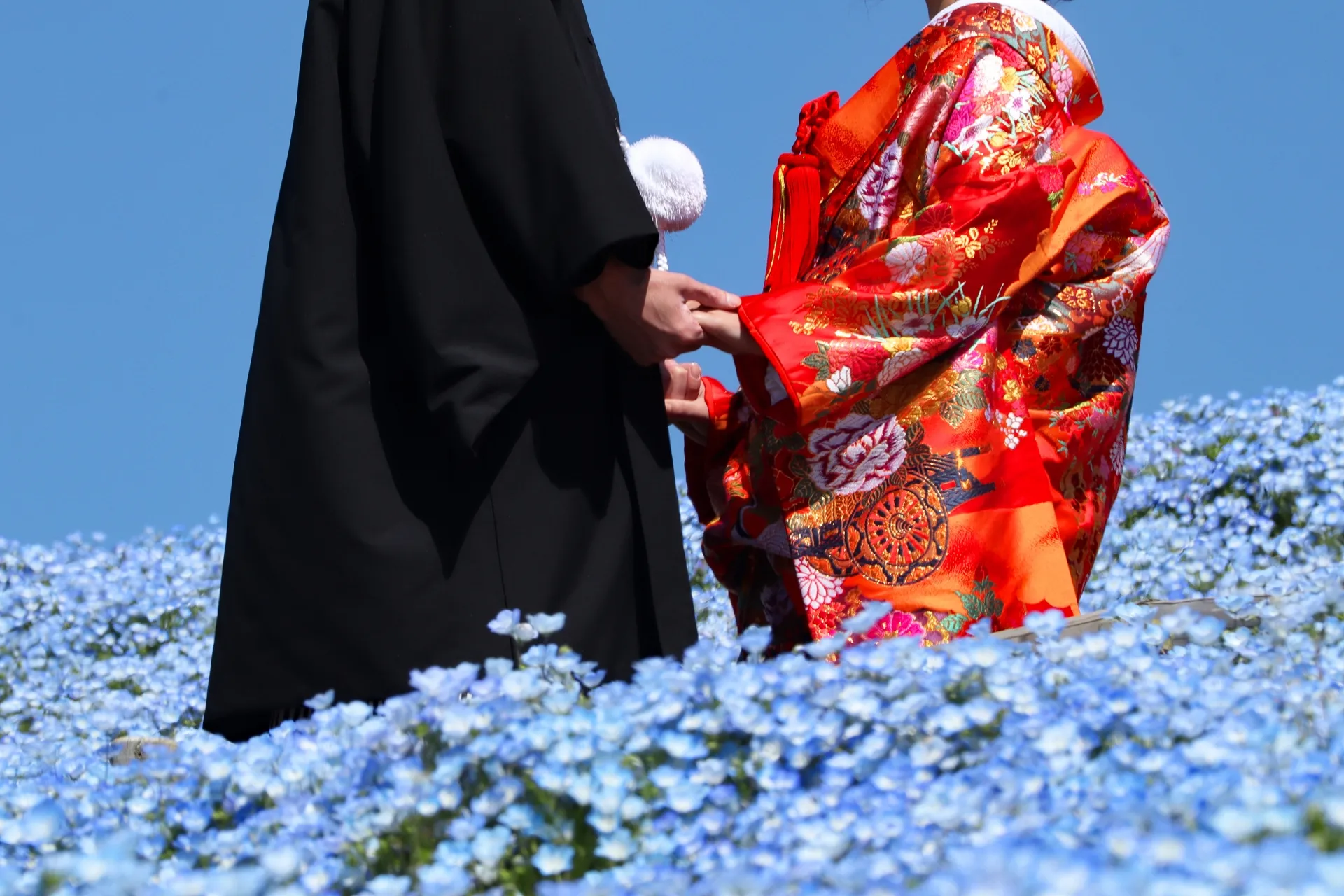
Wako’s rule for kimono photography in general is stillness over movement. The closed I-line silhouette, the 45-degree angle still applies here. But the iro uchikake adds something the shiromuku doesn’t have: colour and embroidery that need to be seen in full and not just suggested.
A tight portrait crop misses the point of an iro uchikake almost entirely. The full spread of the embroidery across the sleeves and the back of the robe is the actual subject. A photographer needs to pull back enough to let the pattern read completely and not just hint at it.
The obi from behind is another shot worth specifically asking for, since the back of an iro uchikake is often as detailed as the front.
Lighting works a little differently too. Richer colours can handle slightly more direct light than the shiromuku’s white silk ever could. But the gold thread detail still needs care, since it blows out fast under anything too harsh.
Read our guide to wedding photographers in Japan for advice on finding someone who shoots kimono well.
Pairing the Iro Uchikake With the Rest of the Day
There’s a detail from Wako’s own planning notes worth knowing: the iro uchikake and the cutting ceremony — whether that’s a Western cake, a mochi-tsuki, or a chirashi-sushi presentation — should visually make sense together.
A bold red-and-gold iro uchikake beside a minimalist white cake reads as mismatched in photos in a way that’s hard to notice until you see it happen.
The same logic applies to the kagami-biraki sake ceremony, which often happens around the same point in the reception. Colour and theatre reinforce each other when they’re planned together rather than separately.
If you’re doing the full 3-step transformation: shiromuku, iro uchikake and Western dress, the iro uchikake is the middle beat.
Sacred, then celebratory, then personal. It’s the loudest of the three, and it’s meant to be.
Read our complete guide to hybrid Shinto-Western weddings for how the full transformation works across a wedding day.
Renting an Iro Uchikake in Japan
When renting an iro uchikake wedding kimono for your iro uchikake wedding, Wako reccomends the same advice as the shiromuku: rent locally, don’t ship.
The garment is heavy, layered, and built to be fitted by someone who does this professionally. Not something to manage internationally.
A standard rental includes the outer robe, the kakeshita underlayer, the obi, and the accessories that complete the look.
Pricing runs approximately ¥100,000 to ¥250,000, with elaborate embroidery or rare colours pushing toward the higher end.
Booking timelines follow the same peak season logic as the shiromuku: 12 months ahead for sakura season and autumn foliage, 6 months for everything else.
If you’re already renting a shiromuku, there’s a practical case for renting the iro uchikake from the same shop: colour coordination between the two garments is easier to manage in one place, fittings happen on the same day, and pricing is often bundled.
For a complete breakdown of attire costs across your wedding, read our Japan destination wedding cost guide.
Is the Iro Uchikake Right for You?
If the shiromuku felt like the right way to start your wedding day, the iro uchikake is usually the right way to continue it. But not everyone does both, and that’s a perfectly reasonable choice too.
It’s right for you if you’re already wearing a shiromuku and want the full traditional arc through to the reception.
It’s right for you if you want your reception to have its own visual drama, distinct from the ceremony that came before it.
And it’s right for you if a motif with real personal meaning. For example cranes for fidelity, pine and bamboo for resilience etc. It matters more to you than just choosing something that photographs well.
For brides building the full traditional Japanese wedding outfit experience across their day, the iro uchikake is simply the next chapter after the shiromuku.
Consider skipping it if your budget only stretches to one kimono, if you’d rather move straight from the shiromuku into a Western dress, or if your reception venue doesn’t suit the formality of the look.
None of these are wrong reasons. Wako’s own view on this is simple: “Not every bride needs both. But the ones who try the iro uchikake almost never regret it.”
For couples planning their attire across the full wedding day, connecting with a stylist who can coordinate both garments, colour, fit and timing makes the whole transformation work the way it’s supposed to.
For a side-by-side comparison of all three attire options, read Shiromuku vs Iro Uchikake vs Modern Wedding Dress.
For a full overview of Japanese wedding attire, read our Japanese Wedding Attire hub.
Iro uchikake Kimono — Frequently Asked Questions
Everything you need to know about Japan’s colourful reception kimono.
What is an iro uchikake?
What is the difference between shiromuku and iro uchikake?
Iro uchikake: Colourful, worn for the reception (celebration). Many brides wear both on the same day.
What does the colour of an iro uchikake mean?
Gold: Prosperity (often paired with red)
Black: Bold & modern
Navy: Elegant & understated
What do the embroidery motifs mean?
Peonies: Prosperity & good fortune
Phoenix: Grace & rebirth
Pine/Bamboo/Plum: Resilience through hardship
What is the oiro-naoshi?
How much does it cost to rent an iro uchikake?
Should I rent both from the same shop?
Do I need to wear both shiromuku and iro uchikake?
How does iro uchikake photograph?
About the Contributor
Wako Koshigai is a professional hairdresser with over 15 years of experience specialising in traditional Japanese wedding hairstyles and kimono dressing. With deep knowledge of Japan’s wedding culture and trends, she has worked with both Japanese and international couples across the country’s most celebrated venues, shrines, and heritage settings.
Timothy is a web builder and marketing specialist with a deep passion for Japan and its culture. He founded Get Married in Japan to help international couples navigate Japan's wedding traditions — and to connect them with the people who know it best.
Connect on LinkedIn →