
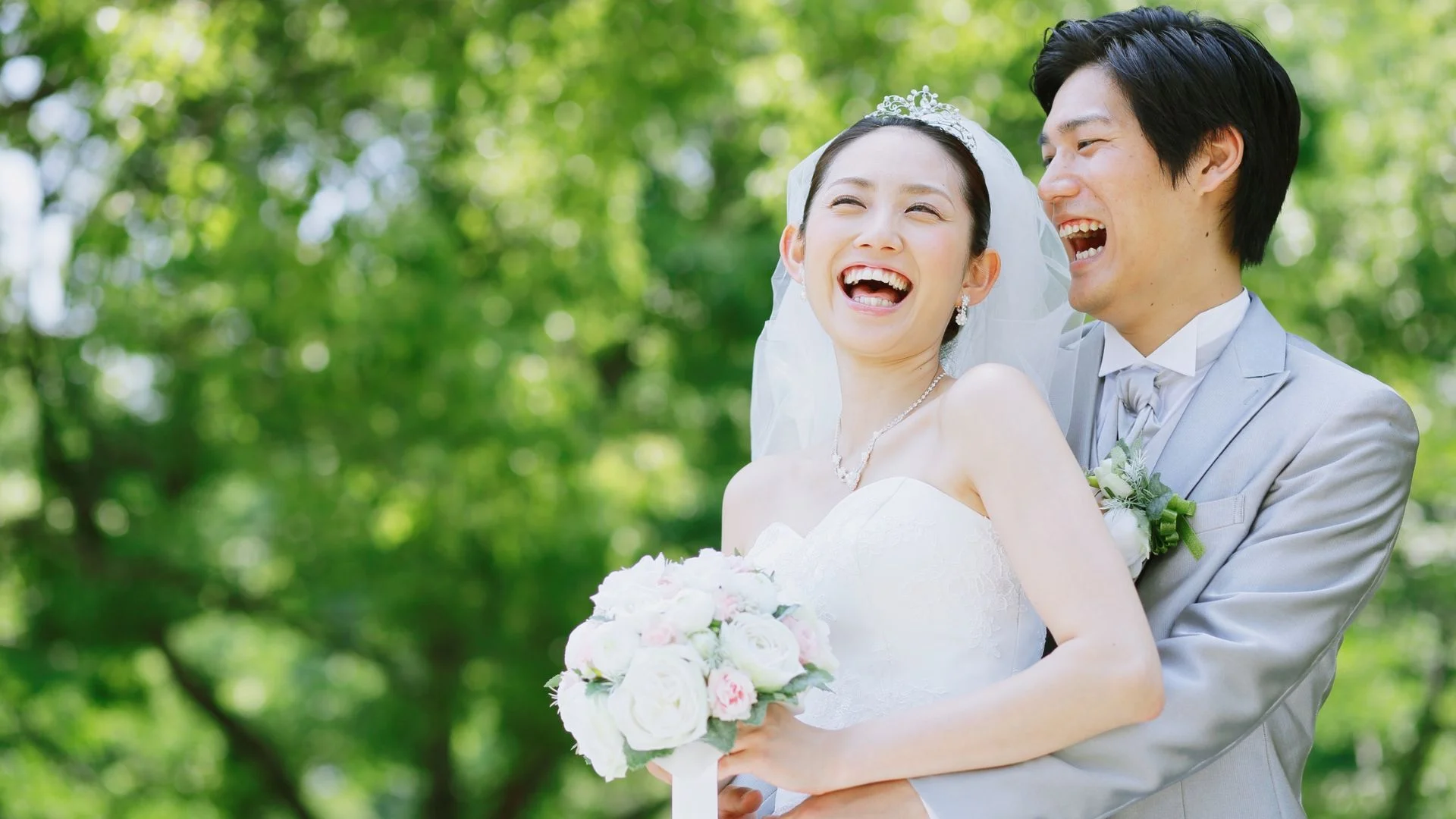
- Two main categories — traditional Japanese wedding clothes fall into the white shiromuku kimono for the ceremony and the colourful iro-uchikake for the reception.
- The 3-step transformation — shiromuku → iro-uchikake → Western dress is the most popular Japanese wedding outfit combination for international couples in 2026.
- Match the groom to the bride — a tuxedo beside a shiromuku creates a visual disconnect in every photo.
- Rent locally — rent kimono in Japan rather than shipping from abroad, and personalise with your own accessories.
- Ceremony to modern — Japanese wedding wear spans ancient ceremony and modern Western style. All options are available to rent or purchase locally, and all are appropriate for a destination wedding.
Wako is a professional hairdresser with over 15 years specialising in traditional Japanese wedding hairstyles and kimono dressing. She brings deep firsthand expertise in Shinto ceremony etiquette, bridal attire, and Japan's wedding culture and trends.
Follow on Instagram →Choosing what to wear is one of the most personal decisions of any wedding — and in Japan, it is also one of the most culturally rich. Japanese traditional wedding clothes range from a centuries-old white silk kimono to a vibrant embroidered gown, and international couples planning a destination wedding in Japan often arrive unsure of what is actually available, appropriate, or possible.
A traditional Japanese wedding dress is not one garment but two. The bride wears a pure white kimono called the shiromuku (白無垢) for the shrine ceremony, then changes into a richly embroidered colour kimono called the iro-uchikake (色打掛) for the reception.
Many brides finish the day in a Western wedding gown. Together, these three outfits make up Japanese wedding attire for brides today, and international couples can rent all of them locally.
To find out more about Japanese wedding attire, I interviewed Wako Koshigai who has spent over 15 years dressing brides for Japanese wedding ceremonies. In this guide we find out about her expertise in Japanese wedding clothes, what each option means, and who it suits.
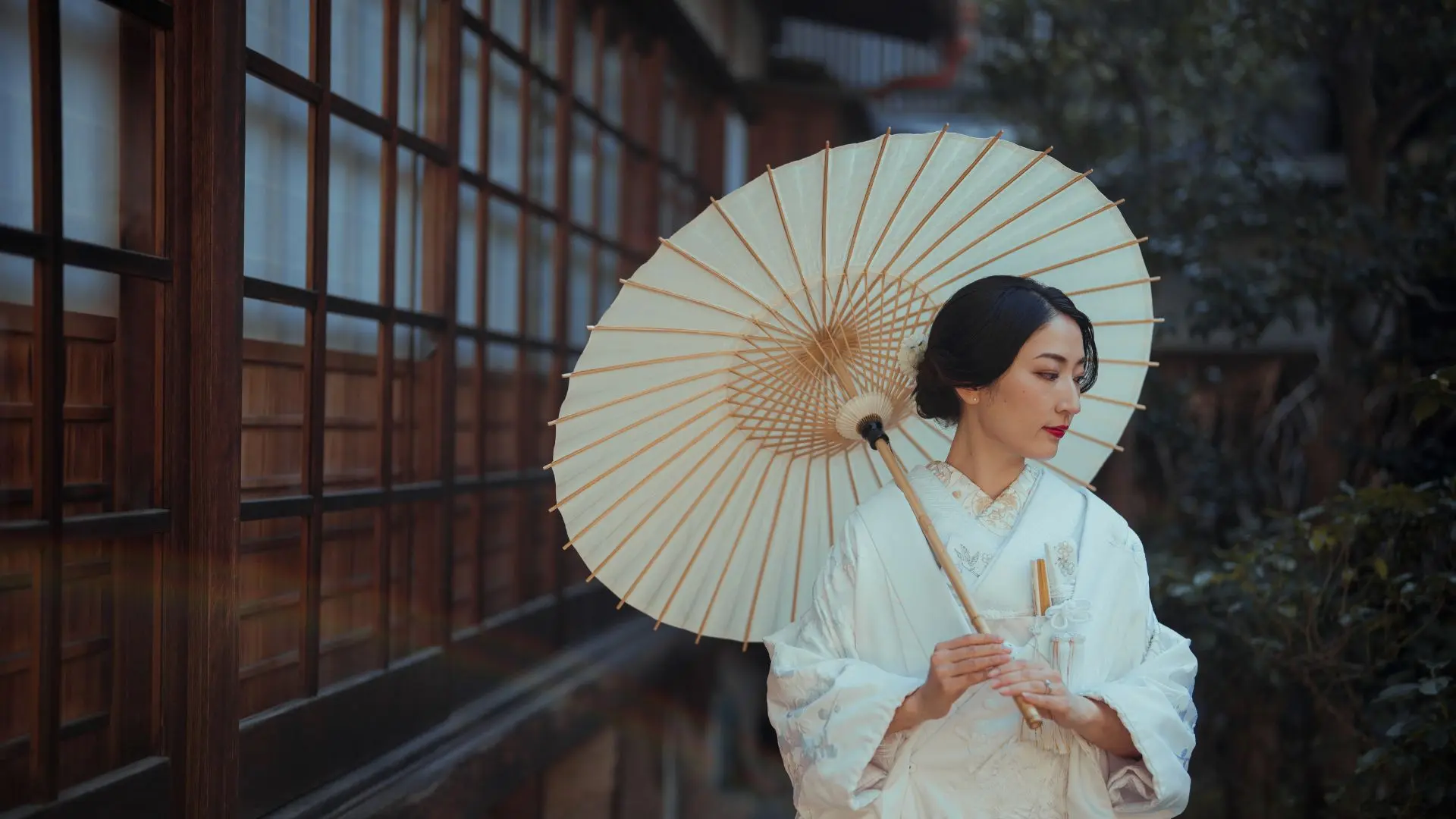
白無垢
Shiromuku
The pure white bridal kimono. Layered silk, worn with a wataboshi hood or tsunokakushi headpiece.
Shinto ceremony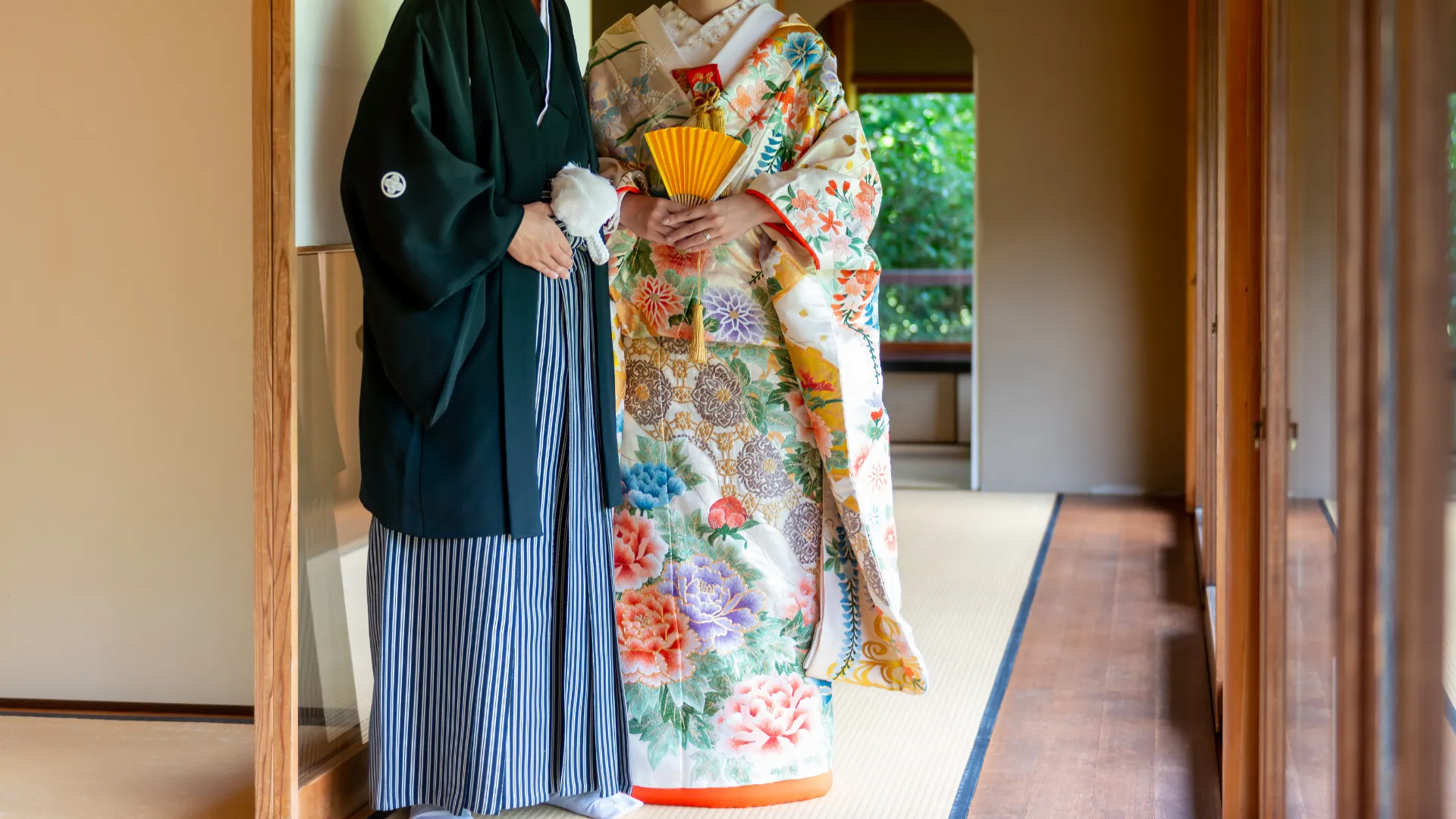
色打掛
Iro-Uchikake
A vivid embroidered kimono in red, gold or black, with motifs like cranes and peonies.
Reception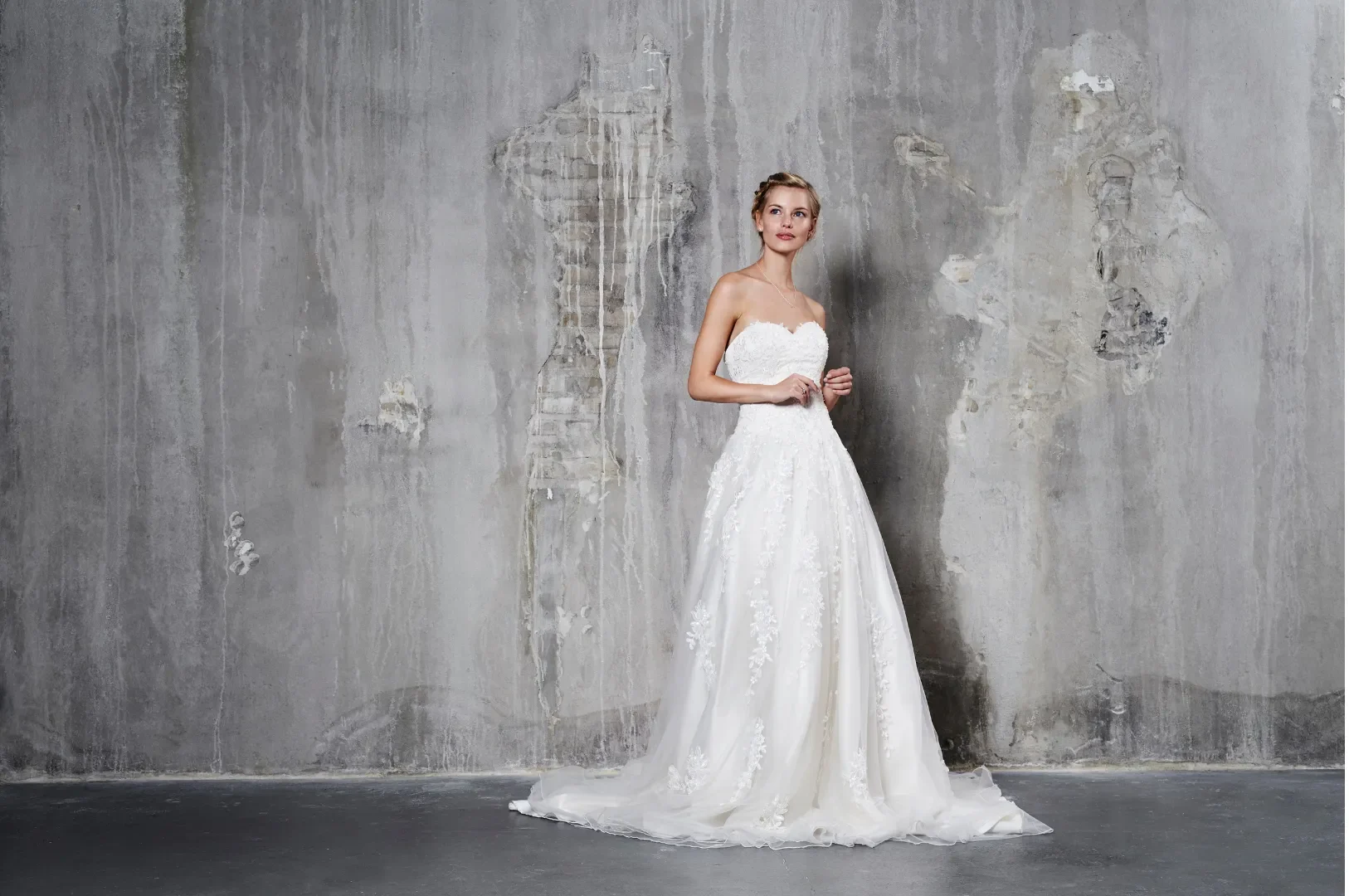
ウェディングドレス
Western Gown
Fully embraced in Japan. Lighter and easier to move in, and the usual choice for the party.
Reception or party- Japanese Wedding Clothes: The Two Traditions
- The Shiromuku (白無垢) — The Sacred White Wedding Kimono
- The Iro-Uchikake (色打掛) — The Celebratory Colour Kimono
- The Modern Western Wedding Dress in Japan
- The 3-Step Transformation: The Complete Japanese Bride Outfit
- What Does the Groom Wear?
- What Do Wedding Guests Wear?
- Renting vs Buying — The Practical Reality
- How to Choose — A Simple Decision Framework
- There Are No Rules — Only Choices
Japanese Wedding Clothes: The Two Traditions
Japanese wedding wear sits at the intersection of two distinct traditions. The first is the kimono tradition — ancient, symbolic, and deeply tied to ceremony and ritual. The second is the Western wedding dress, which arrived in Japan in the latter half of the twentieth century and has since been elevated into something distinctly Japanese in its craftsmanship and precision.
Most international couples in 2026 choose one of three paths: full traditional Japanese wedding attire, a Western dress, or — increasingly — a combination of both across the same day. All three are considered entirely appropriate for a destination wedding in Japan, and all three are available to rent or purchase locally.
Your ceremony style shapes your outfit, so it helps to know how the main Japanese wedding ceremonies compare before you choose.
The Shiromuku (白無垢) — The Sacred White Wedding Kimono
The shiromuku kimono is Japan’s most formal and sacred bridal garment and the centrepiece of traditional Japanese wedding clothes. Pure white from collar to hem, the shiromuku wedding kimono is worn for the Shinto shrine ceremony and represents purity and a readiness to adopt the values of the new family. Every element — the layered fabric, the white obi sash, the elaborate collar — carries meaning.
The shiromuku wedding dress is worn with one of two traditional headpieces: the wataboshi, a soft white hood that covers the face until the ceremony, or the tsunokakushi, a formal rectangular headpiece. The choice between them is one of the first styling decisions a bride makes.
“When a bride sees herself in a shiromuku for the first time, there is always a moment of silence. Something shifts. She is no longer just a bride — she is part of something much older and much more beautiful than herself.” — Wako Koshigai
The shiromuku is a commitment. It is heavy, layered, and requires constant assistance to move gracefully. It is not an outfit you wear casually — it is an outfit that wears you, in the best possible sense.
Read our complete guide to the Shiromuku Kimono: history, symbolism, styling, and what to expect when you wear one.
The Iro-Uchikake (色打掛) — The Celebratory Colour Kimono
Where the shiromuku is solemn and sacred, the iro uchikake is joyful and theatrical. This traditional Japanese wedding gown is worn over a kimono for the reception and comes in rich reds, golds, blacks, and navies, embroidered with motifs that carry specific meaning — cranes for longevity, peonies for prosperity, the phoenix for grace and rebirth.
The iro uchikake kimono is one of the most visually spectacular garments in Japanese wedding wear. The transition from shiromuku to iro uchikake — known as the oiro-naoshi — is one of the most celebrated moments of a Japanese reception. The bride disappears during a natural programme lull and returns transformed, to the delight of guests who have been waiting to see what comes next.
“The iro-uchikake is where a bride’s personality comes through. The shiromuku is tradition. The iro-uchikake is expression. When I help a bride choose her colour and her motif, I am helping her tell her story.” — Wako Koshigai
For couples considering a Japanese cake alternative — a chirashi-sushi cutting or a mochi-tsuki ceremony — the iro uchikake wedding outfit creates a visually cohesive moment that a Western cake beside a Western dress simply cannot match.
Read our complete guide to the Iro-Uchikake: colours, motifs, the oiro-naoshi, and how it photographs.
The Modern Western Wedding Dress in Japan
The Western wedding dress is not a compromise in Japan — it is a fully supported and beautifully executed choice. Japanese bridal ateliers and venue styling teams have decades of experience with Western gowns, and the level of craftsmanship applied to fitting, alteration, and presentation is exceptional.
As a Japanese wedding outfit, the Western gown offers practical advantages that matter on a long wedding day: lighter weight, freedom of movement, no assistance required to walk. It suits hotel and garden venues particularly well, where the clean architecture and natural light complement complement a flowing Western gown.
For international brides who feel more comfortable in familiar attire, this is a completely valid and beautiful choice.
“A Western dress and a kimono require completely different things from a photographer. The dress is about movement — the curve of the body, the sweep of the train. The kimono is about stillness — the line of the collar, the depth of the embroidery. A photographer who understands both will take extraordinary images in either.” — Wako Koshigai
For couples deciding between all three options, our detailed comparison guide covers the practical, visual, and symbolic differences side by side.
Still deciding between traditional Japanese wedding attire and a Western dress? Our detailed comparison guide covers the practical, visual, and symbolic differences of all three options side by side — read Shiromuku vs Iro-Uchikake vs Modern Wedding Dress.
The 3-Step Transformation: The Complete Japanese Bride Outfit
One of the most distinctive features of Japanese wedding attire is the freedom to wear multiple outfits — not as a logistical challenge, but as a deliberate storytelling arc.
The most popular combination in 2026 is what Wako calls the 3-step transformation: shiromuku for the ceremony, iro uchikake for the reception entrance, and a Western dress for the party.
Each change marks a shift in the emotional register of the day. The traditional Japanese bridal dress carries the weight of ceremony. The iro uchikake announces the celebration. The Western dress signals the party has truly begun.
“The 3-step transformation is the most complete version of a Japanese wedding day I know. By the end of it, the bride has worn centuries of Japanese culture and expressed something entirely personal. It is one of the things I love most about this work.” — Wako Koshigai
The transformation does require planning — specifically around the menu and reception programme, since each Japanese wedding costume change takes 20-30 minutes and needs to be built into the schedule.
Read our complete guide to hybrid Shinto-Western weddings and how the outfit changes work in practice.
What Does the Groom Wear?
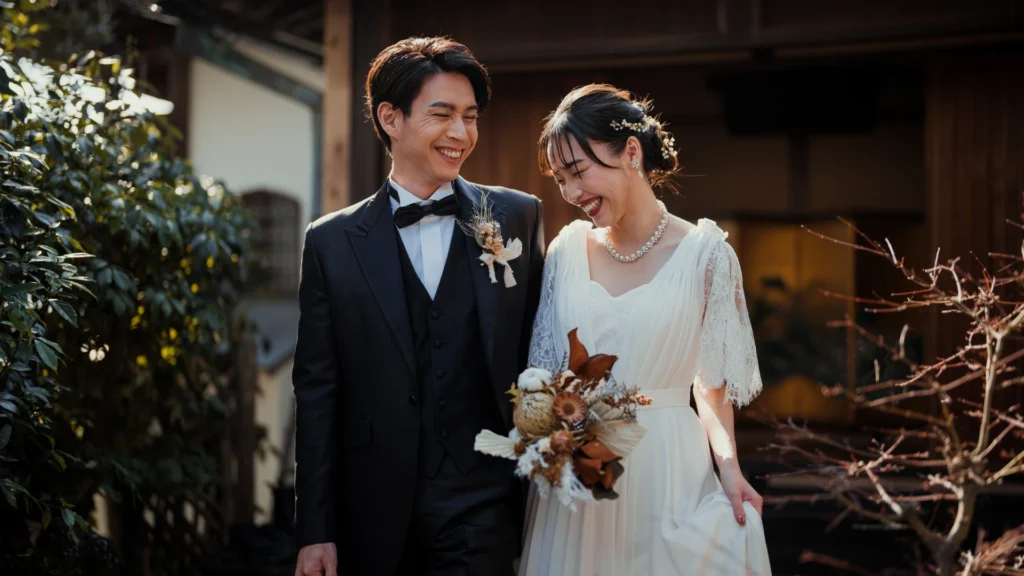
International grooms are often unsure whether to wear traditional Japanese wedding clothes or Western attire — and the answer is simpler than it might seem. Match the bride. A groom in a tuxedo beside a bride in a shiromuku creates a visual disconnect that will read clearly in every photograph.
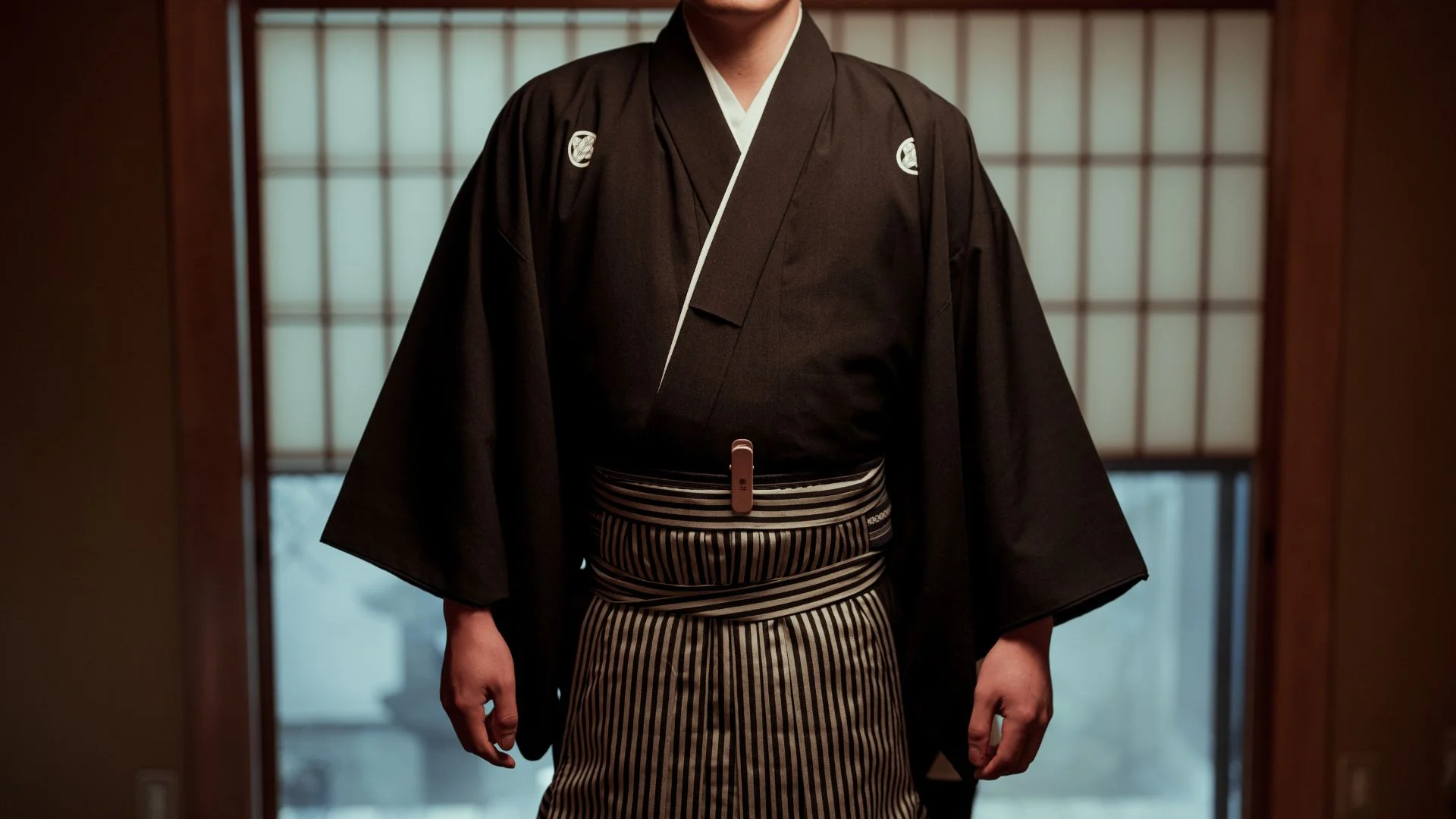
Traditional Japanese groom attire
The montsuki haori hakama (紋付羽織袴) is the most formal traditional Japanese wedding attire for men — a crested kimono worn with a pleated hakama trouser and a formal haori jacket. It is expected at Shinto ceremonies and looks magnificent beside a shiromuku or iro uchikake.
Western groom attire
A morning suit or tuxedo is entirely appropriate for hotel and garden ceremonies, and particularly well-suited to the Western dress portion of a 3-step transformation day. Many grooms choose traditional Japanese wedding clothes for the ceremony and a suit for the reception.
What Do Wedding Guests Wear?
Japanese weddings maintain a high standard of dress. Guests are expected to arrive in formal or semi-formal Japanese wedding wear — suits and ties for men, formal dresses or kimono for women. Casual wear is not appropriate regardless of venue style.
The furisode (振袖) — a long-sleeved formal kimono worn by unmarried women — is one of the most welcome choices a female guest can make. It signals respect for the occasion and adds to the visual beauty of the day. White should be avoided by guests at any ceremony where the bride is wearing white, as it is considered the bride’s colour.
International guests often worry about getting the Japanese wedding costume right. A smart suit or formal dress in any colour other than white is always appropriate and genuinely appreciated.
Read our full dress code guide for foreign guests attending a Japanese wedding.
Renting vs Buying — The Practical Reality
For traditional Japanese wedding clothes, renting locally in Japan is almost always the right decision. The logistics of shipping fragile, layered silk garments internationally are significant, and local rental shops have decades of experience fitting brides of all body types and nationalities. Accessories can be personalised while the kimono itself is rented.
Western dresses are more straightforward to transport, but Wako recommends shipping any dress directly to the venue via Yamato Transport, arriving two days before the wedding.
If flying with a dress, always carry it on — never check it.
Approximate rental price ranges
All prices are approximate rental fees for 2026. Rental typically includes professional dressing by a stylist on the wedding day.
These figures sit within a broader destination wedding budget that varies significantly by package and venue tier.
For a complete breakdown of how Japanese wedding attire costs fit into your overall budget, read our Japan destination wedding cost guide.
How to Choose — A Simple Decision Framework
With so many options across traditional Japanese wedding attire and modern Western styles, the decision can feel overwhelming. Wako’s advice is to start with two questions: what kind of ceremony are you having, and how do you want to feel on the day?
Start with your ceremony type and how you want to feel — the right attire follows naturally from there.
“I always tell brides: choose the attire that makes you feel like the most extraordinary version of yourself. The venue, the ceremony style, the photography — they all follow from that decision. Start there.” — Wako Koshigai
There Are No Rules — Only Choices
Japanese wedding wear in 2026 is more open and more beautiful than it has ever been. International couples are not expected to follow a script — they are welcomed into a tradition that has been evolving for centuries and will continue to evolve long after their wedding day.
Whether you choose a shiromuku, an iro uchikake, a traditional Japanese bridal dress, a modern Western gown, or all three, the craftsmanship, care, and hospitality of Japanese wedding culture will meet you exactly where you are.
For personalised Japanese wedding attire advice specific to your venue, ceremony style, and vision, our local planning team can connect you with the right stylists and rental services across Japan.
Japanese Wedding Attire Guide — Frequently Asked Questions
Everything international couples need to know about traditional Japanese wedding kimono and attire for destination weddings in Japan.
What is the traditional Japanese wedding dress called?
What does a Japanese bride wear on her wedding day?
What is the white Japanese wedding dress called?
What is the colourful Japanese wedding kimono called?
Can foreigners wear a kimono at their Japanese wedding?
What do Japanese wedding guests wear?
What does a Japanese groom typically wear?
Is it expensive to rent a Japanese wedding kimono?
• Iro-uchikake rental: approximately ¥100,000–¥250,000
• Groom’s hakama set: approximately ¥80,000–¥150,000
Rental includes dressing by a professional stylist on the day.
What is the difference between shiromuku and iro-uchikake?
About the Contributor
Wako Koshigai is a professional hairdresser with over 15 years of experience specialising in traditional Japanese wedding hairstyles and kimono dressing. With deep knowledge of Japan’s wedding culture and trends, she has worked with both Japanese and international couples across the country’s most celebrated venues, shrines, and heritage settings.

Timothy is a web builder and marketing specialist with a deep passion for Japan and its culture. He founded Get Married in Japan to help international couples navigate Japan's wedding traditions — and to connect them with the people who know it best.
Connect on LinkedIn →