
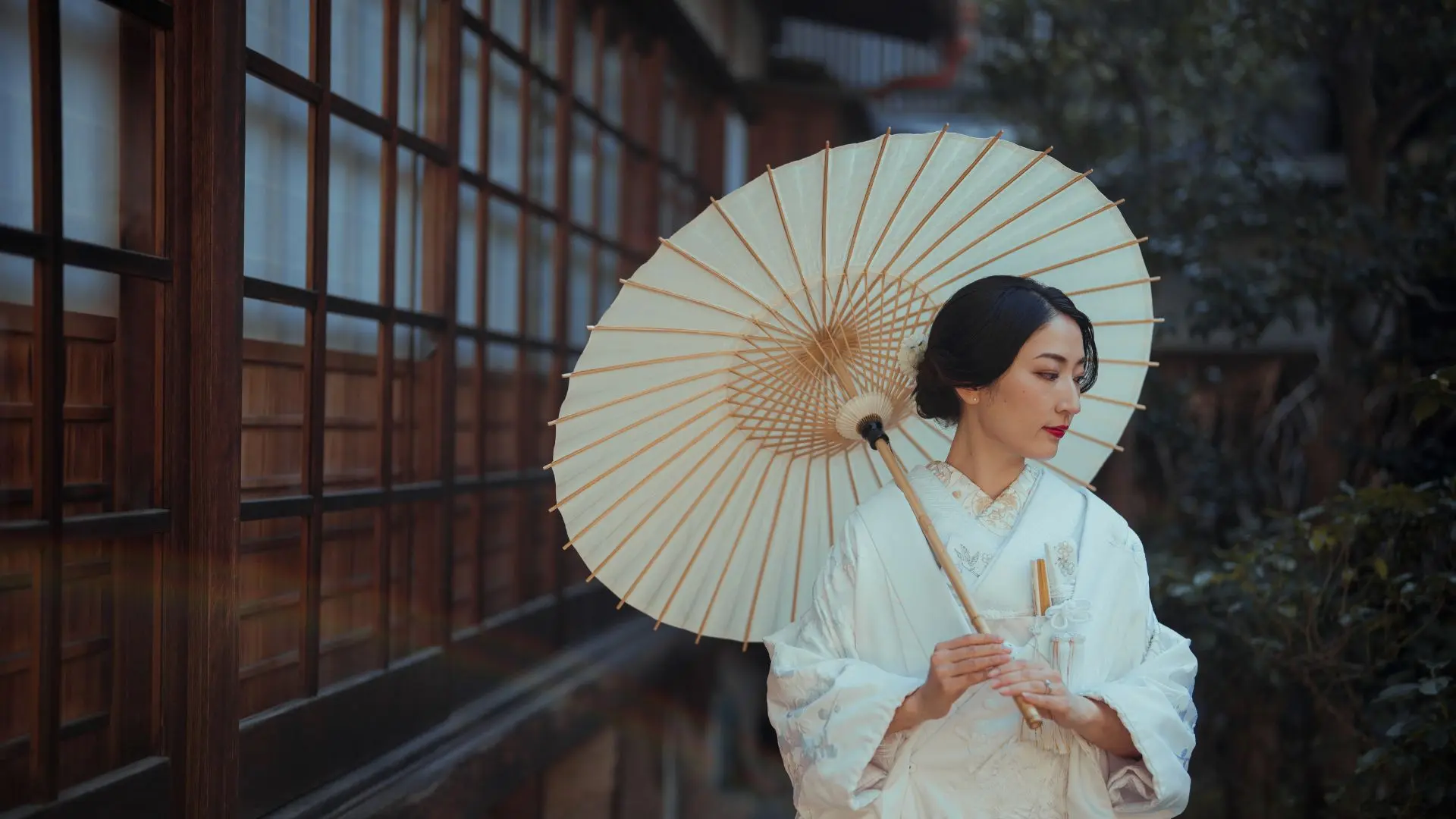
- Shiromuku (白無垢): Traditional white wedding kimono for Shinto ceremonies. Symbolizes purity and new family joining.
- Headpieces: Wataboshi (white hood, shiromuku only) or tsunokakushi (works with both shiromuku & iro-uchikake).
- Prep: 2–3 hours. Heavy ensemble requires pro dressing + Ateshi attendant all day.
- Photography: 45° angle, highlight eri-ashi (nape), use I-line pose (toes in, elbows close).
- Rental: ¥150,000–¥300,000 (full set + dressing). Book 12 months ahead for peak seasons.

Wako is a professional hairdresser with over 15 years specialising in traditional Japanese wedding hairstyles and kimono dressing. She brings deep firsthand expertise in Shinto ceremony etiquette, bridal attire, and Japan's wedding culture and trends.
Follow on Instagram →At some point in the planning of a Japan destination wedding, every bride faces the same question: do I wear a kimono or a Western dress? It sounds simple. It isn’t. Because the kimono in question — the shiromuku (白無垢), Japan’s traditional white bridal kimono — is not simply a different style of dress.
It is a different relationship with your wedding day entirely. It changes how you move, how long your preparation takes, how your photographs look, and how the ceremony feels.
To find out more about the shiromuku (白無垢), I interviewed Wako Koshigai, who has spent 15 years helping international brides make this decision, and she is unambiguous about one thing: the brides who choose the shiromuku always know exactly why they did. This guide gives you everything you need to find out if you are one of them.
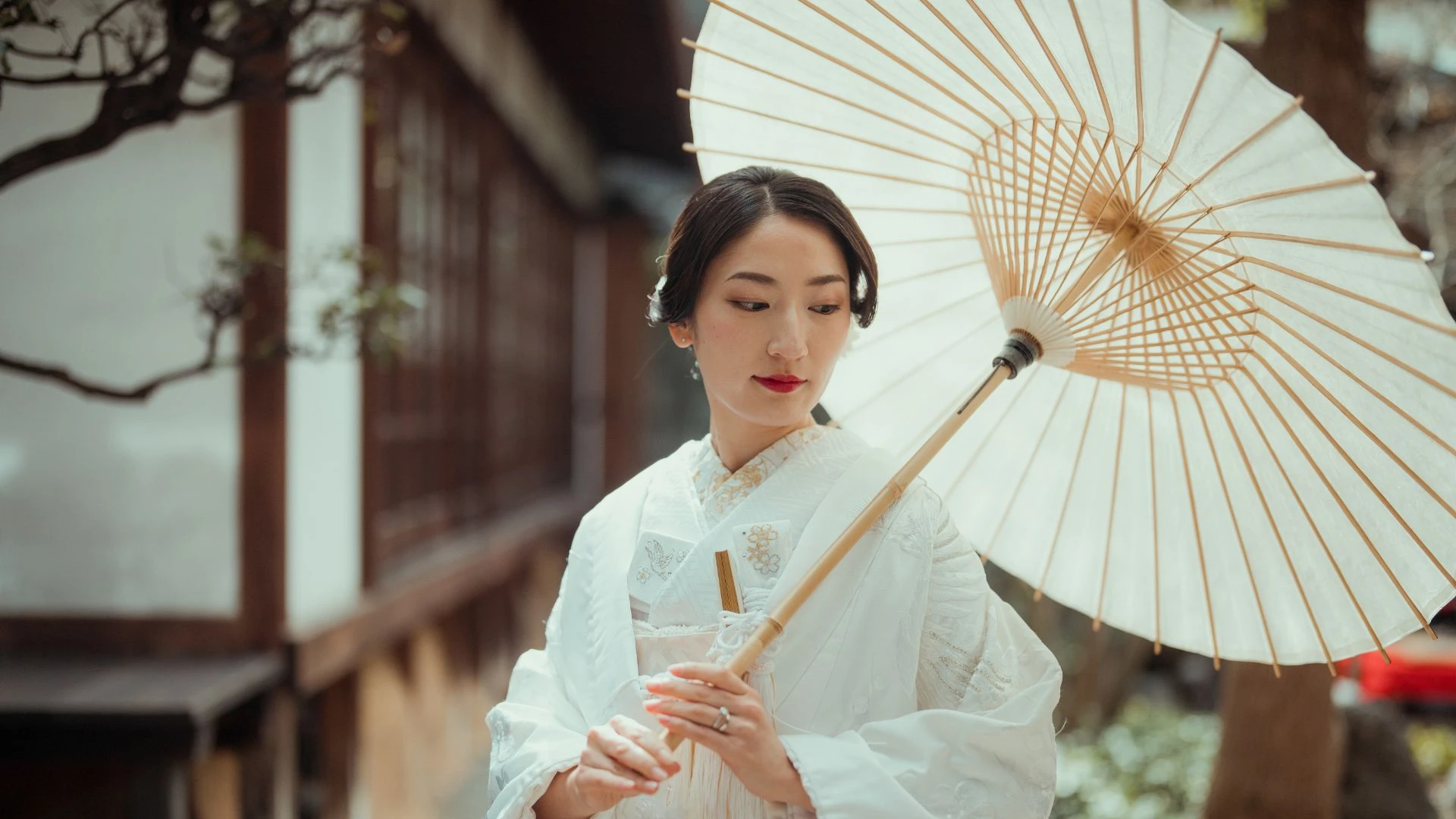
白無垢
The Shiromuku
Japan’s white wedding kimono. Layers of white silk from collar to hem, symbolising purity and a new beginning.
Shinto ceremony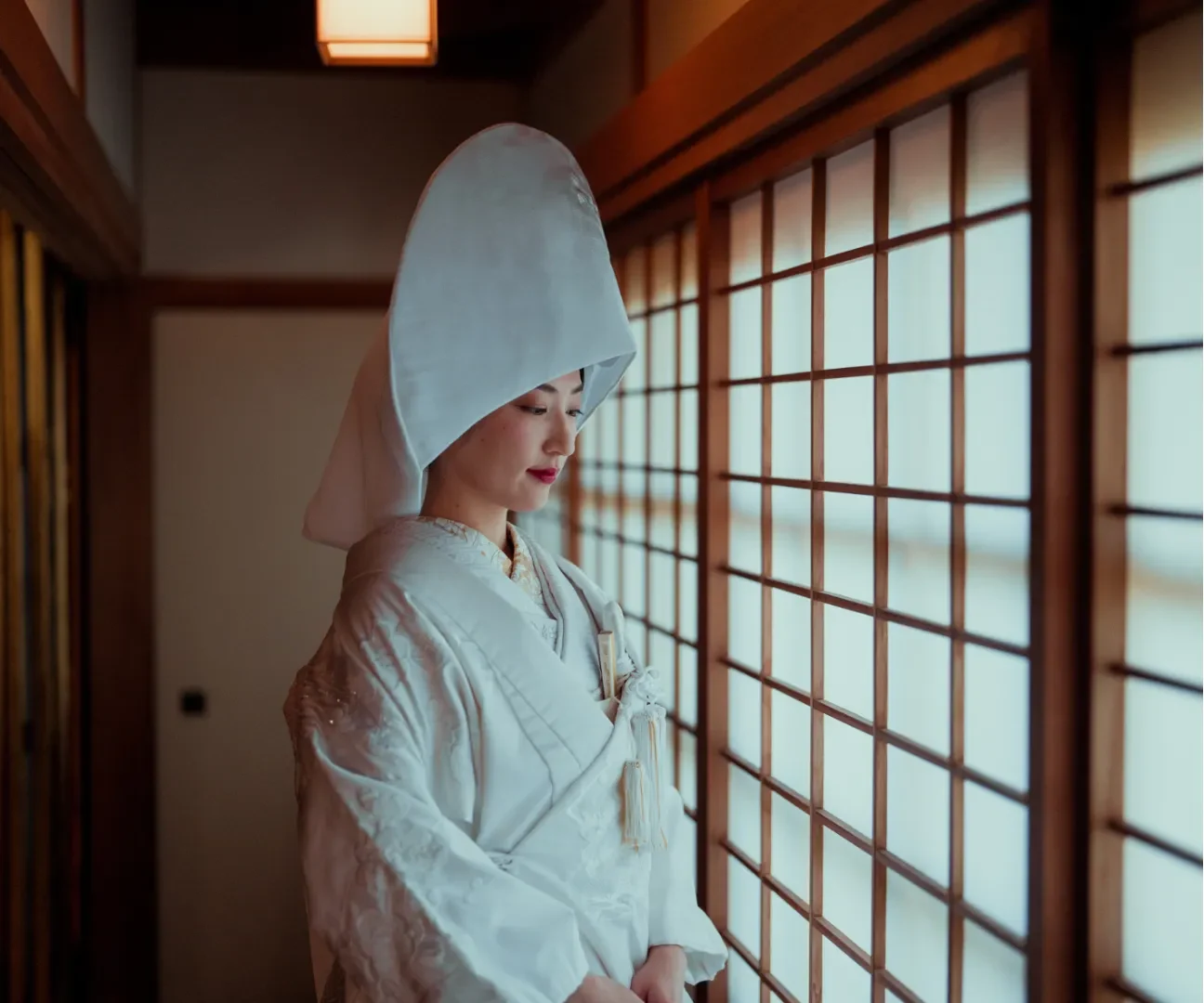
綿帽子
With a Wataboshi
A soft, rounded white hood that frames the face. Worn only with the shiromuku, for the ceremony itself.
Headpiece option 1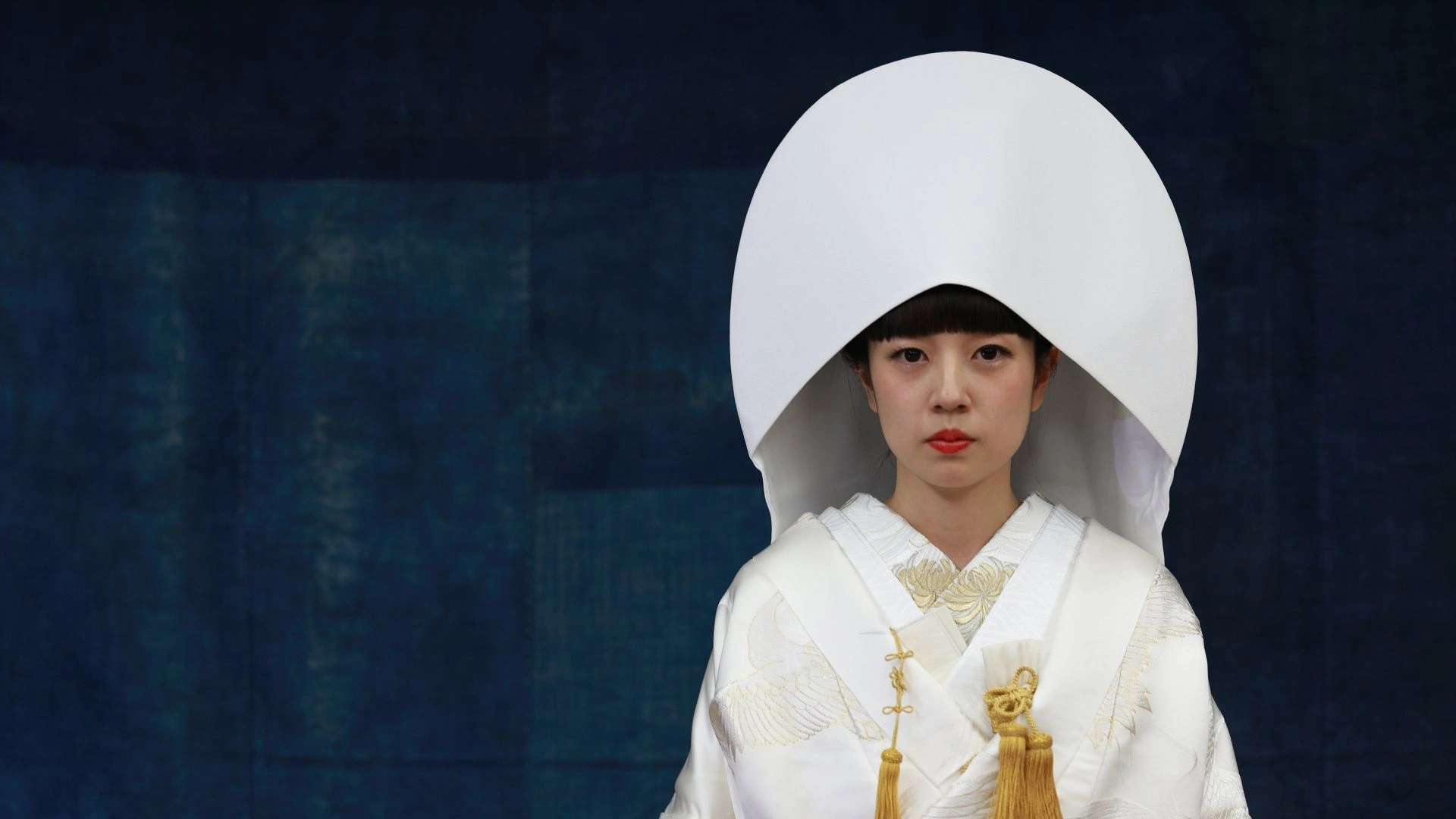
角隠し
With a Tsunokakushi
A formal white band over a traditional updo. Shows more of the hair and face, and also pairs with the iro-uchikake.
Headpiece option 2- What Is the Shiromuku? It’s History and Meaning
- What are the layers of the Shiromuku?
- The Headpiece: Wataboshi or Tsunokakushi?
- Hair and Makeup for the Shiromuku
- What Does It Actually Feel Like to Wear a Shiromuku?
- How to take photographs of the Shiromuku
- The Shiromuku at the Shrine
- The Oiro-Naoshi — Leaving the Shiromuku Behind
- Renting a Shiromuku in Japan
- Is the Shiromuku Right for You?
What Is the Shiromuku? It’s History and Meaning
The shiromuku wedding kimono, known in Japan simply as the kimono shiromuku, has its origins in Japanese aristocratic culture, dating to the Heian period as formal court dress before evolving into the standard bridal garment for Shinto ceremonies.
Today, it remains the most formal and culturally significant attire a Japanese bride can wear — and one of the few traditional bridal garments anywhere in the world still worn in its original context, unchanged in its essential form across centuries.
The Meaning of White
Pure white in Japanese bridal culture carries a specific and layered symbolism that surprises many Western brides. It represents purity and innocence, the bride arriving as a blank canvas, ready to be coloured by the values and traditions of her new family.
There is also a deeper dimension: in Japanese culture white is associated with transitions and sacred thresholds, not exclusively with celebration. The shiromuku acknowledges that the wedding day is both an ending and a beginning.
The bride is leaving one family to join another, and that departure is treated with the same gravity as the arrival.
For international brides this symbolism often resonates more deeply than they expect. The shiromuku has a much deeper meaning besides helping the bride look beautiful.
Why International Brides Are Choosing It
Wako describes the shiromuku as the most immersive experience available to an international bride in Japan. Not because it is the most visually dramatic option, but because wearing it places you inside a tradition rather than beside it.
“It is the most symbolic way to experience the extraordinary and authentic side of Japanese culture,” she says. “For destination wedding couples, nothing else comes close.”
What are the layers of the Shiromuku?
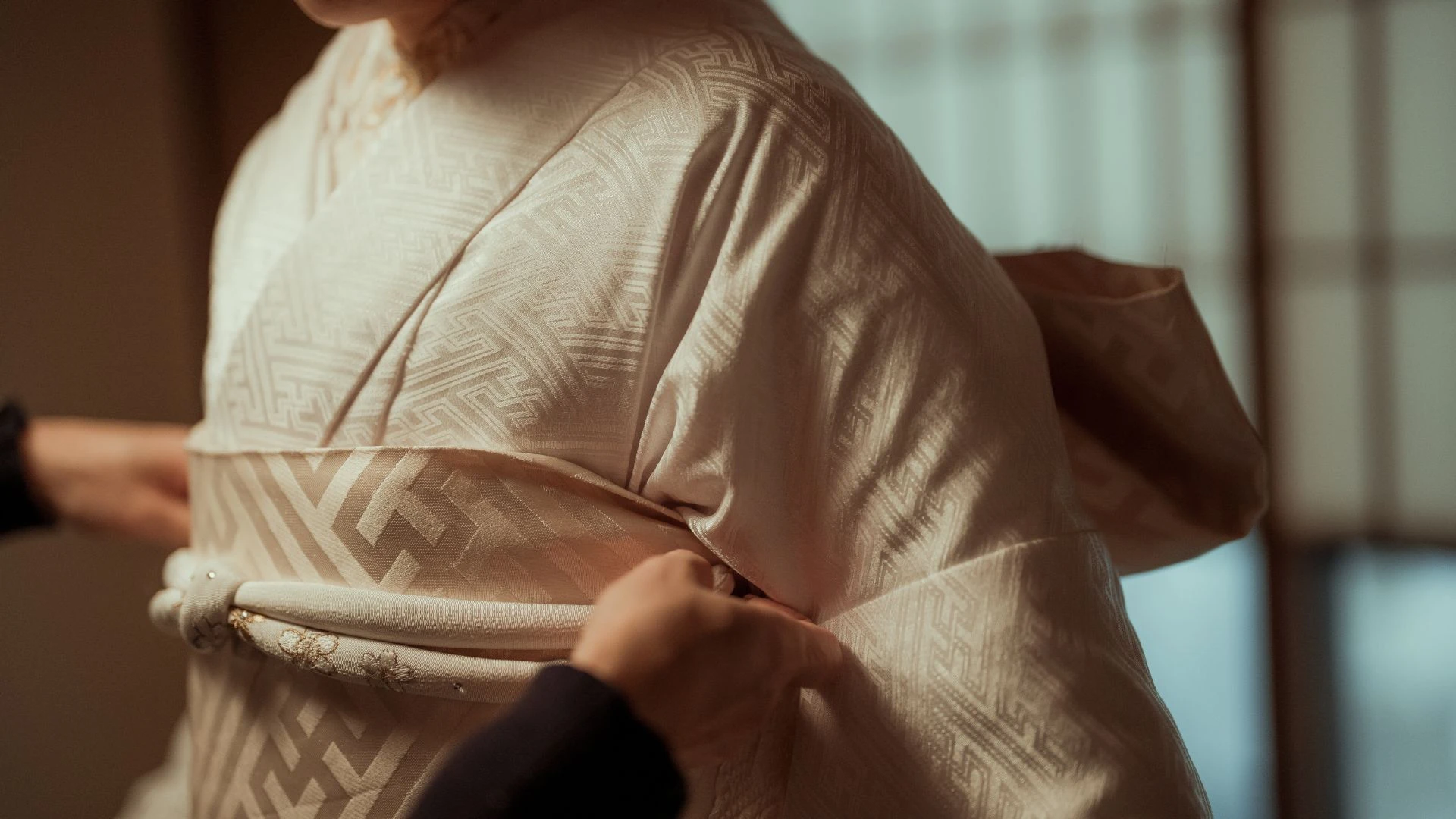
The shiromuku wedding kimono is more than a single garment and understanding it as just a white Japanese wedding dress or costume misses what makes it special. It is a complete layered ensemble, each element with its own name, function, and place within the dressing sequence.
Understanding what you are wearing matters both for appreciating the experience and for communicating with your stylist and rental shop.
The Kakeshita (掛下) — The Inner Kimono
Worn beneath the outer robe, the kakeshita (掛下) is the foundational layer of the entire ensemble. Its fit and quality directly affect the final silhouette and a well-fitted kakeshita creates the clean, straight lines that make the shiromuku’s visual impact possible.
The Shiromuku Uchikake (白無垢打掛) — The Outer Robe
The heavily padded, floor-trailing outer kimono is the garment most people recognise as the shiromuku. Pure white silk, sometimes woven with subtle patterns — pine, waves, or crane motifs — visible only in certain light. The full ensemble is heavier than most brides anticipate, and the weight is something Wako prepares every bride for in advance.
The Kakeshita Obi (掛下帯) — The Waist Sash
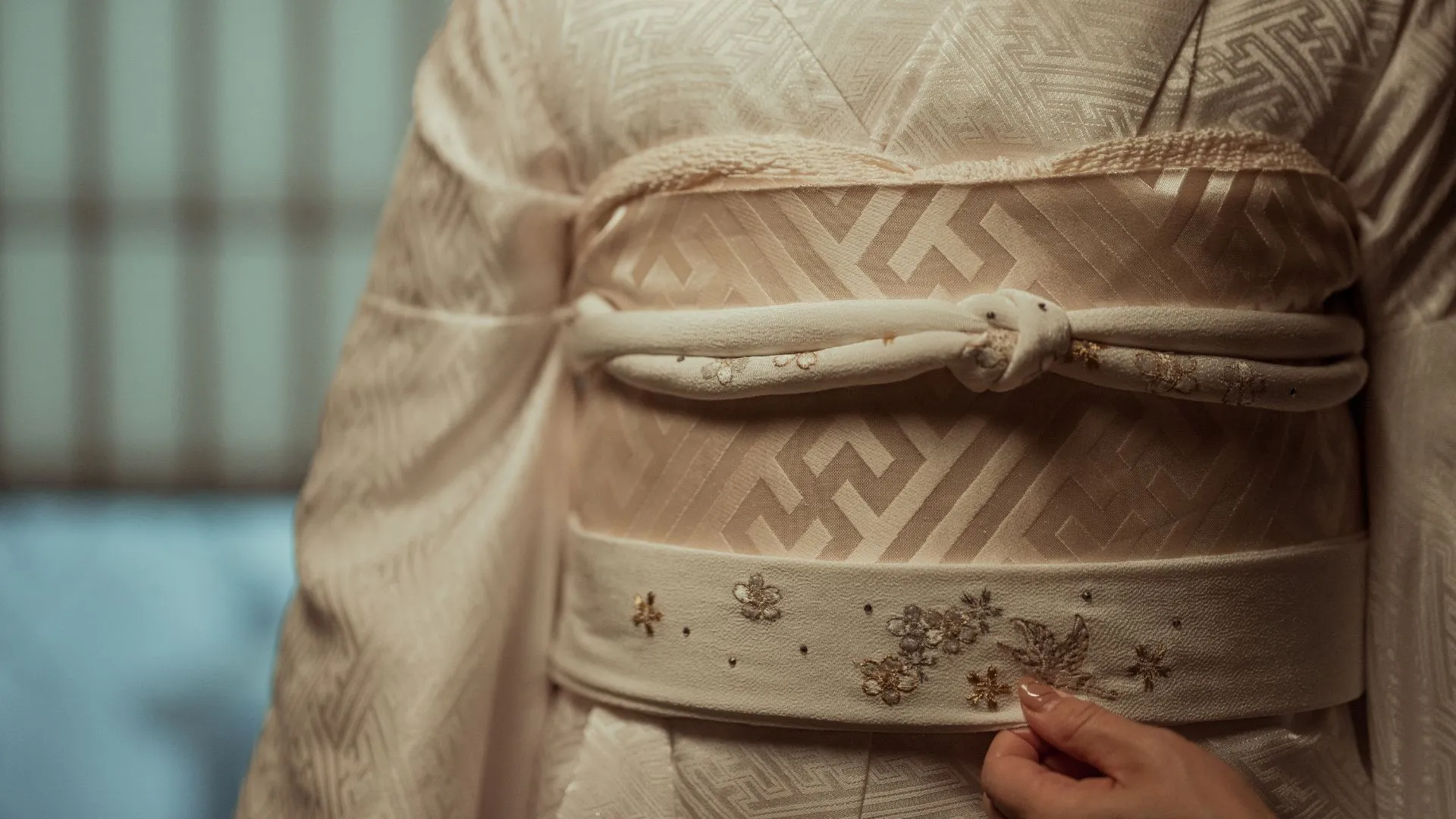
The obi is tied around the waist over the kakeshita and beneath the uchikake outer robe, creating the structured silhouette that defines the kimono’s shape. The specific knot style is chosen by the stylist to complement the bride’s proportions. It cannot be tied alone — professional dressing is essential.
The Eri (襟) — The Collar and the Eri-Ashi (襟足)
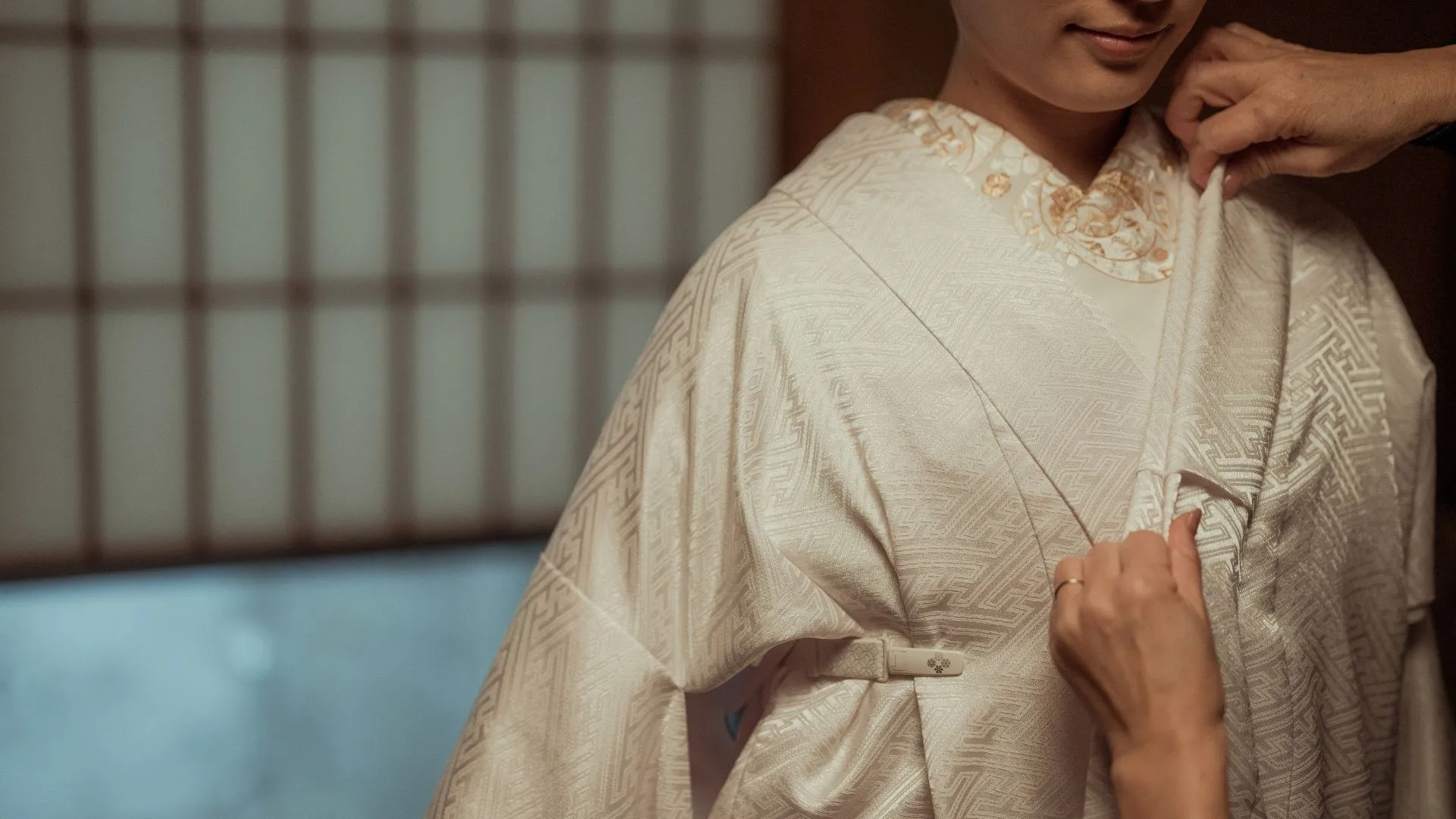
The collar is the most photographed detail of the entire shiromuku look, and maintaining it throughout the day is one of Wako’s primary responsibilities. The specific detail she watches for most carefully is what she calls the eri-ashi (襟足) — the deliberate gap between the collar and the nape of the neck.
“In Japanese aesthetics, the back of the neck is considered one of the most sensual and elegant features. A photographer should look for that delicate line where the collar sits slightly away from the neck. It is a shot every knowledgeable photographer actively seeks — and one that can be ruined in seconds if the collar shifts.” — Wako Koshigai
The Accessories
The complete shiromuku ensemble includes tabi 足袋 (white split-toe socks), zori 草履(traditional flat sandals), a hakoseko 筥迫 (decorative pouch tucked into the collar), a kaiken 懐剣 (symbolic decorative blade representing the bride’s resolve), and a sensu 扇子 (folded fan). These are typically included in the rental package and are selected or adjusted by the stylist on the day.
The Headpiece: Wataboshi or Tsunokakushi?
One of the first and most significant styling choices a shiromuku bride makes is her headpiece and most international brides have never heard of either option before beginning their research. The decision affects not just the visual impact of the ceremony but the practical flow of the entire wedding day.
The Wataboshi (綿帽子) — The White Hood
The wataboshi is a large, rounded white cotton hood that covers the entire head and face, concealing the bride from all eyes except the groom’s until the ceremony is complete. It is one of the most ethereal and distinctive looks in all of bridal fashion — quietly theatrical, deeply traditional, and unlike anything in Western wedding culture.
Wako considers the wataboshi the most atmospheric choice for a Shinto ceremony: “Begin with the wataboshi for the ceremony,” she advises. “This respects the ancient traditions of Japan and creates a sense of mystique and sacred transition that nothing else achieves.”
The practical consideration is important: the wataboshi can only be worn with the shiromuku, not the iro-uchikake. Brides planning an outfit change should factor this into their decision.
The Tsunokakushi (角隠し) — The Formal Headpiece
The tsunokakushi is a stiff, rectangular white headpiece worn flat across the top of the head. Its name translates literally as “horn concealer” — the horns of jealousy, selfishness, and ego are hidden to signal the bride’s intention to enter her marriage with grace and devotion.
More structured and formal than the wataboshi, the tsunokakushi reveals the face fully from the ceremony onward.
Its key practical advantage is versatility: the tsunokakushi works with both the shiromuku and the iro-uchikake, making it the more flexible choice for brides planning multiple outfit changes across the day.
The Hybrid Option — Western Veil with Shiromuku
An increasingly popular choice for international brides is pairing the shiromuku with a Western veil — worn after the ceremony rather than during it. Wako has clear guidelines on making this work well: “Many strict shrines still require the traditional wataboshi during the actual Shinto ritual. A common and very stylish approach is to wear the wataboshi for the ceremony, then switch to the Western veil for the photo session and reception.”
The key detail is colour matching. “The shiromuku is not always pure white,” she explains. “It can range from a crisp stark white to a warm ivory called Kinari. A veil that is too bright against an ivory kimono will look mismatched immediately. Always match the veil tone to the kimono tone exactly.”
Hair and Makeup for the Shiromuku
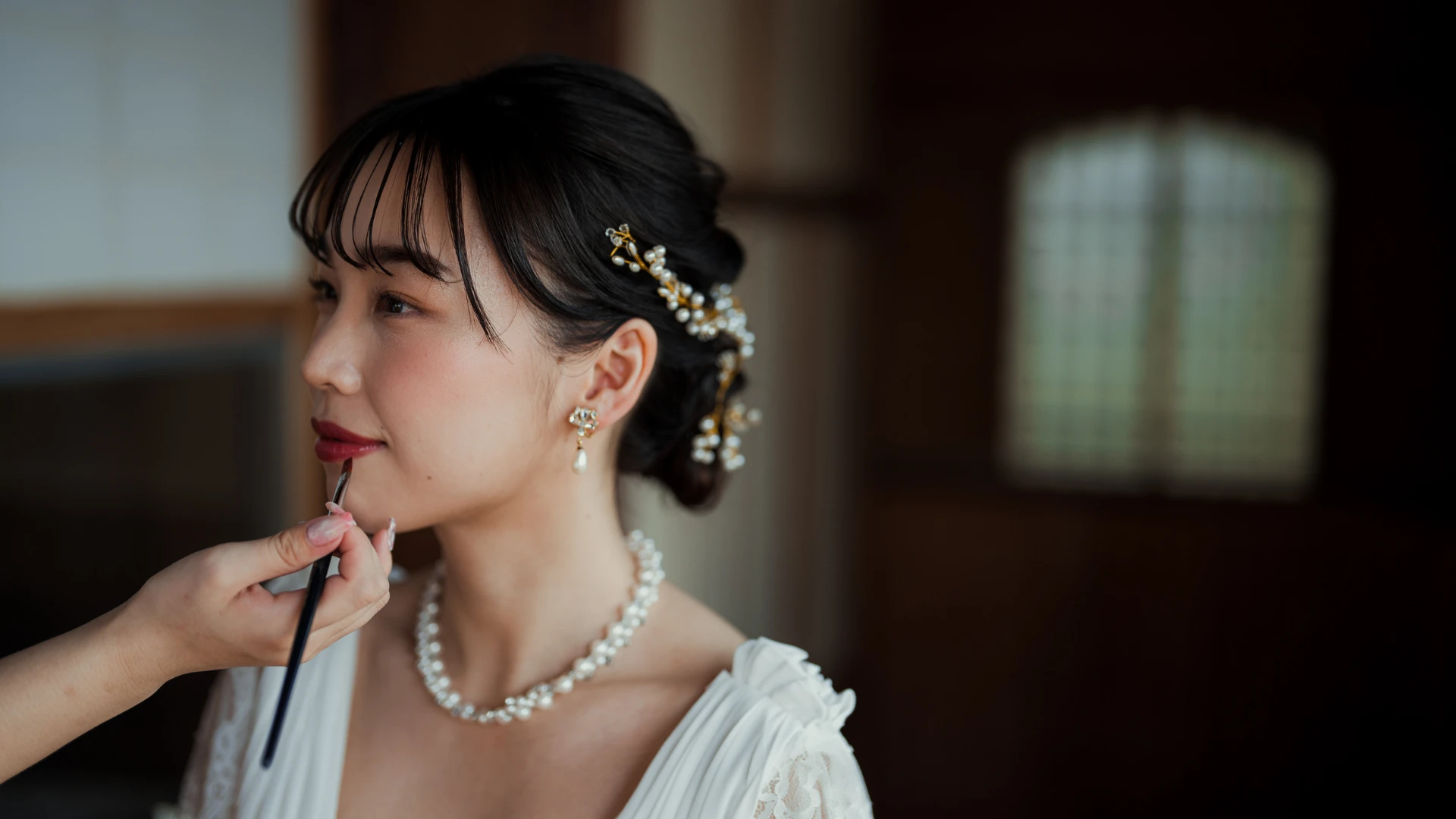
Traditional Nihongami — The Japanese Bridal Updo
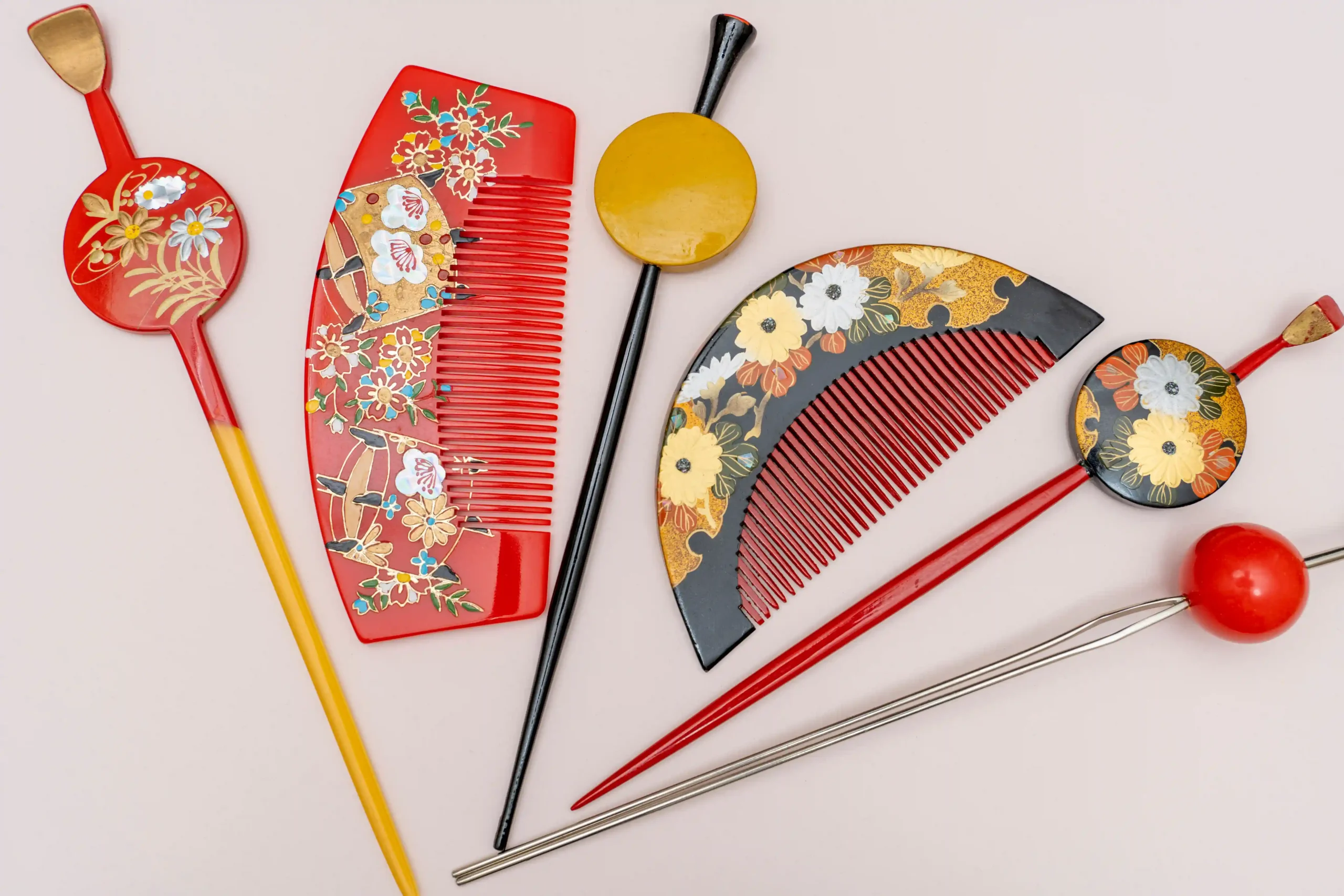
The traditional accompaniment to the shiromuku is the nihongami 日本髪, specifically the bunkin-takashimada 文金高島田, a high shimada updo associated with formal shrine weddings and adorned with elaborate kanzashi hair ornaments in gold, silver, and lacquer.
It is a complete commitment to the traditional aesthetic, where every element of the look — from the outermost layer of the kimono to the final hair pin — belongs to the same centuries-old visual language.
Modern and Hybrid Hair Styling
Many international brides opt for a modern updo with Japanese hair ornaments rather than the full traditional nihongami, a choice Wako fully supports. “A hybrid hair arrangement — a modern style with enough volume to hold accessories securely but elegant enough to transition into a wedding dress later often serves international brides better,” she says.
The practical advantages are meaningful: a modern updo is more comfortable for longer wear, easier to transition out of during the oiro-naoshi, and more accommodating of non-Japanese hair textures.
How Long Does It Take?
The full shiromuku preparation of the dressing, hair, and makeup typically takes two to three hours from start to finish. This is not simply a logistical window to schedule around. It is, as every bride who has experienced it describes it, one of the most memorable parts of the entire wedding day. A slow, deliberate transformation that has its own ritual quality before the ceremony has even begun.
Read our complete guide to Japanese wedding bridal hairstyles for a deeper look at every styling option.
What Does It Actually Feel Like to Wear a Shiromuku?

This is the question most international brides want answered and rarely find addressed directly. Wako’s perspective on the physical reality of the shiromuku is one of the most valuable things she offers couples who are deciding whether it is right for them.
The Weight
The full shiromuku ensemble is significantly heavier than most brides expect — the layered silk, the padding, the obi, and the accessories together create a weight that affects posture, movement, and energy across a long day.
Wako is direct about this: it requires preparation, not just aesthetically but physically. Brides who know what to expect arrive at the dressing room ready for it. Brides who don’t are often surprised in the first minutes of standing.
Movement and Pace
The shiromuku is designed for a specific kind of movement that is slow, deliberate, and graceful. Walking requires shorter steps than usual. The obi prevents deep bending. The sleeves constrain the shoulders. None of this is a flaw. It is the garment asking the bride to slow down, to be present, to move as though every step matters.
You will need assistance at every transition such as standing from a chair, entering a car, navigating steps. The Ateshi (介添人) is there for exactly this purpose. “By trusting them with the logistics of your body,” Wako says, “you are free to focus 100% on your partner and your guests.”
The Ateshi — Your Guardian Angel
Most venues provide an Ateshi (介添人 — Kaizoin) as part of the wedding package. An Ateshi is a professional attendant whose sole mission is to ensure the bride stays beautiful, comfortable, and stress-free from the moment she leaves the dressing room until the reception ends.
They lift the hem as the bride walks, smooth the train for every photograph, offer water between programmes, and hold accessories at the exact moment they are needed.
Wako describes the Ateshi as her “eyes and hands on the floor” once the styling is complete. “If a strand of hair moves out of place, she notices immediately and alerts me. We work as a team to protect the bride’s beauty throughout the day.”
What makes a skilled Ateshi exceptional, she adds, is their art of invisibility. “Appearing when needed and disappearing back into the shadows seamlessly. It is a beautiful form of Japanese hospitality.”
The Sanctuary Handover
There is one moment in a Shinto ceremony that Wako describes as her most critical preparation window: the minutes immediately before the bride crosses the threshold into the inner shrine sanctuary.
Once inside, Wako cannot follow as external stylists (or anyone else for that matter) are not permitted in the sanctuary during the ritual. The Miko, the shrine’s sacred maidens will take over.
“Everything must be perfect before she steps inside,” Wako says. “Every hair, every fold, every detail of the collar. I cannot fix anything once that threshold is crossed.” It is a moment that sharpens her focus more than any other point in the day.
How to take photographs of the Shiromuku
The shiromuku is a completely different photographic subject to a Western wedding dress, and a photographer who understands this difference will produce images that are in another category entirely from one who does not.
The 45-Degree Angle
“While a dress often looks great from the front, a kimono is most beautiful from a 45-degree angle. This captures the depth of the embroidery, the curve of the obi, and the layered silhouette simultaneously. Front-on rarely works.” — Wako Koshigai
The Eri-Ashi Shot
Every knowledgeable photographer working in Japan knows to look for the eri-ashi — the nape of the neck, where the collar sits slightly away from the skin. It is the most elegant detail of the entire look, and in the right light it is one of the most beautiful shots a shiromuku wedding produces.
The I-Line Pose
Where Western bridal posing typically opens the body, a hip dropped, a shoulder turned outward, the shiromuku requires the opposite.
Wako calls it the “internal” pose: toes slightly inward, elbows close to the sides. This closing of the body creates the classic slender I-line silhouette that defines shiromuku photography. “Kimono beauty is about closing the body,” she explains. “A photographer who guides the bride into this pose instinctively understands what they are shooting.”
Lighting
Harsh sunlight washes out the subtle weave patterns and any gold thread details woven into the silk. The ideal light for a shiromuku shoot is soft and diffused — the natural light under a shrine’s wooden eaves is considered by many Japanese photographers to be the finest setting for this garment. For indoor settings, careful adjustment is needed to preserve the white without losing the fabric’s texture entirely.
Read our complete guide to wedding photographers in Japan for advice on finding one who understands both kimono and Western dress.
The Shiromuku at the Shrine
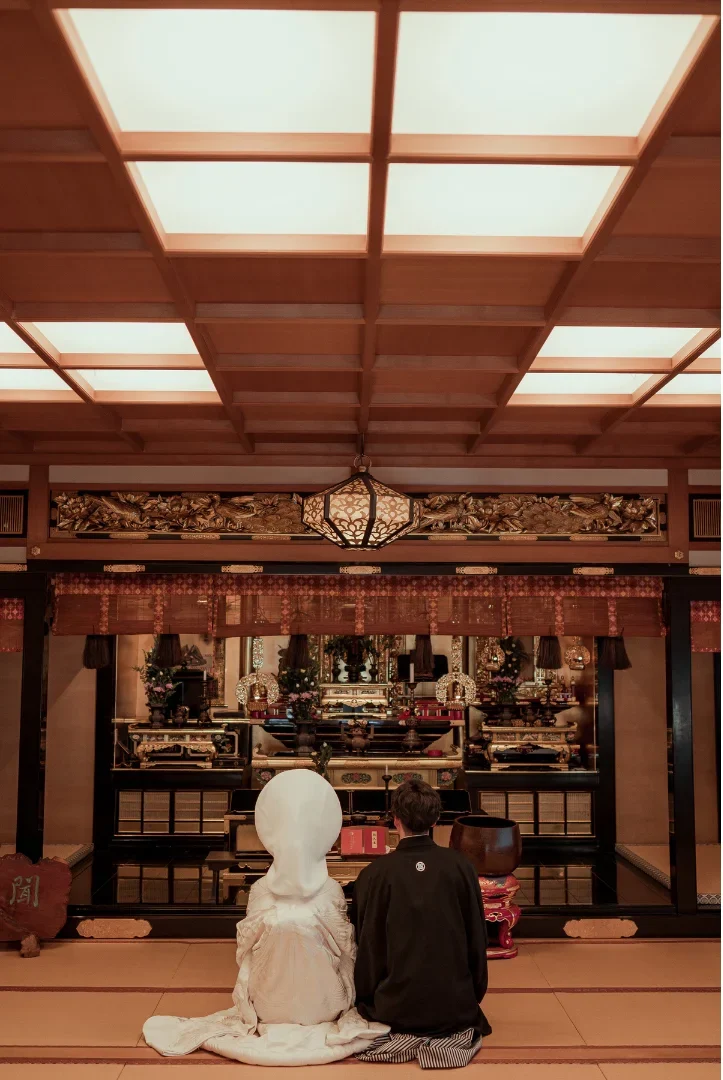
prayers to the deities.
The shiromuku is almost exclusively worn for Shinto shrine ceremonies as it is the visual and cultural expression of that ritual, and wearing it at a hotel chapel or garden ceremony would create a visual and spiritual disconnect that most stylists would advise against.
Not all shrines are equal in their flexibility. Famous landmarks like Meiji Jingu or Heian Jingu run multiple ceremonies simultaneously and offer limited creative freedom such as fixed photo spots, strict rules on external vendors, and little room for hybrid elements.
Smaller, lesser-known shrines typically tend to offer more flexibility, more intimacy, and a willingness to accommodate international couples that the major shrines rarely match.
Before booking any shrine, Wako recommends asking specifically whether the dressing facilities can accommodate the full shiromuku dressing process and whether the Ateshi is permitted to accompany the bride inside the venue.
These are the questions that reveal how experienced a shrine is with international couples.
Read our complete guide to Shinto wedding ceremonies in Japan for everything you need to know about the ritual itself.
The Oiro-Naoshi — Leaving the Shiromuku Behind
While the shiromuku is worn for the ceremony, the moment the reception begins, the oiro-naoshi (the traditional outfit change). The bride disappears and returns, and what she returns in changes everything.
Wako’s own wedding followed the 3-step flow she now recommends to every bride she works with:
“Step 1: The mystique of the shrine in the shiromuku and wataboshi, respecting the ancient traditions of Japan.
Step 2: After moving to the reception, removing the hood to reveal the vibrant iro-uchikake, switching to a modern hair arrangement with beautiful accessories.
Step 3: Finally, changing into a pure white wedding dress for the party. The transition from traditional to personal creates an amazing energy in the room. I felt a huge sense of accomplishment, having fulfilled all my dreams in one day.”
The oiro-naoshi typically takes 20–30 minutes and is planned into the reception programme as a natural lull. Sometimes it is filled with a live cooking station or entertainment to keep guests engaged while the change happens.
Once the shiromuku comes off, it is carefully folded and returned to the rental shop.
Renting a Shiromuku in Japan
For international brides, renting locally in Japan is almost always the right decision. The logistics of transporting a heavily padded, layered silk garment internationally are prohibitive, and local rental shops have decades of experience fitting brides of all body types and nationalities.
The full ensemble: kakeshita, uchikake, obi, headpiece, and accessories — is included in the rental, and the dressing is performed by a professional on the wedding morning.
What to Expect from the Rental Process
The process begins with an initial consultation and fitting, typically required six to twelve months in advance for peak season dates. Measurements are taken with more precision than standard Western dress sizing as the way the kimono wraps and layers means proportions matter as much as size.
A trial dressing session, where the bride experiences the full ensemble for the first time before the wedding day, is strongly recommended. It is the first opportunity to make adjustments and, in many cases, the moment the bride decides for certain that the shiromuku is the right choice.
Price Ranges
Renting a shiromuku kimono — Standard shiromuku rental: approximately ¥150,000 to ¥300,000.
Premium and high-end garments from established bridal houses or with particularly complex weaving: ¥300,000 to ¥600,000 and above.
The price is driven by fabric quality, provenance, weave complexity, and the age and condition of the specific garment.
Some venues include the shiromuku rental within their wedding package and it is worth confirming before booking independently.
How Far in Advance to Book
For sakura season (late March and April) and autumn foliage season (November), Japan’s two most popular wedding periods, booking twelve months in advance is standard and strongly recommended. The most sought-after garments at reputable rental shops are reserved well ahead of these dates. For off-peak seasons, six months is generally sufficient.
For a complete breakdown of how shiromuku rental costs fit into your overall wedding budget, read our Japan destination wedding cost guide.
Is the Shiromuku Right for You?
Wako’s answer to this question is characteristically direct: “The shiromuku is not for everyone. And that is the point. The brides who choose it always know exactly why they did.”
The shiromuku suits you if you are having a Shinto shrine ceremony and want to honour that ritual fully through your attire.
It suits you if you want an experience that is genuinely unlike anything available in Western wedding culture. Something that places you inside a tradition rather than beside it.
It suits you if you are comfortable with assistance, with a slower pace, and with the understanding that the garment will ask something of you in return for what it gives.
Consider alternatives if you need freedom of movement throughout the day, if your venue is a hotel chapel or garden setting where a shiromuku would feel visually out of place, or if budget constraints make one outfit change more practical than two.
The hybrid path meaning the shiromuku for the ceremony, Western dress or iro-uchikake for the reception, is available to anyone who wants the experience of the garment without committing to it for the entire day.
For a side-by-side comparison of all three options, read our complete guide to Shiromuku vs Iro-Uchikake vs Modern Wedding Dress.
For a full overview of all Japanese wedding attire options, read our Japanese Wedding Attire hub.
Shiromuku Kimono — Frequently Asked Questions
Everything international brides need to know about Japan’s traditional white wedding kimono.
What is a shiromuku?
What is the difference between a shiromuku and a regular kimono?
Can foreigners wear a shiromuku?
What is the difference between a wataboshi and tsunokakushi?
Tsunokakushi: Structured rectangular headpiece that shows the face and works with both shiromuku and iro-uchikake.
How long does it take to get dressed in a shiromuku?
How heavy is a shiromuku?
How does a shiromuku photograph?
How much does it cost to rent a shiromuku in Japan?
When should I book a shiromuku rental?
Can I wear a Western veil with a shiromuku?
About the Contributor
Wako Koshigai is a professional hairdresser with over 15 years of experience specialising in traditional Japanese wedding hairstyles and kimono dressing. With deep knowledge of Japan’s wedding culture and trends, she has worked with both Japanese and international couples across the country’s most celebrated venues, shrines, and heritage settings.

Timothy is a web builder and marketing specialist with a deep passion for Japan and its culture. He founded Get Married in Japan to help international couples navigate Japan's wedding traditions — and to connect them with the people who know it best.
Connect on LinkedIn →