
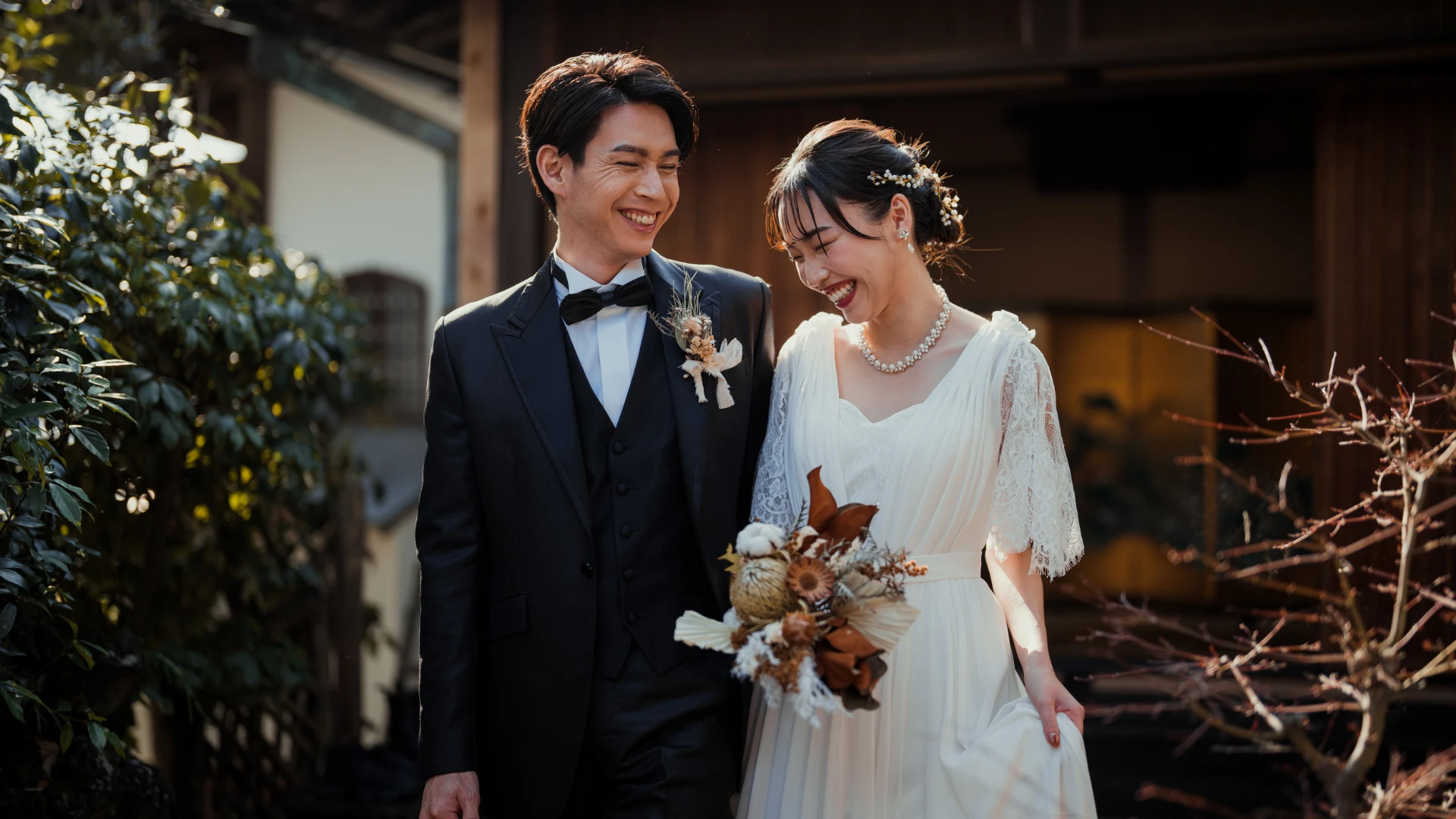
- 4 ceremony types: Shinto shrine (30–45 min), chapel/Christian (20–30 min), garden civil (20–40 min), and hybrid combinations
- No ceremony is legally binding — only the konin-todoke (婚姻届) submitted to city hall makes the marriage official
- A full wedding day lasts 6–8 hours — ceremony, formal photos, reception, sake barrel ceremony, outfit changes, and same-day edit film
- Shinto is the most immersive option — smaller local shrines offer more flexibility for international couples than famous landmarks
- The 3-dress transformation (shiromuku → iro-uchikake → Western dress) is the fullest way to experience all of Japanese wedding culture in one day

Wako is a professional hairdresser with over 15 years specialising in traditional Japanese wedding hairstyles and kimono dressing. She brings deep firsthand expertise in Shinto ceremony etiquette, bridal attire, and Japan's wedding culture and trends.
Follow on Instagram →What is a Japanese wedding ceremony actually like, and how do Japanese weddings work? It depends entirely on which of the four main styles you choose and each creates a completely different experience.
Japan offers something genuinely rare in the wedding world: a country where an ancient Shinto ritual performed inside a shrine sanctuary and a modern garden ceremony with handwritten vows can both be done for the same wedding couple.
Japanese wedding ceremonies span centuries of tradition and every contemporary style imaginable, and international couples are welcomed into all of them with a level of care and craftsmanship that is difficult to find anywhere else.
To find out more about the different types of Japanese wedding ceremonies, I interviewed Wako Koshigai, who has spent over 15 years styling brides across every type of Japanese wedding ceremony.
This guide draws on her experience to introduce each style, explain how Japanese weddings work in practice, and help you find one that fits your style.
- The Most Important Thing to Understand First: The Legal Reality
- The Shinto Ceremony (神前式 — Shinzen-shiki) — Japan's Ancient Marriage Ritual
- The Chapel Ceremony (キリスト教式 — Kirisutokyō-shiki) — Japan's Most Popular Style
- The Western Civil or Garden Ceremony — Complete Creative Freedom
- The Hybrid Ceremony — Blending Two Traditions
- The Kagami-Biraki — The Sake Ceremony at the Heart of Every Reception
- Which Japanese Wedding Ceremony is Right for You?
- Planning Timeline — When to Lock in Your Ceremony Style
- Closing: Japan Will Meet You Where You Are
The Most Important Thing to Understand First: The Legal Reality
How does a Japanese wedding ceremony work from a legal standpoint? This is the most common source of confusion for international couples, and the answer is simpler than most people expect.
No ceremony in Japan — not Shinto, not Christian, not a civil ceremony — carries any legal weight on its own. The only act that makes a marriage legally valid in Japan is the submission of the konin-todoke (婚姻届), the Marriage Registration form, to a local city hall or municipal office.
How long does it take to get married in Japan? The legal registration itself takes one to three hours at city hall, while the ceremony and full wedding day typically run six to eight hours.
In practice, this means the ceremony and the legal registration are two entirely separate events. Couples choose when and where to do each independently. Many international couples complete their legal registration days, months, or even years before their ceremony — a trend that accelerated significantly after the pandemic and has since become entirely normalised in Japan.
The romantic upside of separating the two is straightforward: two separate dates means two anniversaries to celebrate every year.
Read our complete guide to the legal requirements for getting married in Japan as a foreigner.
The Shinto Ceremony (神前式 — Shinzen-shiki) — Japan’s Ancient Marriage Ritual
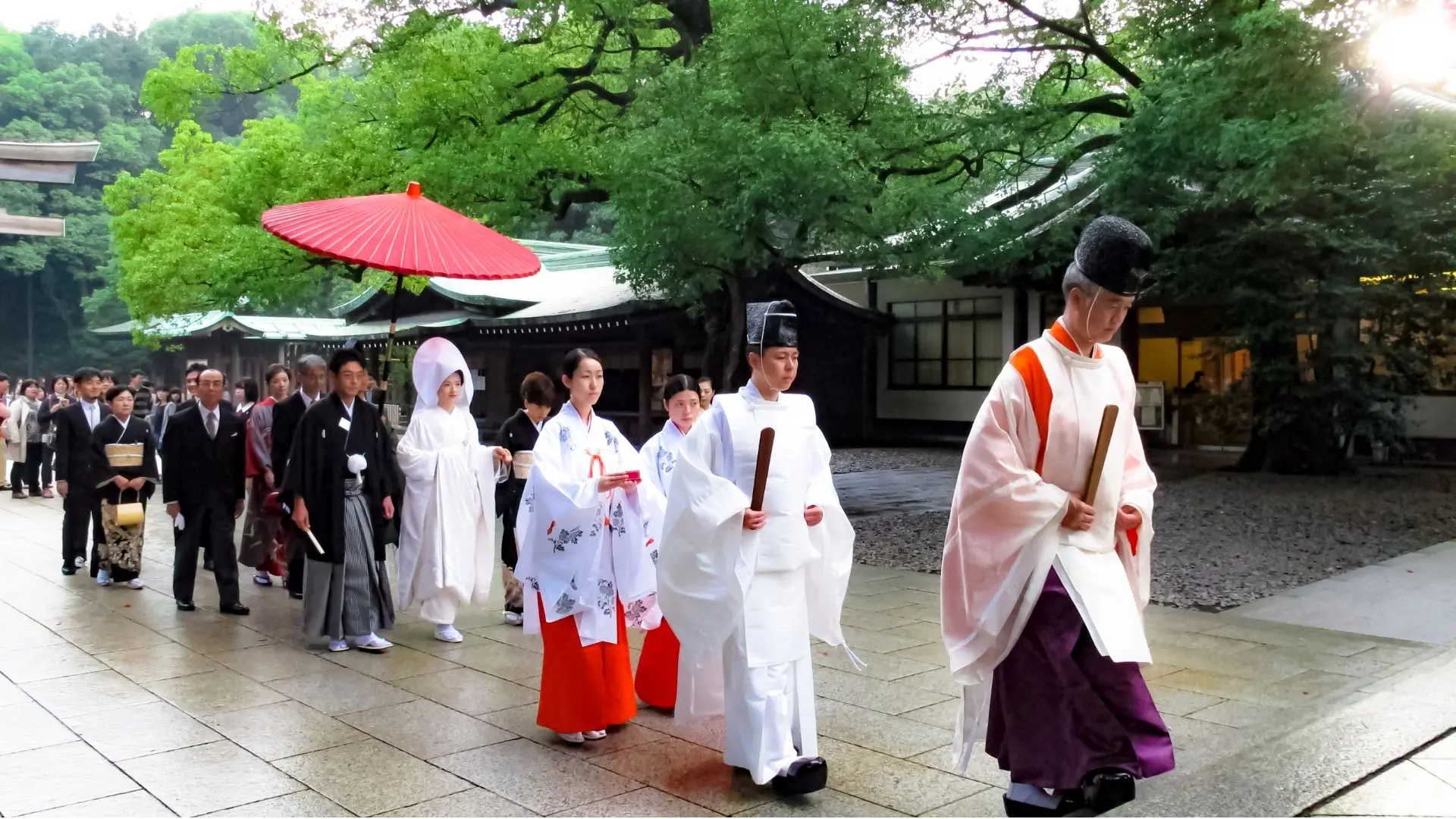
When most people picture a traditional Japanese wedding, this is what they imagine. The Japanese shrine wedding ceremony is Japan’s traditional form of marriage and the one most deeply rooted in the country’s cultural identity.
It is conducted inside a shrine sanctuary under the blessing of the Shinto gods, led by a Kannushi (head priest) and assisted by Miko, the shrine’s sacred maidens.
For international couples, it is the most immersive and emotionally significant of all the Japanese marriage ceremony styles available.
in Western wedding culture
“Inside the shrine, everything slows down. There is no applause, no music in the Western sense, no audience in the way we think of one. It is just the couple, the priest, and something much older than either of them. I have dressed hundreds of brides for this moment and it never stops feeling significant.” — Wako Koshigai
One practical consideration for international couples: not all shrines treat external photographers, stylists, or hybrid ceremony elements equally.
Smaller, lesser-known shrines typically offer more flexibility and a more intimate experience than famous landmarks like Meiji Jingu or Heian Jingu, where multiple weddings run simultaneously and creative freedom is limited.
Read our complete guide to Shinto wedding ceremonies in Japan — rituals, attire, access rules, and what to expect.
The Chapel Ceremony (キリスト教式 — Kirisutokyō-shiki) — Japan’s Most Popular Style
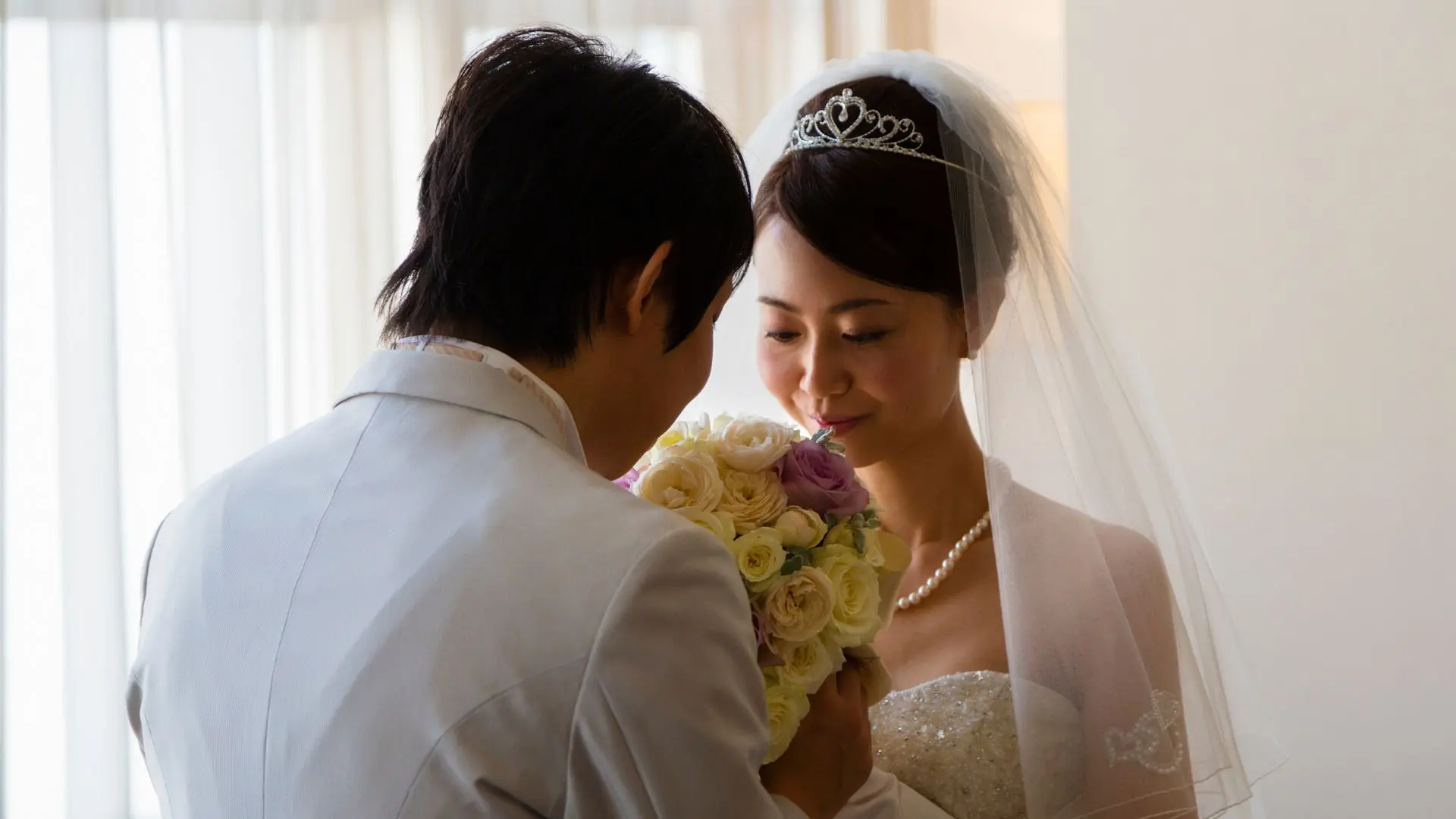
The chapel or Christian-style ceremony is, perhaps surprisingly, the most popular wedding ceremony style in Japan today. It arrived in the latter half of the twentieth century and has been embraced so completely by Japanese wedding culture that it now accounts for the majority of all formal ceremonies held at Japanese wedding venues.
What is a Japanese chapel ceremony like?
It closely mirrors a Western Christian wedding in structure: a processional, personal vows, a ring exchange, and a pronouncement — but with one important distinction that international couples should understand: most Japanese chapel ceremonies are not legally or religiously Christian.
The venues are purpose-built wedding chapels, often within hotel complexes, and the ceremony is officiated by a pastor-like figure. Couples do not need to be Christian to have a chapel ceremony in Japan, and the vast majority of Japanese couples who choose this style are not practising Christians.
It is the aesthetic and emotional experience they are choosing — the aisle walk, the white gown, the ring exchange — rather than the theology.
Chapel ceremonies are typically shorter than Shinto ceremonies, around 20 to 30 minutes, and are followed immediately by a reception. They suit couples who want a familiar Western structure, who prefer a Western wedding dress, or whose guests come from diverse cultural backgrounds where a Shinto ritual might feel unfamiliar.
For international couples who are genuinely Christian and want a ceremony with real religious meaning, finding an English-speaking pastor or a certified church is possible but requires advance research and planning.
The Western Civil or Garden Ceremony — Complete Creative Freedom
The garden or civil ceremony is the youngest of Japan’s main wedding ceremony styles and the one growing fastest among international couples. It involves no fixed religious or cultural framework — the couple writes their own vows, chooses their own music, and structures the ceremony entirely around their own story. An officiant or bilingual MC leads the proceedings.
The settings for this style are some of the most visually spectacular in Japan: rooftop gardens in Tokyo, castle grounds in Kyoto, lakeside venues in Hakone, ryokan gardens in the Japanese Alps.
The ceremony itself is typically 20 to 40 minutes, but the flexibility extends to every element — attire, language, traditions incorporated, and the balance between Japanese and international cultural elements.
What makes a garden ceremony in Japan still distinctly Japanese, even without the traditional ritual, is everything surrounding it.
The food service, the sake ceremony, the level of care applied to every detail, the Ateshi attendant — the Japanese spirit of hospitality infuses even the most personalised ceremony with something that could not happen anywhere else in the world.
For garden and outdoor wedding venues across Japan, read our guide to why a ryokan makes a perfect wedding destination.
The Hybrid Ceremony — Blending Two Traditions
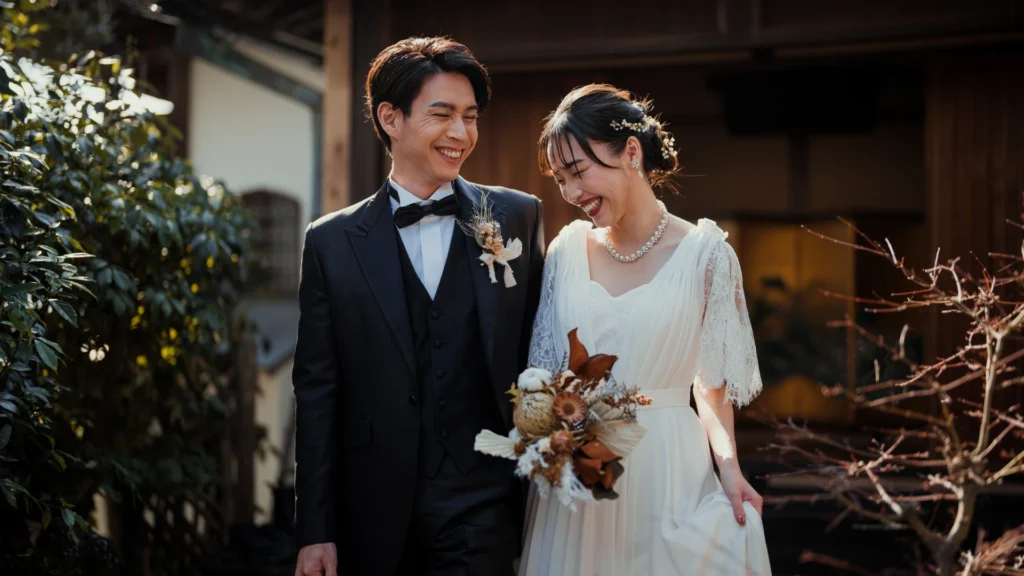
The hybrid ceremony is perhaps the most interesting development in Japanese wedding culture in recent years — and the one that Wako encounters most often among international couples. It involves combining elements of a Shinto ceremony with Western or personal elements, either within a single ceremony or across the arc of the whole wedding day.
The Shinto-Western Hybrid
The most common format is a Shinto ritual for the formal ceremony, with Western elements — a ring exchange, personal vows, a guest procession — woven into the reception programme. The bride and groom begin the day in traditional Japanese wedding attire and transition into Western dress for the reception.
Wako’s 3-step transformation — shiromuku to iro-uchikake to Western gown — is the most complete expression of this approach, and the one she recommends most often to international brides who want to experience all of what Japan’s wedding culture has to offer.
“The 3-step transformation tells a complete story. The shiromuku says: I am entering something sacred and ancient. The iro-uchikake says: I am celebrating with joy. The Western dress says: now I am simply myself, at a party with the people I love most. All three are true at once.” — Wako Koshigai
Read our complete guide to hybrid Shinto-Western weddings in Japan.
The Shinto-Christian Hybrid
A smaller but growing category — couples who want both the cultural depth of a Shinto shrine ritual and the Christian faith element. This requires finding a shrine that is open to hybrid elements and a Christian officiant willing to work alongside the Shinto format. It is more complex to arrange but deeply meaningful for couples for whom both traditions are genuinely important.
How Weddings Are Celebrated in Japan Across the Full Day
How are weddings celebrated in Japan?
Regardless of ceremony style, the structure of how a Japanese wedding is celebrated follows a broadly consistent arc.
The morning begins with hair, makeup, and dressing — often a two to three hour process for the bride in traditional kimono.
The ceremony follows, then a formal photographic session. The reception — two and a half to three hours of speeches, toasts, the kagami-biraki sake barrel ceremony, the cutting ceremony, and guest entertainment — forms the heart of the day.
One or more outfit changes happen within the reception programme. The day typically concludes with the same-day edit end-roll movie, a cinematic highlight film screened to guests at the very end of the reception.
The Kagami-Biraki — The Sake Ceremony at the Heart of Every Reception
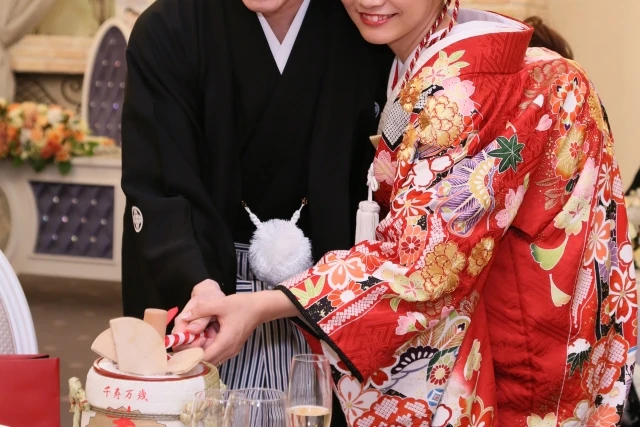
Whatever ceremony style a couple chooses, one moment appears at almost every Japanese wedding reception regardless of tradition: the kagami-biraki (鏡開き), the sake barrel breaking ceremony.
The couple uses wooden mallets to break open the lid of a sake barrel, and the freshly opened sake is shared in traditional cedar masu cups among the couple, their families, and their guests.
It is theatrical, participatory, and deeply photogenic — one of the most memorable moments of any Japanese wedding day. The most seamless timing is at the very opening of the reception, flowing straight into the kanpai toast.
Some couples prefer to time it after the oiro-naoshi outfit change, when the iro-uchikake is at its most spectacular and the ceremony creates the greatest visual impact.
Read our complete guide to the kagami-biraki sake ceremony — timing, meaning, and how it works in practice.
Which Japanese Wedding Ceremony is Right for You?
The right ceremony style follows from two questions: what kind of experience do you want to have, and how do you want to feel on the day?
The venue, the attire, and the photography all follow from that decision — not the other way around.
If you want deep cultural immersion and a ritual that connects you to centuries of Japanese tradition, the Shinto ceremony is the natural choice.
If you want a familiar Western structure in a beautiful setting, the chapel ceremony delivers this with exceptional Japanese craftsmanship applied to every detail.
If you want complete creative freedom and a ceremony entirely in your own words, the garden or civil ceremony offers this within some of the most visually spectacular settings in the world.
And if you want to experience all of it — the sacred, the celebratory, and the personal — the hybrid approach and the 3-step transformation make this possible within a single wedding day.
“I always tell brides: don’t start with what looks beautiful in photos. Start with how you want to feel when you walk back down that aisle. The photos will always follow the feeling.” — Wako Koshigai
For attire advice specific to each ceremony style, read our complete guide to Japanese wedding attire.
Planning Timeline — When to Lock in Your Ceremony Style
The ceremony style should be decided before the venue — not after. This is the single most common sequencing mistake international couples make.
A couple who falls in love with a specific shrine, then discovers it does not permit hybrid elements or external photographers, faces a painful renegotiation. Confirming the ceremony style first narrows the venue search to spaces that actually support what you want.
For Shinto ceremonies at popular shrines, booking 6 to 12 months in advance is standard, and essential during sakura season in late March and April or autumn foliage season in November.
Chapel and garden venues operate on similar timelines for peak dates. Hybrid ceremonies require an additional step — confirming the shrine’s openness to non-traditional elements before any contract is signed. This conversation must happen before anything is committed to paper.
For international couples planning remotely, a local wedding planner who can make these venue conversations on your behalf — in Japanese, with the cultural fluency to read between the lines of what a venue is actually willing to accommodate — is one of the most valuable investments in the entire planning process.
For a complete breakdown of costs across all ceremony styles, read our Japan destination wedding cost guide.
Closing: Japan Will Meet You Where You Are
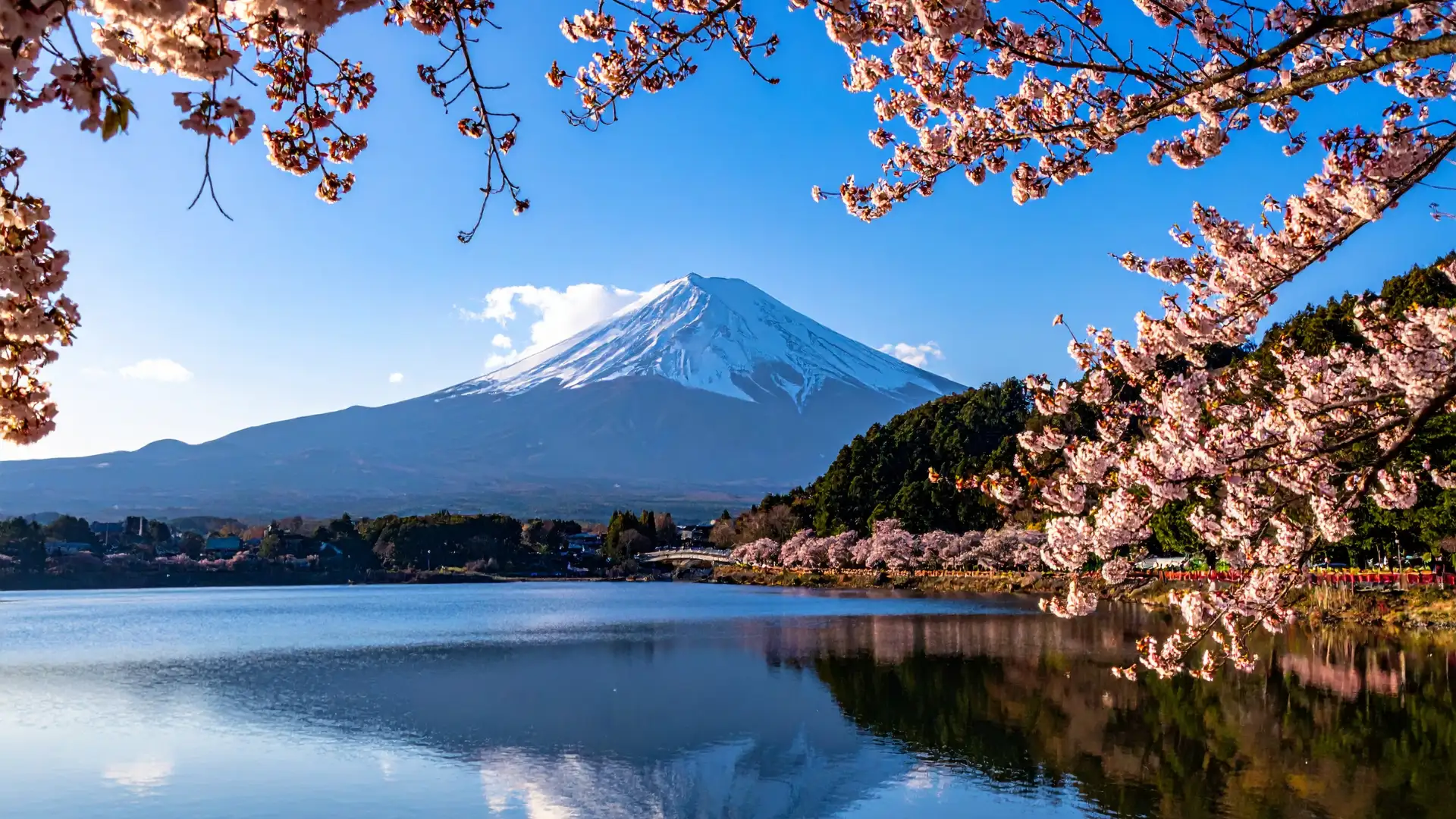
Japanese marriage ceremonies in 2026 are more open and more welcoming to international couples than at any point in the country’s history. The range of styles available, from a Shinto shrine ritual steeped in centuries of tradition to a fully personalised garden ceremony with handwritten vows means there is genuinely no wrong answer.
There is only the ceremony that is right for you.
What unites every style of Japanese wedding ceremony is the spirit of Omotenashi — the Japanese concept of hospitality so complete that a guest’s needs are anticipated before they are expressed.
Whether you are standing inside a shrine sanctuary or under an open sky, that spirit will be present in every detail of your day.
Japanese Wedding Ceremonies — Frequently Asked Questions
Everything international couples need to know about different wedding ceremony styles in Japan.
What types of Japanese wedding ceremonies are there?
How do Japanese weddings work?
How long is a Japanese wedding ceremony?
Do you have to be Shinto or Christian to have that type of ceremony in Japan?
What is a Shinto wedding ceremony like?
What is a traditional Japanese wedding like?
Is a wedding ceremony in Japan legally binding?
How long does it take to get married in Japan?
How are weddings celebrated in Japan?
What is the most popular wedding ceremony style in Japan?
Can foreigners have a Shinto wedding ceremony in Japan?
What is the kagami-biraki ceremony?
About the Contributor
Wako Koshigai is a professional hairdresser with over 15 years of experience specialising in traditional Japanese wedding hairstyles and kimono dressing. With deep knowledge of Japan’s wedding culture and trends, she has worked with both Japanese and international couples across the country’s most celebrated venues, shrines, and heritage settings.

Timothy is a web builder and marketing specialist with a deep passion for Japan and its culture. He founded Get Married in Japan to help international couples navigate Japan's wedding traditions — and to connect them with the people who know it best.
Connect on LinkedIn →